An AI search engine still relies on pages Google can retrieve and trust enough to cite. That is the same principle behind AI Overview search.
If a buyer types a specific question and you have no page for it, ChatGPT and AI Overviews have nothing of yours to recommend. Specific comparison and objection pages give generative AI search more relevant retail content to retrieve than one broad category page does.
A sofa category page is a fine page. It just doesn’t know the buyer has a dog.
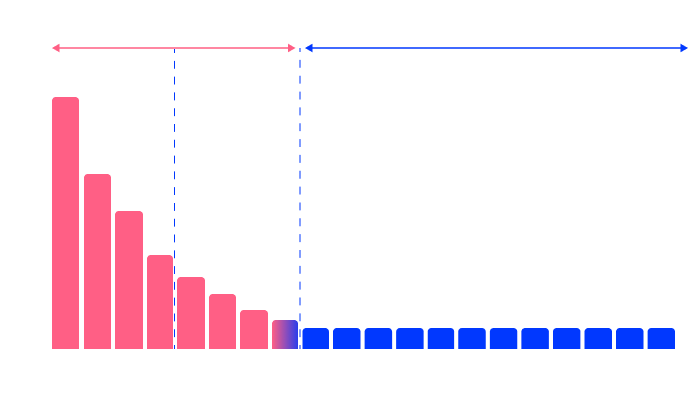
Most retailers have broad category pages and little for the specific comparisons and objections buyers search before they purchase. That is where the bulk of demand sits.
With that gap, an AI engine has nothing from your site worth pulling in, however strong your position looks on a head term.
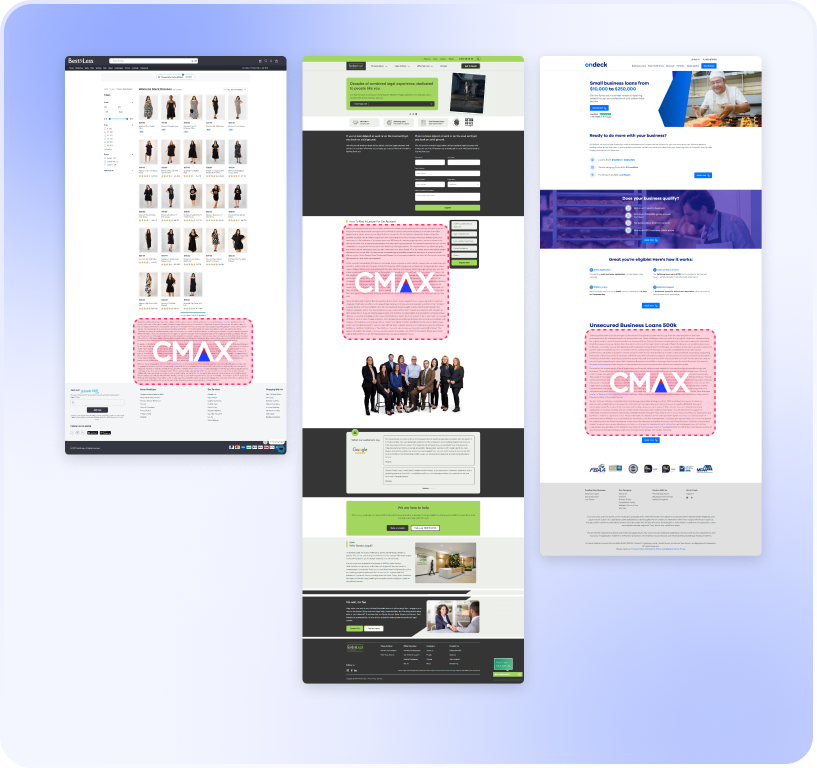
CMAX works from this logic, building and connecting the long-tail pages that give search and AI systems more reasons to find and cite your brand. That is how we connect AI and SEO: with brand-approved material that retrieval systems can evaluate.
AI search changes the interface and keeps the need for visibility
Retrieval still decides citations
Google’s generative AI features pull relevant, up-to-date pages from Google’s index to build their answers. Google states a page must be indexed and eligible to show a snippet in Google Search before it can appear in any generative AI feature.
So for indexed pages eligible to show snippets, an AI search engine is one more interface through which Google can retrieve and cite useful information.
In practical terms, Google AI Search is a new interface to Google. A site with no clear page for a buyer’s question gives the AI answer less reason to cite it.
Clear product imagery and descriptive page context also help AI image search interpret a modular sofa alongside its indexed category information.
Query fan-out raises long-tail stakes
Google defines query fan-out as a set of concurrent, related queries the model generates to fetch additional relevant results. A single buyer question like “best modular sofa for apartment living” can branch into fabric durability, delivery time, returns and price comparisons at the same time.
Imagine a renovator asks her apprentice for one quote on a bathroom. He rings four suppliers at once and orders from whoever has a price sheet for that exact job.
The supplier holding only a glossy general brochure gets no order. In this context, query fan-out means the AI makes several calls for one buyer question, and your site gets picked only if it holds a price sheet, a specific page, for each call.
Effective LLM SEO plans for those calls. Pages that answer specific buyer angles are more likely to be retrieved than pages that describe a category in general terms.
A strategy built around a few head terms leaves most of that demand uncovered.
Visibility depends on coverage and freshness
Long-tail coverage wins more demand
Over 90% of search and AI demand is in the long tail: the specific, detailed queries buyers type once they’ve moved past a broad category. For a homewares brand, that’s searches like “stain-resistant linen sofa under $2,000 Sydney” rather than “sofa.”
Content surface area, meaning how many of those specific questions your site answers, is a direct visibility lever.
As part of an AI search analytics review, check whether your site covers comparisons, use cases, price concerns, location limits and common objections. We provide answer engine optimisation services by expanding coverage across those buyer needs.
No AI search engine can cite a page you never wrote.
Freshness and internal links matter
Google warns against recycled commodity content and says unique, useful content can influence a site’s presence in generative AI search over time. Current product ranges, prices and policies give Google generative AI search fresher information to retrieve from an internally linked content cluster.
Unlike a conventional results page, an AI search engine can synthesise information from several current, internally linked pages into one response.
CMAX Helps Brands Build That Coverage at Scale
Built for Long-tail Search Coverage
We run our Agentic SEO Platform on Dynamic Internal Linking and Full Body SEO. CMAX targets that same long tail, where most search demand sits.
In practice, an AI search engine is a retrieval interface that synthesises indexed sources into generated responses. The goal is to cover the thousands of specific searches buyers use when they compare, narrow, question and validate a purchase.
If your site doesn’t talk about a search, an AI search engine has no relevant page from your brand to retrieve.
Our approach to AI search engine optimisation is to build connected on-site pages that traditional search and AI systems can read and evaluate. That gives traditional search and AI search more pages to find and evaluate.
Human-Reviewed, Faster Click Visibility
An AI SEO content generator can publish pages quickly. CMAX is trained on human-reviewed, client-approved content, and that matters because Google recommends unique, useful content over recycled copy.
Most SEO programmes run by conventional agencies, using outdated methods, tell clients to expect results in six months. CMAX’s methods allow clients to start seeing clicks in 6 to 8 weeks.
Timelines depend on the site, its competition and how the work is done.
Day to day, we apply AI search optimisation by scaling content, linking it into the site, monitoring performance and refreshing pages as buyer behaviour changes. That is AI SEO optimisation as a running programme.
Performance-led generative AI search engine optimisation keeps published pages from going static.
Frequently Asked Questions (FAQ)
How can I track how often my brand appears in AI answers?
Start with Search Console, Google’s free tool. It now includes a generative AI performance report showing impressions for AI Overviews and AI Mode.
A practical answer to “what is answer engine optimisation” starts with measurement: AI Overview impressions, assisted conversions, branded search lift and direct visits (those your analytics can’t attribute to a source). Also watch for pages that gain impressions after a content refresh.
Prompt tracking tools that repeatedly ask ChatGPT questions and log whether your brand appears can show directional change. Treat these AI search monitoring tools as samples.
They won’t capture every buyer search.
Do all AI search engines use the same index?
No. Google’s generative AI features retrieve pages from Google’s index, which is the question behind AI search Google. OpenAI uses OAI-SearchBot to surface websites in ChatGPT results, and Anthropic documents Claude-SearchBot for search indexing.
Make your useful pages accessible to each crawler you want, then measure visibility by provider where data is available. Even an uncensored AI search engine can only retrieve pages it can reach.
How do I block AI training crawlers but allow AI search?
The robots.txt file, which tells crawlers what they may read, lets you control training and search access separately. That lets each AI search engine reach your published pages without automatically granting its training crawler the same access.
OpenAI allows OAI-SearchBot for search visibility while GPTBot handles training. Anthropic separates ClaudeBot (training) from Claude-SearchBot (search indexing).
Review each vendor’s crawler names and allow only the access that matches your publishing policy.
AI Search Engine Starts With Better Coverage
An AI search engine can only retrieve and cite what your site covers. When buyer questions branch into comparisons, constraints, use cases and objections, visibility depends on how much useful ground your content covers, and one strong page covers little.
CMAX focuses on content surface area across the long tail, then keeps that content fresh and connected so search and AI systems have more relevant pages to find and evaluate. That supports answer engine optimisation aeo: long-tail content that stays fresh, connected and grounded in client-approved brand assets.
Missing coverage can cost you visibility even when the rest of your SEO is strong. Creating pages is easy.
Building enough useful content around how customers really search, and keeping it current, is the harder part, and it is the focus of AI search marketing.
The quickest way to see your gaps is to look at them. A review shows which buyer questions your site answers and which it leaves empty.
If you’re curious as to how you’re performing on AI, book in a Missing Customer Map review with our Growth Team.
Author
Jeremy Tang
Founder and CEO of CMAX
Jeremy Tang is the Founder and CEO of CMAX. With over 2 decades of experience in business consulting and digital marketing, he has successfully driven seven startup businesses, six of which achieved $1 million in revenue from zero in less than 16 months, 5 of which grew to multi-million dollar a year ventures without any external funding. Jeremy's expertise lies in streamlining business processes through technology and leveraging digital (in particular SEO) for business growth. He resides in Australia, travels extensively, and draws inspiration from his global experiences.