Within CMAX reporting, AI search analytics measures brand mentions, citations, share of voice and the commercial impact that follows across AI-generated answers. A screenshot of one AI answer proves the AI answered once.
The question that matters is commercial. Do these answers make more buyers recognise your brand, search for you by name, click through or buy later?
Branded demand and assisted conversions show whether search visibility pays off after an AI answer names you. Let’s say a radio host names your shop on air.
Rank tracking tells you where your ad sat in the break, and it can’t tell you whether listeners then typed your name into a search bar or walked into the store. Those are the sales.
In this context, AI search analytics means counting the name searches and walk-ins that follow the on-air mention, alongside the ad slot.
This measurement sits beside your existing SEO reporting. It doesn’t replace it.
Each AI search engine words its answers differently, which is why isolated prompt checks mislead. CMAX connects content coverage and performance data to the search and AI behaviour that moves sales.
That is how SEO and AI reporting ties back to revenue, through performance data and approved content.
AI search analytics shows how your brand appears in AI answers and why it matters
What it measures
We measure four things: brand mentions, visible citations or links, share of voice across repeated commercial prompts, and downstream impact such as branded search lift, landing-page demand and assisted conversions.
For a retailer, bank, healthcare provider or university, LLM visibility matters when recommendation answers shape recognition before a buyer reaches your site.
Inclusion versus citation
Appearing in an AI Overview search result differs from earning a citation.
We treat that gap as a measurement issue. Our answer engine optimisation services rest on measurable signals such as branded demand, assisted conversions and page-level citation performance.
If your brand is mentioned and nobody clicks, check branded search demand and assisted conversions. If your site is cited and visits stay flat, check whether the answer satisfies the query before the click, or whether the cited page lacks a clear next step.
Strong measurement looks beyond rank position and checks whether AI visibility changes search behaviour
Why rank position is not enough
Rank tracking shows where a page sits in traditional search results. It misses the cases where an AI answer names your brand above the results list, summarises several sources, or shifts which retailer a buyer notices first.
So AI search analytics sits beside SEO analytics. Buyers often ask “What is generative engine optimisation?”
In short, it is building connected pages that AI engines can retrieve for detailed commercial questions.
Google now reports AI Overviews and AI Mode impressions in a dedicated generative AI performance report in Search Console. That makes answer-surface visibility on Google AI Search a separate measurement layer from standard rank tracking.
Keep tracking rank position, but don’t use it alone to judge search and AI visibility.
Page trends that signal impact
Search Console is a free Google tool that shows which searches your site appears for. Page-level impressions, branded demand and assisted conversions give AI search analytics the concrete signals that ranking reports miss.
Its generative AI performance report breaks AI Overview and AI Mode impressions down by page, country and device.
We use SEO data analytics to connect rising impressions with clicks, branded demand and assisted conversions, so exposure is never counted as success on its own. If branded search rises, the AI answer is likely driving discovery without a direct click.
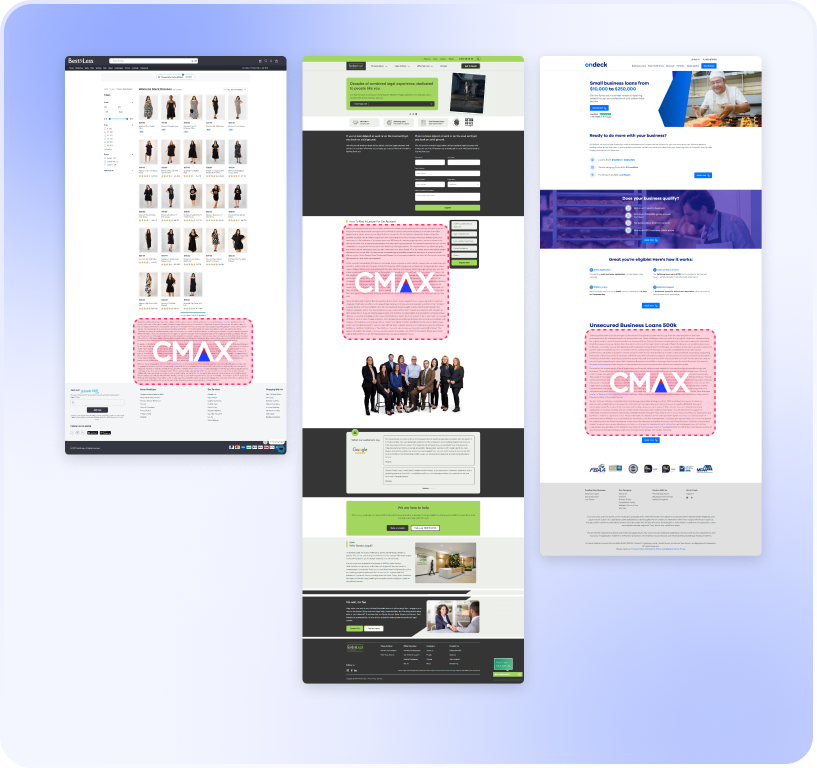
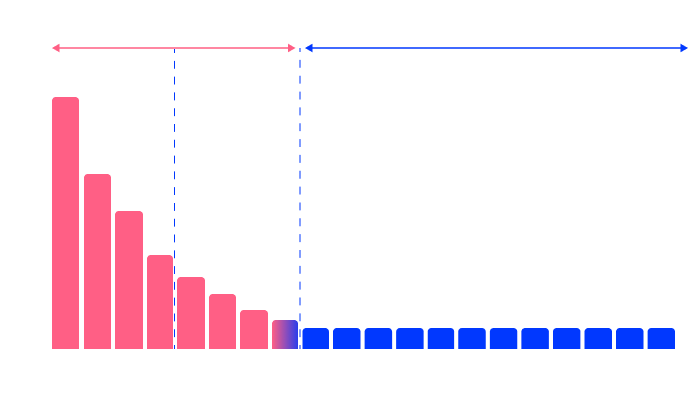
CMAX tracks patterns that matter, and ignores prompt-by-prompt noise
Patterns beat prompt snapshots
Prompt tracking logs one answer at a time. AI search analytics connects repeated answer patterns with Search Console, landing-page demand and assisted conversions.
A stronger rhythm for AI search tests the same commercial prompt groups over time, then cross-references the pattern against Search Console, branded search and assisted conversions. If visibility improves across several related prompts and the same period shows stronger branded demand or qualified organic sessions, that pattern is worth investigating.
Repeated prompt groups make generative engine optimisation GEO measurable across mention patterns, landing-page demand and qualified organic sessions.
Searching for the best LLM visibility tracking tools returns plenty that log single prompts. Good LLM visibility tracking and LLM visibility monitoring connect to Search Console and sales data.
The term LLM observability describes watching how a model itself performs, which is a different job from measuring how your brand shows up in its answers.
Why CMAX focuses on coverage
CMAX is trained on human-reviewed, client-approved content, which matters when brand, compliance and accuracy can’t be left to generic AI output. An AI SEO analysis can assess whether approved content covers enough specific questions for Google and AI engines to retrieve relevant pages.
In practical terms, AI search optimisation depends on whether the site carries enough fresh, connected content to qualify for more of the searches and AI answer paths that drive commercial outcomes.
Frequently Asked Questions (FAQ)
Does Google Search Console track AI Mode impressions?
Yes. Google’s generative AI performance report in Search Console includes impression data for AI Overviews and AI Mode, and Google notes the list may expand as Search develops.
Search Console excludes Search Labs experiment data from that report, so keep live Google feature data separate from experimental testing.
For reporting, show AI Overview and AI Mode visibility as separate metrics. Then compare them against page-level clicks, branded search movement and conversion paths.
That tells leadership whether AI surfaces are driving discovery, absorbing clicks or routing buyers to different pages.
People also ask “What is SEO analysis?” It is the review of page impressions, clicks, branded demand and conversion paths rather than rank position alone.
Why do ChatGPT visits show as direct in Google Analytics?
In Google Analytics, a direct visit is one your analytics can’t trace to a source. Lost UTM parameters, redirects, URL shorteners and ad blockers can all strip referral data from AI tool visits.
For visit analysis on AI search Google, a loose shorthand for visits from Google’s AI surfaces, look for unexplained direct visits to category or product pages, branded search lift, higher returning-user sessions and assisted conversions where organic or direct appears in the path. Reporting for answer engine optimisation Australia uses Australian spelling and dollars, while US reporting uses American spelling and dollars.
How often should I check my AI visibility metrics?
Weekly checks are enough for pattern detection, because day-to-day prompt outputs shift without signalling a real change in search visibility. Track the same prompt groups, mention rate, citation rate and share of voice weekly.
Hold off reacting to a single unusual result unless it repeats.
Monthly, connect AI visibility with Search Console trends, branded demand, landing-page engagement and assisted conversions, especially after new content is added, refreshed or internally linked. Weekly pattern checks and monthly conversion reviews make AI search analytics useful for decisions.
We use this view because content momentum, freshness and long-tail coverage are more reliable signals than isolated AI answer screenshots.
AI Search Analytics, Patterns Matter More Than Prompts
AI search analytics is useful when it shows whether AI visibility changes branded search, landing-page demand and assisted conversions. Rank position still matters.
It just doesn’t tell you whether AI answers are discovering your brand, or whether that attention turns into search behaviour you can measure.
CMAX applies a simple principle to AI search marketing: a brand can’t win coverage it doesn’t have. Unlike a conventional generative engine optimisation agency, CMAX is an Agentic SEO Platform that helps brands expand useful, approved content across the long tail and keep it fresh, so Google and AI systems have more relevant pages to retrieve and cite.
The review shows where your brand appears in AI answers and where it doesn’t. That is the quickest way to find out whether the patterns above are working for you.
If you’re curious as to how you’re performing on AI, book in a Missing Customer Map review with our Growth Team.
Author
Jeremy Tang
Founder and CEO of CMAX
Jeremy Tang is the Founder and CEO of CMAX. With over 2 decades of experience in business consulting and digital marketing, he has successfully driven seven startup businesses, six of which achieved $1 million in revenue from zero in less than 16 months, 5 of which grew to multi-million dollar a year ventures without any external funding. Jeremy's expertise lies in streamlining business processes through technology and leveraging digital (in particular SEO) for business growth. He resides in Australia, travels extensively, and draws inspiration from his global experiences.