AI search marketing is the work of making your brand eligible to appear in AI Overviews, AI Mode, and chat answers. It is not a separate channel from SEO.
The relationship between AI and SEO starts with pages that Google can index, read, and pass to its AI features, the same pages your agency already manages for organic visibility.
Google has confirmed that the eligibility rules governing AI search marketing also shape AI search engine visibility. The foundation is identical to what you already have: indexed pages, clear structure, useful content.
Here is where it gets interesting. When a customer asks an AI assistant one question, the AI runs eight to twelve smaller Google searches behind the scenes to build its answer.
That one question becomes a dozen visibility opportunities across comparisons, category pages, and supporting articles, most of which a standard ranking report will never show you.
That is a different way of thinking about search coverage than tracking a handful of keywords.
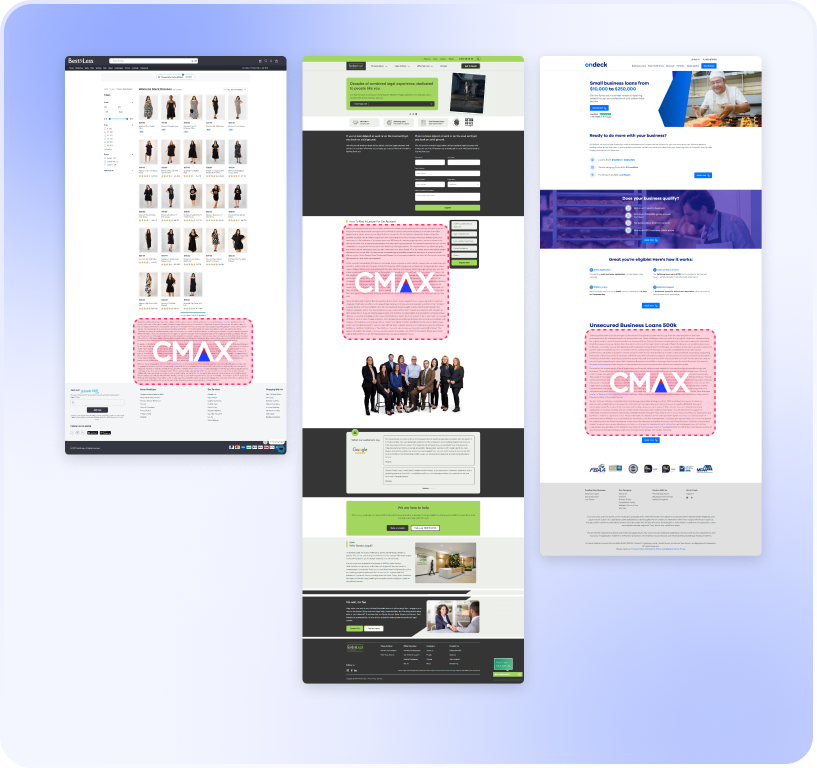
CMAX, the Agentic SEO Platform, works from this foundation, building long-tail coverage across a site’s existing pages so that wider visibility is something you can trace back to search performance, not guess at.
AI search marketing extends SEO into answer surfaces and search journeys.
Appear in AI answer surfaces.
AI search marketing improves a brand’s eligibility to appear in AI Overviews, AI Mode, and chat answers, where a customer may get what they need before ever clicking through. When you ask an AI assistant a question, it runs several smaller Google searches to build its answer.
One customer question creates multiple visibility opportunities across related subtopics, comparison pages, and supporting articles.
If you have heard vendors talk about a generative engine optimisation agency, this is the mechanism they are describing. CMAX delivers this through implementation across existing pages, a concrete model you can assess when comparing suppliers.
SEO fundamentals still decide eligibility.
Google confirms its SEO best practices remain relevant for AI features, with no extra technical requirements to appear in AI Overviews or AI Mode. A plain answer to what is generative engine optimisation begins here: useful, fresh, and indexable pages that AI systems can extract clearly.
If you have been looking at an AI SEO course to understand this space, this is the mechanism that course will keep coming back to.
Usefulness, freshness, indexability, and clear page structure determine eligibility for AI Overview search. A page that is hard to crawl, blocked from snippets, or too thin to answer a specific question clearly is less likely to appear in either search or AI results.
Nothing exotic. The same rules, applied more rigorously.
Conventional SEO alone misses too much long-tail demand.
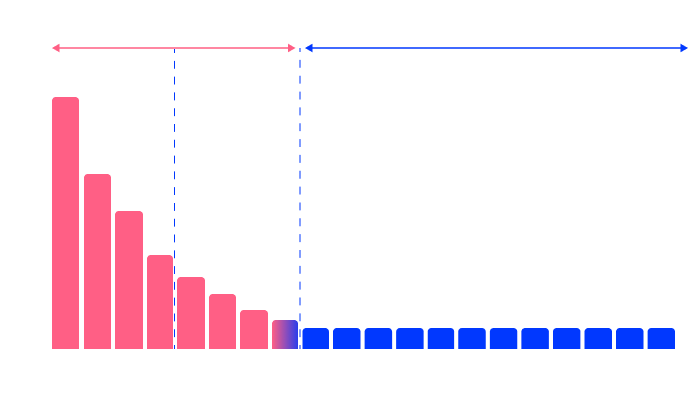
Most demand sits in the long tail.
The long tail is the specific, detailed searches people type, as opposed to short general terms. Think “timber outdoor dining table seats eight Sydney” rather than “furniture.”
Over 90% of search and AI demand is in the long tail, and CMAX targets that share of search demand because that is where most real buying behaviour sits.
A strategy built around a handful of head terms leaves most of that untouched. When one customer question fans out into eight to twelve narrower Google searches spanning comparisons, edge cases, and buying intent, a short keyword list is not a strategy, it is a sample.
To understand the scale of this, consider Nike. Nike ranks at the top for running shoes in the US, yet according to SEMrush it captures around 70,900 visitors a month from non-brand searches related to running shoes, out of more than 8.5 million monthly US searches in the category.
That is under 1% of actual search demand, for the most dominant brand in the market. Brands that rank at the top on their most important terms rarely capture more than 5% of the organic search opportunity in their category.
Coverage and freshness shape visibility.
Picture a bell curve. Most of the area sits in the wide middle.
A small group sits at each thin edge.
In AI search adoption, most brands are in the wide middle: monitoring the situation, waiting to see how it plays out, running the same SEO programme they ran three years ago. A smaller group at the thin edge is already building content coverage for the specific searches their buyers actually make, and their visibility is compounding.
The middle is not doing anything wrong. They are just not moving.
The ones at the thin edge will be very hard to catch.
In this context, AI digital marketing means deciding which end of the curve your brand sits on, because how many of the ways customers search you have a useful answer for matters more than polishing a handful of isolated pages.
Google AI Search surfaces a wider, more diverse set of helpful links than classic web search did. Search Console performance data, which is Google’s free tool showing which searches your site appears for, gives AI SEO optimisation a measurable basis for refreshing ageing category coverage and addressing newly emerging questions.
CMAX scales long-tail coverage.
CMAX is the Agentic SEO Platform, built for brands that need continuous long-tail coverage rather than one-off page production. CMAX is trained on human-reviewed, client-approved content and targets the vast majority of search demand in the long tail with continuous updates.
Standalone gap-analysis platforms can show you where gaps exist, but closing them at scale requires a programme that keeps pace as demand shifts.
This is what generative engine optimisation GEO looks like in practice: a programme that keeps pace with the way search demand shifts, not a one-time project.
The right AI search marketing programme measures visibility, not vanity metrics.
Measure mentions, visits, and revenue.
AI answers often satisfy part of a search path before a visit happens, so click volume alone understates real visibility. AI search marketing worth paying for connects Search Console impressions, assisted conversions, and revenue signals across commercially important pages, not just a ranking table.
There is a subtlety worth knowing here. Most ChatGPT users are on the free plan, which strips referral data when they click through.
Your analytics records those visits as direct, meaning visits your analytics cannot trace to a source. If your direct figures have been growing without explanation, some of that is likely AI-assisted.
AI search analytics helps measure that gap.
Connected content is easier to surface.
CMAX defines AI search marketing as measurable work across indexed pages. Dynamic Internal Linking moves authority and context across related pages rather than leaving it trapped on isolated URLs.
Full Body SEO and machine-readable product details broaden what AI retrieval systems can interpret and use.
Think of internal links like the aisle signs in a large warehouse: they tell anyone navigating the space what is stored where, and they make it far easier to find the thing you actually need. Without them, useful content sits in unmarked boxes.
Structured data, which means hidden labels in a page’s code that tell Google what things are, adds machine-readable information for products, entities, reviews, and page purpose. This matters most on category, collection, and product detail pages, exactly the pages that drive purchasing decisions.
Expect a compounding visibility curve.
With the CMAX programme, clients see first clicks in 6-8 weeks, with most programmes maturing around month six. That reflects the time publishing, crawling, indexing, internal linking, and performance feedback loops need to compound.
There is no shortcut here, and any supplier offering one is describing something else.
The goal is growing search and AI visibility while reducing paid search dependence over time. TechCrunch reported AI Overviews now reach more than 2.5 billion people a month and AI Mode has passed 1 billion monthly users, numbers that make the channel harder to ignore.
For AI marketing Australia, the same programme applies. Local spelling, Australian dollars where prices appear, and proximity signals for searches tied to specific cities.
Frequently Asked Questions (FAQ)
Can third-party websites affect what AI says about my brand?
Yes. AI systems assemble answers from multiple web sources, so review platforms, directories, forums, publishers, and partner sites can shape how your brand is described, even when your own site says something different.
Brand consistency across product details, policies, executive bios, and third-party listings is part of AI search marketing for that reason.
How can I correct inaccurate information about my brand in AI answers?
Effective AI search optimisation corrects the underlying source material rather than only the generated answer, because AI systems reflect what they find across indexed pages. Update the relevant page on your own site first, then correct the third-party listings that repeat the error, and make the preferred version easier to extract with clear headings and concise statements.
Google also provides controls such as nosnippet, data-nosnippet, max-snippet, and noindex to limit what outdated snippets from your own pages can show. For search engine marketing Australia, comparable guidance applies regardless of whether your campaigns run in Australian or US dollars.
Should I allow AI crawlers to access my website?
In most cases, yes. Blocking crawling or snippet display reduces how much of your content is available to be surfaced in search and AI answers.
Google states AI is built into Search, so robots.txt directives for Googlebot remain the main access control. Pages must be indexed and eligible to show a snippet to appear as supporting links in AI Overviews or AI Mode.
If you want search visibility but want to limit separate AI training uses, Google points site owners to Google-Extended for those controls. Local searches, for example a question about an AI marketing agency Sydney, can return different results depending on location.
That is proximity shaping discovery, not a different system.
AI Search Marketing Starts With Search Coverage
AI search marketing is still driven by what is AI search and what Google can find, index, and use across the many specific searches behind one customer question. CMAX is built around that reality: if you do not cover the searches your buyers actually make, you leave both search and AI visibility on the table.
This is what AI search Google looks like in practice. The opportunity spans Google’s AI features and the wider search paths behind each customer question, not just the blue links.
For search marketing specialists exploring an AI SEO content generator or broader generative AI optimisation, CMAX is the Agentic SEO Platform built to expand content surface area across thousands of long-tail searches and keep that content current as demand shifts. Answer surfaces reward useful, connected, up-to-date pages.
A small set of polished head-term pages does not reach them.
The most useful thing you can do right now is find out where your gaps actually are. Getting a clear picture of your current AI and search coverage is the obvious starting point.
If you’re curious as to how you’re performing on AI, book in a Missing Customer Map review with our Growth Team.
Author
Jeremy Tang
Founder and CEO of CMAX
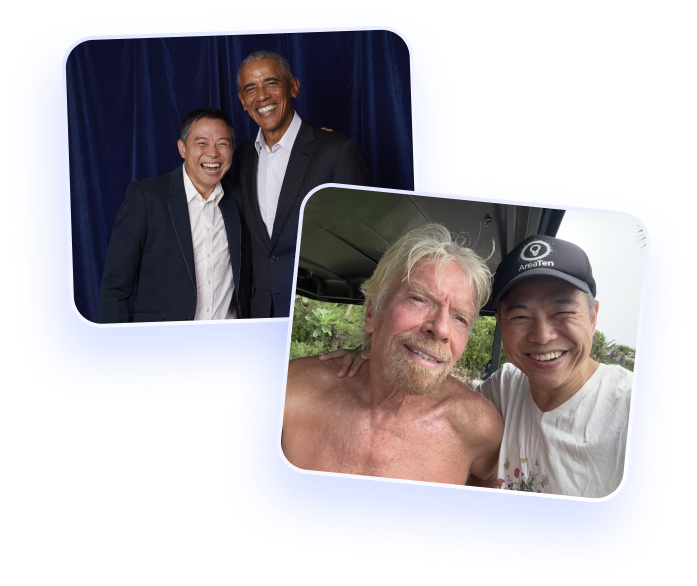
Jeremy Tang is the Founder and CEO of CMAX. With over 2 decades of experience in business consulting and digital marketing, he has successfully driven seven startup businesses, six of which achieved $1 million in revenue from zero in less than 16 months, 5 of which grew to multi-million dollar a year ventures without any external funding. Jeremy's expertise lies in streamlining business processes through technology and leveraging digital (in particular SEO) for business growth. He resides in Australia, travels extensively, and draws inspiration from his global experiences.