Long tail keywords are the specific searches people type when they already know what they need. On a commercial site, longtail keywords show product detail, comparison intent, price sensitivity or use case before anyone clicks.
“Cookware” tells you almost nothing about the searcher. Short tail keywords like it leave out the material and the cooktop the dish has to suit.
“Cast iron casserole dish for induction cooktop” leaves out nothing that matters. Within a page map, long tail keywords for SEO connect that query to one focused collection, product or guide page.
Picture a library. You ask the librarian for “a book” and she waves at the whole building.
You ask for “a beginner’s sourdough book with photos” and she walks you to one shelf. In this context, long tail keywords means the specific requests, and each one needs a shelf that answers it directly.
A long tail keyword is defined by how much it reveals about intent, product fit or buyer stage. Word count has little to do with it.
For a mid-market retailer, keyword research tools can expose hundreds of specific variants. Their combined demand matters more than any one headline estimate.
A searcher who types “cast iron casserole dish for induction cooktop” leaves no doubt about which page should answer. The commercial value sits in these searches added together, and no single term carries it.
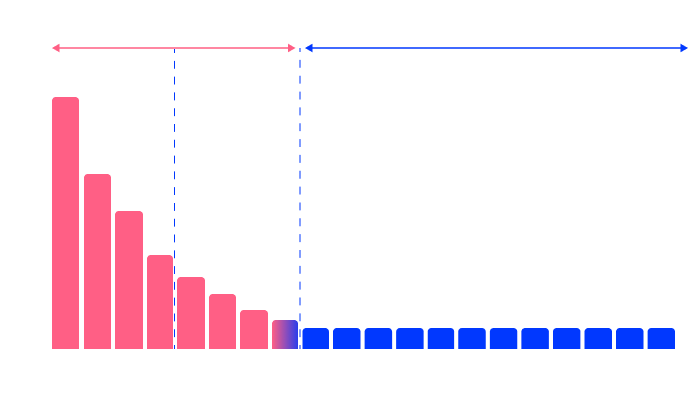
Carsales, Australia’s biggest used-car platform, captures only around 2.3% of its category’s organic search opportunity, with the remaining 97.7% spread across the long tail.
That is the gap most Google Ads budgets are quietly funding instead of closing. Google Ads takes the money either way.
CMAX works from this same premise, mapping long-tail demand to the pages built to convert it. The rest of this piece shows how that works.
Long-tail keywords are the specific searches that reveal real intent
Treat long tail keywords as clues about the buyer. Product detail, comparison intent, price sensitivity and use case all show up in the search itself, before a single click happens.
Long tail means specific intent
“Cookware” tells you almost nothing. “Cast iron casserole dish for induction cooktop” tells you the material, the cooktop it must suit and that the person is close to buying.
A page map sends that query to a focused collection, product or guide page. A generic homewares page is too broad to win it.
Lower volume, higher qualification
In keyword tools, long tail keywords often look small one by one. Yet 500 related variants around size, material, use case and comparison can add up to demand your category page never reaches.
A practical SEO keywords analysis asks whether the cluster describes buyers you can serve. The volume of a single term answers a much smaller question.
Free keyword research in a tool such as the SEO book keyword tool is enough to start.
Coverage wins when each important search gets a useful page
Search performance improves when each important intent has a page that answers it directly. An SEO keywords list that stays a spreadsheet does nothing for sales.
It should assign each intent to a category, comparison, use-case or product page.
Content surface area is the number of ways customers search that you have a useful answer for.
Buyers search in many ways
A page map should separate longtail keywords across feature, problem, comparison and price intent when one URL cannot answer all four clearly. One buyer searches “best non-stick frypan”.
Another searches “frypan for induction cooktop”. A third searches “non-stick vs stainless steel frypan”.
Treat those as separate entry points unless one page can answer all three without becoming bloated.
Fresh, connected pages stay visible
Pages age because language, products, pricing, competitors and buyer questions change. Updating SEO keywords in HTML, meaning the titles and headings on the page, is part of the fix.
A practical starting point for longtail keyword research is Search Console, Google’s free tool showing which searches your site appears for. Comparing Queries and Pages together reveals which URLs need tighter titles, opening answers, internal links or examples for the queries Google already associates with them.
CMAX scales long-tail coverage
Over 90% of search and AI demand is in the long tail. CMAX maps longtail keywords across thousands of specific ways customers describe what a brand sells, rather than targeting a handful of head terms.
CMAX is trained on human-reviewed, client-approved content. Our Agentic SEO Platform deploys and continuously updates connected pages for those searches, with useful answers mapped to real demand and kept current as search behaviour changes.
The best page map groups long-tail terms by intent and business value
A useful keyword map sorts queries by what the searcher wants and what the page helps them do next. That turns an SEO plan from a list of low-volume phrases into a publishing plan tied to categories, products, comparisons, guides and conversion paths.
In that plan, longtail keywords are specific intents assigned to a page with a clear next step.
Match queries to page roles
When you give each page a job, long tail keyword research connects broader commercial searches, high-intent product questions and supporting comparisons to the right page. Category pages target broader commercial searches.
Product pages answer high-intent feature and fit questions. Supporting pages handle comparisons, problems and “how to choose” searches.
Refresh an existing page when the query already fits a page Google shows for your site. Fewer pages chasing the same intent means your own pages stop competing with each other.
Skip low-fit low-volume terms
Before publishing, ask three questions. Does the query describe a customer you want?
Can you answer it better than the current results? Is there a credible next step after the visit?
Keyword difficulty analysis belongs alongside those checks, and a free keyword difficulty checker is enough for a first pass. One “no” and the page adds maintenance cost without adding qualified demand.
Broad, current coverage compounds visibility
Teams asking what are long tail keywords should treat the answer as a system of specific intents. A fixed list of lengthy phrases misses the point.
For retail teams, keyword research for amazon may organise marketplace demand differently from the connected category, product and guide pages used for Google visibility. New searches keep appearing as AI tools break questions into smaller searches, so the long tail keeps expanding.
CMAX targets that same long tail by focusing on breadth, connected pages and freshness rather than a handful of obvious head terms.
Frequently Asked Questions (FAQ)
How can I find long-tail keywords in Google Search Console?
Open the Performance report and review Queries and Pages together. This is also a grounded way to do keyword research for small business.
Filter for modifiers such as size, location, material, price, “best”, “vs”, “alternative” or “for”. Then prioritise pages that already have impressions but low click-through, or an average position just outside the top results.
How do I measure the performance of long-tail keywords?
Measure clusters first, then individual pages and queries. Positions come from SEO keyword tracking software, but Search Console and analytics connect related variants with clicks, impressions, enquiries and purchases.
A single long-tail term may be too small to judge alone. A cluster around one use case can bring meaningful numbers of qualified visitors.
In Search Console, track clicks, impressions, click-through rate and average position. In analytics, check whether those pages assist purchases, enquiries or demo requests.
Why do some long-tail keywords show zero search volume?
Zero volume means the tool has too little data to report demand with confidence. This is common in long tail keywords examples that come from new products, niche use cases and highly specific buyer language.
Long tail keywords stay useful when they appear in Search Console, match language from sales or support calls, or belong to a cluster already bringing relevant visitors.
Longtail Keywords Map to Pages That Convert
Longtail keywords matter when they point to a page with a clear job. CMAX is built around that idea.
Search demand grows when a site covers more of the specific searches buyers use, rather than relying on a few broad terms.
That is why we focus on content surface area across search and AI. Our pages match real intent and stay current as products, questions and language change.
For teams working to find long tail keywords and turn them into revenue, the goal is better coverage of the searches that lead to the right next step.
You can’t fix a gap you haven’t seen. A review that maps where your pages answer real searches, and where they don’t, is the quickest way to see it.
If you’re curious as to how you’re performing on AI, book in a Missing Customer Map review with our Growth Team.
Author
Jeremy Tang
Founder and CEO of CMAX
Jeremy Tang is the Founder and CEO of CMAX. With over 2 decades of experience in business consulting and digital marketing, he has successfully driven seven startup businesses, six of which achieved $1 million in revenue from zero in less than 16 months, 5 of which grew to multi-million dollar a year ventures without any external funding. Jeremy's expertise lies in streamlining business processes through technology and leveraging digital (in particular SEO) for business growth. He resides in Australia, travels extensively, and draws inspiration from his global experiences.