Most SEO programmes chase a short list of obvious search terms. Broader programmes use sge AI SEO audits to find where a brand is absent from the searches its customers are actually typing, not just the ones that look impressive in a monthly report.
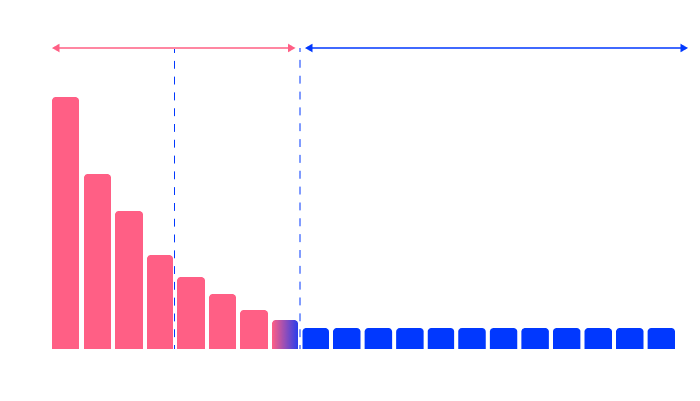
For a retailer with a large catalogueue, demand is scattered across thousands of specific searches. Even Nike, sitting at the top for “running shoes” in the US, captures under 1% of that category’s total search demand.
Everything else goes somewhere else.
That gap matters more now. AI tools retrieve their answers from Google’s index, Google’s library of pages it knows about, so the more searches you have a useful page for, the more places you can appear.
AI SEO, at its core, increases the number of specific questions a brand can answer with a relevant page. Understanding what is SEO in website terms comes down to this: every page is a potential answer to a customer question, and more relevant pages mean more chances to appear.
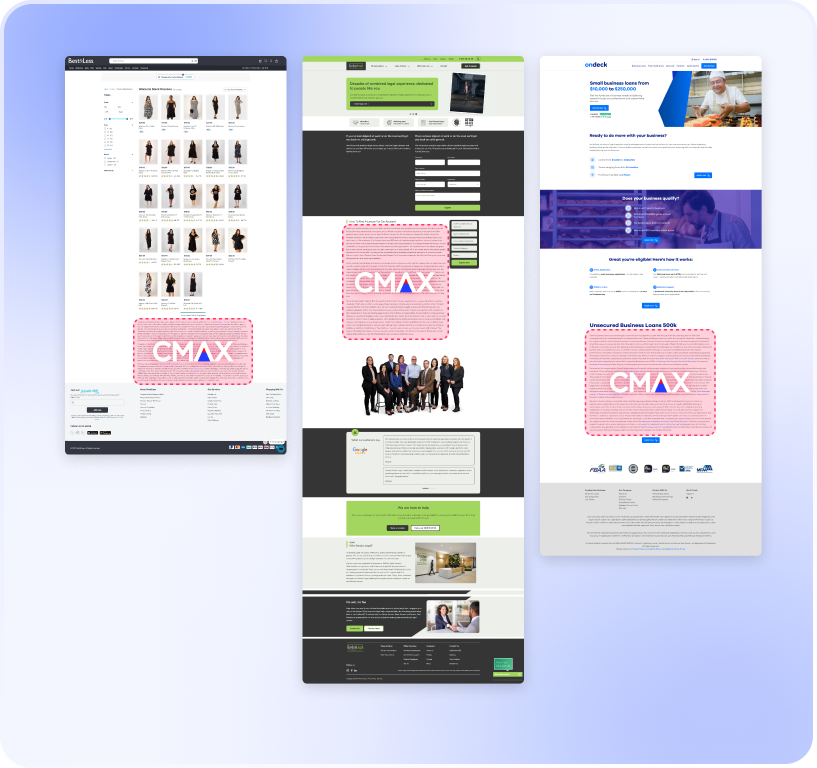
CMAX is built around this idea: broader search and AI visibility through approved content, Dynamic Internal Linking, and ongoing performance-based updates, combined into one managed programme.
AI Powered SEO Services Help Brands Cover More of the Searches That Matter
Think of a supermarket shelf-stocking team working through the night. The products are yours, the placement rules are yours, and by morning every aisle is full at a volume no single person could manage before opening.
The value is in the combination of speed and governance, not one without the other. In this context, AI powered SEO services scale in both directions: careful review and process get you to more positions faster, while careless output gets you penalised faster.
Following an AI SEO audit, keyword research, topic mapping, content production, internal linking, refreshes and reporting can operate as one continuous programme. You’re buying ongoing search coverage, not a one-off batch of pages.
An SEO automation platform connects those parts so they work together rather than as separate jobs given to separate teams.
This model suits brands with large product ranges, multiple service lines, store locations or many use cases. AI driven SEO services can cover hundreds or thousands of specific searches, where a conventional agency would work through a shortlist.
AI engines retrieve their answers by pulling from many narrower searches, so content surface area, how many of the ways customers search you have a useful answer for, becomes a direct factor in both search and AI visibility. Among the best SEO automation platforms, those that tie content production to performance data close that loop fastest.
Human Review and Approved-Source Controls Keep AI SEO Reliable
Google’s guidelines treat people-first quality as the standard for all content, AI-generated or otherwise. Content created primarily to manipulate search positions rather than inform a reader fails that standard.
For brands in regulated or high-trust categories, AI SEO optimisation requires approved claims, legal wording, compliance checks and brand voice controls before any page is published.
2.1: Approved-Source Training Supports Compliance
CMAX is trained on human-reviewed, client-approved content. That controlled source base is what keeps hundreds of published pages aligned with your internal standards and sign-off processes.
When a brand needs consistent terminology, approved claims or sector-specific wording repeated at scale, the source material defines what the platform can say. Scale only works if every page that goes live could pass your own compliance review.
An AI SEO content generator that skips this step produces volume without governance, which is a different problem from having no volume at all.
Ongoing Updates and Performance Feedback Turn Coverage into Momentum
Publishing pages is the start, not the finish. Google’s own guidance says that clear internal links help both users and search engines connect related parts of a site, and that anchor text tells Google what the linked page contains before it arrives.
AI powered SEO services can update those internal links and refresh page content as product details, seasonal demand and search patterns shift.
Regular refreshes also affect crawl frequency, how often Google’s software comes back to read a site. A page that is updated regularly is revisited more often.
That means changes are picked up faster and content stays aligned with demand as it moves.
3.1: Long-Tail Targeting Builds Early Momentum
Over 90% of search and AI demand is in the long tail, which is shorthand for the specific, detailed searches people type when they are close to a decision. CMAX targets that majority of search demand in the long tail, so the programme covers far more of those searches than a shortlist of primary keywords allows.
An AI SEO audits process can use Search Console data, Google’s free tool showing which searches your site appears for, to identify pages that need expansion, a refresh or consolidation. Most SEO programmes run by conventional agencies, using outdated methods, tell clients to expect results in six months.
CMAX’s methods allow clients to start seeing clicks in 6 to 8 weeks.
Frequently Asked Questions (FAQ)
4.1: Can AI-Powered SEO Services Integrate with My Existing CMS?
Yes, usually. AI powered SEO services work with common CMS setups through direct publishing workflows, exports or implementation support.
CMS workflows used by SEO providers in Australia may require Australian spelling and locally relevant content, while programmes in other markets follow their own approved language requirements.
A workable AI SEO strategy accounts for how approvals, templates, internal links and refresh workflows fit your existing publishing process without adding load to your marketing team.
4.2: Can Scaling AI Content Cause Keyword Cannibalization?
It can, if multiple pages target the same intent without clear differentiation. SEO ranking platforms can surface that overlap before it becomes a problem, so you can refresh or consolidate pages before two URLs start competing for the same searches.
The safer approach maps each page to a distinct search need, uses internal links to clarify relationships between related pages, and monitors performance data regularly. At scale, cannibalization is a planning and governance issue, not an inevitability.
4.3: How Long Does It Take to See Results from AI SEO?
There is no fixed industry timeline. Timelines depend on the site, its competition and how the work is done.
Any assessment of SEO services cost should account for site authority, competition, implementation requirements and the volume of approved content ready to publish.
An AI SEO consultant can assess those factors without treating a generic industry figure as a promise. Most SEO programmes run by conventional agencies, using outdated methods, tell clients to expect results in six months.
CMAX’s methods allow clients to start seeing clicks in 6 to 8 weeks.
Treat timing as a function of content surface area, freshness, internal linking and how quickly approved content moves through sign-off. AI powered SEO services fit best when the publishing process can keep pace.
AI Powered SEO Services Expand Search Coverage
AI powered SEO services make most sense as a coverage model: not a faster way to push out pages, but a systematic way to answer more of the searches your buyers are already making, across Google and AI. An SEO audit for the Australian market uses local Search Console data to show where Australian demand exists that your site is not answering.
That is why CMAX focuses on content surface area, freshness and the links between related pages rather than a small list of obvious terms. CMAX is the Agentic SEO Platform.
Its agentic approach applies SEO for AI search principles to scale content from approved brand material, update it using performance data, and build the momentum that broader visibility depends on.
If you want to know where your brand could be showing up and is not, that is a question worth answering before your next planning cycle. Whether you’re exploring free AI SEO platforms or a fully managed programme, understanding your long-tail gap is a sound first step.
You can also explore what AI and SEO together look like in practice through an AI SEO course or by reviewing a generative AI SEO service in detail.
The most direct way to see your actual position is a Missing Customer Map review, which maps where demand exists against where your site currently answers it.
If you’re curious as to how you’re performing on AI, book in a Missing Customer Map review with our Growth Team.
Author
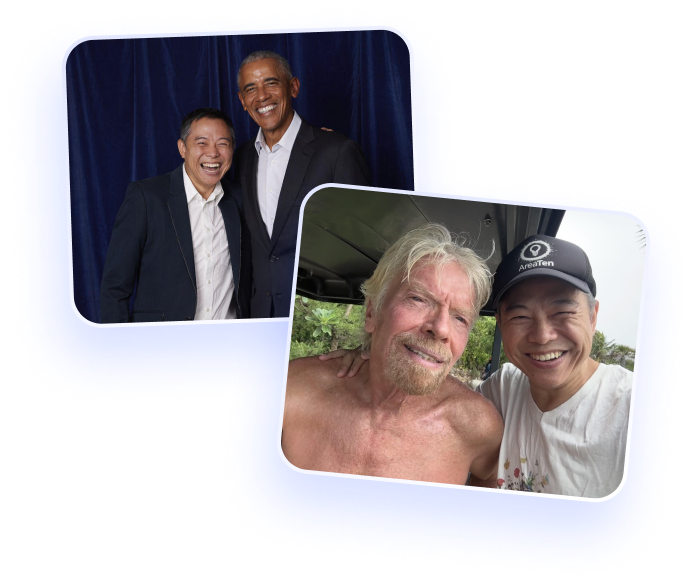
Jeremy Tang
Founder and CEO of CMAX
Jeremy Tang is the Founder and CEO of CMAX. With over 2 decades of experience in business consulting and digital marketing, he has successfully driven seven startup businesses, six of which achieved $1 million in revenue from zero in less than 16 months, 5 of which grew to multi-million dollar a year ventures without any external funding. Jeremy's expertise lies in streamlining business processes through technology and leveraging digital (in particular SEO) for business growth. He resides in Australia, travels extensively, and draws inspiration from his global experiences.