At their core, SGE AI SEO audits check whether customers can find your site on Google and inside tools like ChatGPT.
Most audits you’ve seen stopped at technical fixes: broken links, slow pages and missing metadata. The answer to what is SEO audit goes further. It covers whether you can be found, and which fixes will earn money first.
Those fixes matter. They don’t tell you whether your site answers the questions customers type before they buy, or whether Google can retrieve and connect your pages when an AI tool builds an answer.
An AI SEO audit shows what is blocking discoverability first
Crawl, index and page health
Search and AI visibility start at the same gate: can Google get to the page? Our AI SEO audit first checks whether Google can crawl each page, add it to its index (the list of pages Google knows about), and read it correctly once it loads. Google has confirmed that pages appearing as supporting links in AI Overviews or AI Mode must already be indexed and eligible to appear in standard Google Search. The checks cover blocked crawling, noindex tags on commercial pages, incorrect canonicals, duplicate URLs, soft 404s, redirect chains, slow templates and thin category pages.
Content gaps, links and freshness
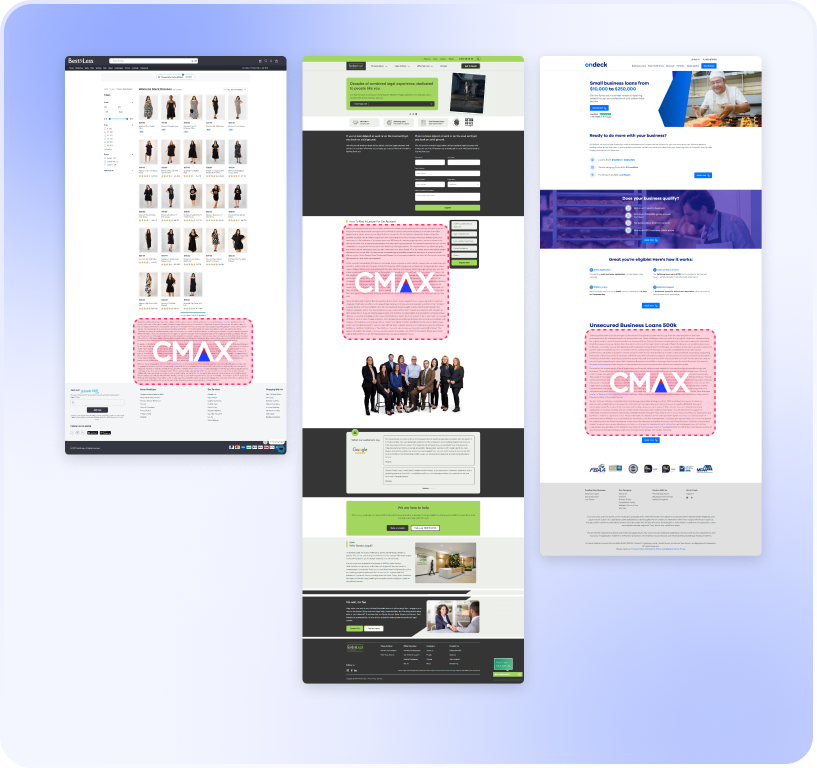
A technical SEO audit then measures content surface area: how many of the ways customers search you have a useful answer for. Most brands hold pages for broad category terms but none for searches around use cases, comparisons, locations, materials or buyer problems. At this stage, AI SEO audits separate three issues: missing pages for high-intent searches, weak internal links that leave important pages unsupported, and stale copy that no longer reflects current products, pricing or customer behaviour.
It separates standard SEO fixes from the AI-era checks that now matter
AI retrieval and interpretation signals
A standard audit asks whether a page can rank. An AI SEO audit also asks whether the page is easy to retrieve, connect and interpret for more specific questions.
Google’s AI features can use query fan-out. Picture an assistant booking a team offsite for your CEO. They don’t make one call. They ring a venue, then a caterer, then stitch the answers into one plan, and a caterer with no phone number never makes the plan. In this context, query fan-out means an AI tool runs several smaller Google searches for one question, and your site needs a page that answers each smaller question or it’s left out of the answer.
Many SEO ranking tools report positions, while AI powered SEO services review index coverage, schema (hidden labels in a page’s code that tell Google what things are), crawl frequency (how often Google’s software comes back to read a site), internal links and supporting page clusters.
Where standard audits stop early
Most audits stop after technical remediation: redirects, images and metadata. A practical answer to what is technical SEO audit starts with those and also covers connected content and update cadence. An audit that ignores query coverage and update cadence fixes the plumbing and leaves the revenue problem. You can’t rank, or be retrieved, for questions your site doesn’t answer.
Evidence over vanity metrics
Unlike a static technical report, an AI SEO audit ranks actions using Search Console impressions, clicks, average position, and pages gaining or losing visibility. Search Console is Google’s free tool showing which searches your site appears for. For a generative AI SEO service to act on the findings, the output must be a ranked plan built on those same numbers. An effective SEO technical audit checklist puts indexation before copy rewrites, strengthens internal links before adding more orphaned pages, and focuses work where demand, intent and business value overlap.
CMAX turns audit findings into a practical action plan
Human-reviewed actions
CMAX is trained on human-reviewed, client-approved content, so audit findings become concrete next steps for pages, links and updates instead of generic AI copy. We define an AI SEO audit as the starting point for deciding what to publish, refresh, link, measure and revisit.
Long-tail coverage with connected pages
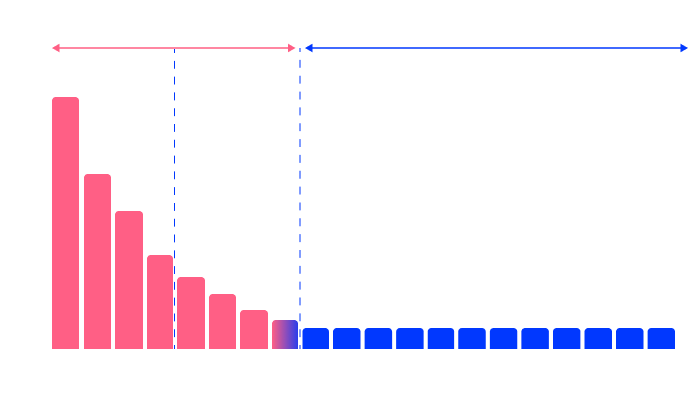
Over 90% of search and AI demand is in the long tail, so the audit judges visibility for detailed searches as well as broad category terms. A technical SEO audit consultant can connect those findings to CMAX’s Dynamic Internal Linking and Full Body SEO approach, pointing attention at the pages that need work first.
Faster operational follow-through
Most SEO programmes run by conventional agencies, using outdated methods, tell clients to expect results in six months. CMAX’s methods allow clients to start seeing clicks in 6 to 8 weeks. A technical SEO audit template should connect each finding to continuous publishing, linking and refresh work. Timelines still depend on the site, its competition and how the work is done. An AI SEO strategy with a faster feedback loop shows which changes improve discoverability.
How often should you run an AI SEO audit?
Run a full audit after major changes to templates, navigation, linking, content strategy, product range, URLs or indexation. For ongoing monitoring, a quarterly strategy review paired with monthly checks on indexed pages, clicks, impressions, and declining or thin priority topics is a sensible cadence. A regular AI SEO audit keeps priorities tied to site changes.
Should you rerun an SEO audit after a website redesign?
Yes. After a redesign, an AI SEO consultant should check whether changes to templates, navigation, links, metadata, canonicals, redirects or copy have made the site harder to crawl, index or interpret. A redesign is a clear SEO audit example, because all of those can change at once.
Does Search Console track ChatGPT or Perplexity citations?
No. Search Console reports Google Search performance only. Prompt tracking tools that repeatedly query ChatGPT and record brand appearances are directional, and they aren’t a source of truth. Search Console remains useful because most AI discovery depends on what Google can crawl, index and retrieve. Unlike broader SEO analytics tools, it reports Google performance through indexed pages, impressions, clicks and the searches where a site appears. An SEO checker tool free online or an SEO keyword tool free of charge shows a slice of the same picture.
AI SEO Audit Starts With Discoverability Blocks
An AI SEO audit is most useful when it shows what is stopping visibility first, then what will expand it. A SEO competitor analysis tool may expose comparative gaps, while we first prioritise crawl, index and page issues before expanding coverage and internal links. Fix those, then build the coverage, internal links and freshness that bring in more of the searches that matter.
You still can’t rank, or be retrieved in AI search, for topics your site doesn’t cover. We expand content coverage and connect pages so they keep improving, supporting SEO for AI search without losing sight of standard Google discoverability. You can find out where your gaps are by looking at your own data, with no commitment attached.
If you’re curious as to how you’re performing on AI, book in a Missing Customer Map review with our Growth Team.
Author
Jeremy Tang
Founder and CEO of CMAX
Jeremy Tang is the Founder and CEO of CMAX. With over 2 decades of experience in business consulting and digital marketing, he has successfully driven seven startup businesses, six of which achieved $1 million in revenue from zero in less than 16 months, 5 of which grew to multi-million dollar a year ventures without any external funding. Jeremy's expertise lies in streamlining business processes through technology and leveraging digital (in particular SEO) for business growth. He resides in Australia, travels extensively, and draws inspiration from his global experiences.