Hundreds of category pages is too many to research, write and update by hand. AI search optimisation services do that work through automation.
Automation doesn’t know which products matter to your business, which claims your legal team has signed off or which language fits your brand. People set those boundaries. They give AI search engine optimisation its limits.
So human oversight sits inside the system from the start. It isn’t bolted on later.
A fixed keyword list and a quarterly content calendar suit a slower market. That’s part of why many SEO programmes feel stuck while search behaviour shifts toward longer, more specific queries.
You’ll see this work sold as generative engine optimisation GEO, answer engine optimisation aeo, LLM SEO or generative search engine optimisation. What is generative engine optimisation in practice? It’s SEO, done so your pages answer the questions AI engines ask. Same site, same discipline, wider reach.
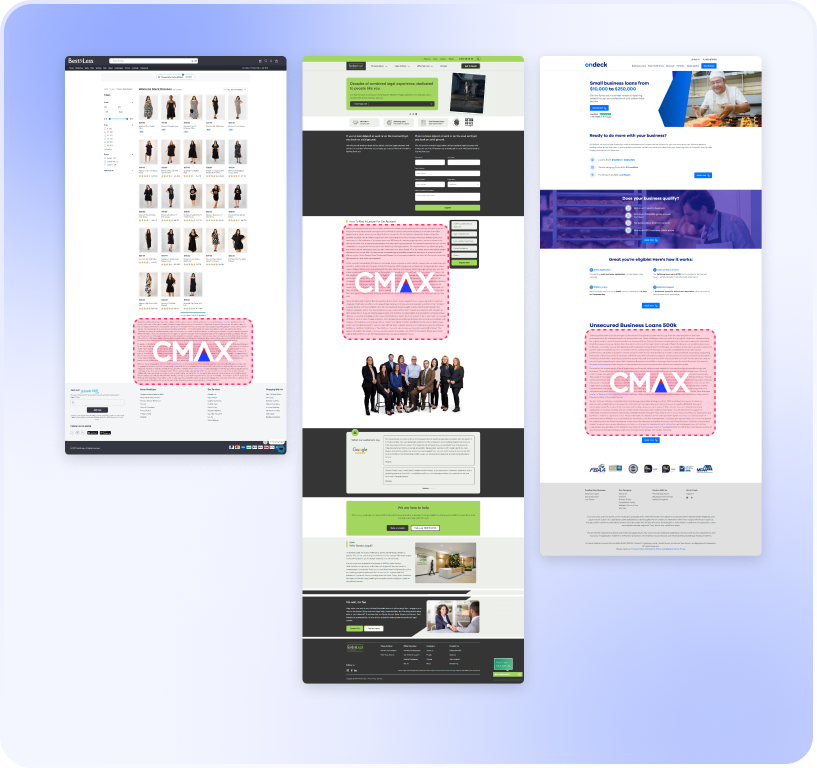
CMAX is one example of a platform built around this balance. It’s trained on content the business has already approved, so the AI expands and refreshes pages within boundaries a person has set and doesn’t publish unchecked.
AI SEO services combine automation with human strategy, so the work stays useful and on brand.
AI does the heavy lifting
At category scale, AI SEO services automate long-tail opportunity grouping. People decide which products to push and which wording is approved or banned. Those commercial controls are ones automation can’t set for itself.
Long-tail demand changes the brief
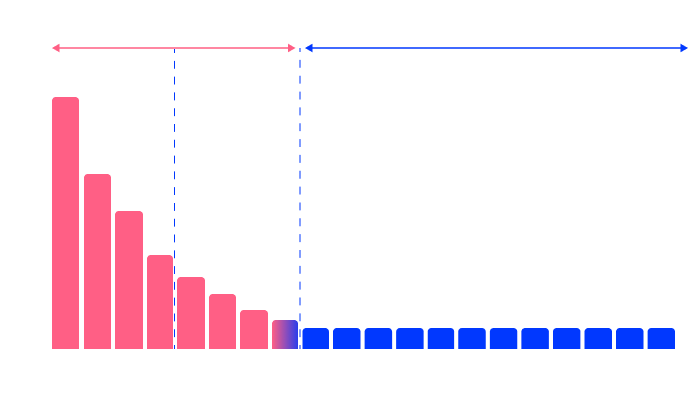
Over 90% of search and AI demand is in the long tail, the specific, detailed searches people type. The biggest missed opportunity is often the thousands of product, use-case, comparison and problem-based searches around the head term.
Picture a hardware store with its ten best sellers in the front window. A customer who wants a 6mm tile drill bit walks past the window and buys from whichever shop has a labelled aisle for it. In this context, the long tail means the thousands of specific searches that sit in the aisles, and long-tail content means a labelled aisle for each one.
To optimise content for AI search, CMAX builds answers around the specific product, comparison and problem-based questions found throughout the long tail.
Google has also said 15% of the searches it sees every day are new, so a fixed keyword list goes stale.
Location changes the brief too. A campaign built around AI search marketing Brisbane will lean on different categories and language from one built for Sydney.
The strongest AI SEO services cover more search demand without turning content generic.
Content surface area matters
Content surface area is how many of the ways customers search you have a useful answer for. Across hundreds of category pages, AI SEO services can expand it while internal links keep specific buying answers connected and crawlable.
A broad category page won’t capture “best modular sofa for small apartment” or “interest-free furniture finance Australia”. Those searches need their own pages built around specific buying intent. At that scale, AI SEO services only create value when every page is clear, crawlable and connected through links that help Google discover and index it.
CMAX keeps pages connected
CMAX grounds its AI content in human-reviewed, client-approved material before pages are expanded, refreshed or connected through Dynamic Internal Linking. Dynamic Internal Linking and Full Body SEO connect product, comparison and problem-solving pages so each one reinforces the others.
Static programmes lose freshness
Most conventional agencies build around a small keyword set, a quarterly calendar and a monthly report that arrives after the market has moved. That’s a history book with charts. Good automated SEO reporting shows freshness, indexation and commercial movement instead.
Freshness, internal linking and publishing velocity are practical disciplines for judging an AI search optimisation agency. The same test applies to a generative engine optimisation agency or an answer engine optimisation agency. Continuous refreshing makes AI SEO services more responsive than a quarterly calendar and a monthly report delivered after demand has shifted.
Buyers should compare AI SEO services on control, freshness and measurement, not on buzzwords.
Query fan-out changes optimisation
AI search engines such as ChatGPT and Google’s AI Mode answer a question by running several smaller searches behind the scenes. They pull from what ranks across those subtopics.
Imagine asking a friend for a restaurant tip. Before replying, she texts four people who’ve eaten there, then recommends the place most of them mention. In this context, query fan-out means the AI plays the friend: it sends out smaller questions and recommends the brand whose pages answer most of them.
Unattended content generation, such as ChatGPT for SEO drafts with no source checks, skips this. AI SEO services use approved source material, indexation data and human controls to guide updates across connected subtopics. Google confirms AI Overviews and AI Mode may use this query fan-out technique. Pages shown as supporting links must be indexed and eligible to appear in Google Search with a snippet.
A single page targeting one keyword won’t cover that spread. The average cost of SEO services depends on site competition, content scope, implementation and measurement, so no single universal figure holds. Pages need to answer connected questions: price, suitability, comparisons, use cases, limitations and proof.
Measurement should follow discovery
Search Console shows which searches your site appears for. Google confirms clicks and impressions from AI features are included in the Performance report under Web Search. AI search optimisation tools can use that data to track impressions, indexation and clicks moving toward commercial pages.
Reports should also show pages published and refreshed, and whether your search visibility is growing where sales happen. Unexplained direct visits can signal demand created outside trackable journeys, such as zero click search, where the answer satisfies the reader before any click.
Momentum is the real operating metric
CMAX targets the long tail, where most search demand sits, with reporting tied to business performance. Within a measured programme, AI can identify what Google has indexed, where impressions appear, which pages need a stronger answer, which links to add and which content is going stale.
A sound LLM SEO strategy asks any provider, including those selling answer engine optimisation services, to report pages live, pages refreshed, indexation, click growth and assisted revenue.
Can AI SEO services work for regulated industries?
Yes, if the service runs controlled workflows rather than unattended publishing. Ask any provider who approves source material, who signs off content and how changes are tracked after publication. A staged workflow with approved sources, controlled drafting and human review makes generative AI search engine optimisation workable in regulated industries.
How do AI SEO services handle compliance reviews?
The safer model is a staged review. AI prepares a draft against approved source material. Humans then check factual claims, required disclaimers, prohibited wording and product limitations before anything publishes. CMAX is trained on human-reviewed, client-approved content, so the model starts with approved facts and brand boundaries already in place.
Do strong Google results mean AI citations?
No. Strong placement in classic Google results can improve the chance of being retrieved. Google says the features in its Google AI Search engine, AI Overviews and AI Mode, use different models and techniques, and their links can vary from classic search. Publish indexable, well-structured pages that answer specific questions, supported by content covering related questions.
A plan for LLM SEO Australia needs Australian regulatory and market language. US coverage needs its own, though both depend on indexable answers to specific questions.
AI SEO Services Start With Human Control
AI SEO services work when automation expands coverage and people set the rules. CMAX is the Agentic SEO Platform, built on approved brand material so content scales across the long tail without drifting off message or off brief.
Most demand sits in the thousands of specific searches broad category pages never reach. CMAX combines human controls with AI SEO, expanding content surface area through fresh, connected pages that cover more specific demand across Google and AI, with reporting tied back to business performance.
The quickest way to see which specific searches your site misses is to have someone map them. You can look at the gaps first and decide on any action afterwards.
If you’re curious as to how you’re performing on AI, book in a Missing Customer Map review with our Growth Team.
Author
Jeremy Tang
Founder and CEO of CMAX
Jeremy Tang is the Founder and CEO of CMAX. With over 2 decades of experience in business consulting and digital marketing, he has successfully driven seven startup businesses, six of which achieved $1 million in revenue from zero in less than 16 months, 5 of which grew to multi-million dollar a year ventures without any external funding. Jeremy's expertise lies in streamlining business processes through technology and leveraging digital (in particular SEO) for business growth. He resides in Australia, travels extensively, and draws inspiration from his global experiences.