Most advice on NLP SEO boils down to “use more synonyms.” That advice misses the point by a wide margin.
Natural language processing is how Google reads meaning, not just words. It identifies entities, reads context, and works out what a searcher is actually trying to do.
A page that explains a topic clearly, names the right entities, and answers the real question behind a search will connect with far more searches than a page built around one repeated phrase. That is what the term means, and it is worth understanding before you spend another dollar on content.
This matters most for research-led queries, where someone is still learning and comparing before they are ready to buy. Those visitors are often the ones who eventually convert, and they are largely invisible in a report that only tracks your top ten keywords.
Even in broader SEO services discussions, the real question is whether a page makes its topic unmistakable through entities, context, and real question-and-answer patterns, not through keyword variety alone.
How NLP SEO helps Google process meaning, entities, and intent
Google does not match pages to searches word-for-word anymore. It groups concepts.
“Customer churn,” “retention loss,” “subscriber drop-off,” and “cancellation rates” are natural language processing examples of different phrases Google recognises as the same problem. A page that covers the concept well will rank for all of them.
A page optimised for one phrase will rank for one.
Think of it like a well-organised hardware store. The signage says “plumbing,” not “pipes, tubes, taps, and fittings” on separate signs.
Google works the same way: it files your page under a concept, then retrieves it for every related search.
Beyond exact-match keywords
Content that explains a concept clearly consistently outperforms content that mirrors one phrase. When Google can map your page to a concept, it does the matching.
Your job is to make the topic unmistakable.
Strongest for informational intent
NLP matters most when someone is trying to learn, compare, or make a decision. Those pages need stronger definitions, concrete examples, and side-by-side distinctions.
A page answering “is SEO important” cannot get away with a vague yes. It has to satisfy the learning intent behind the question before it earns a click or a conversion.
In practice, this applies whether you are targeting a broad topic or a local one. A page like SEO services Hobart still needs to answer the research questions a buyer asks before they are ready to commit.
What to optimise for stronger relevance across long-tail searches
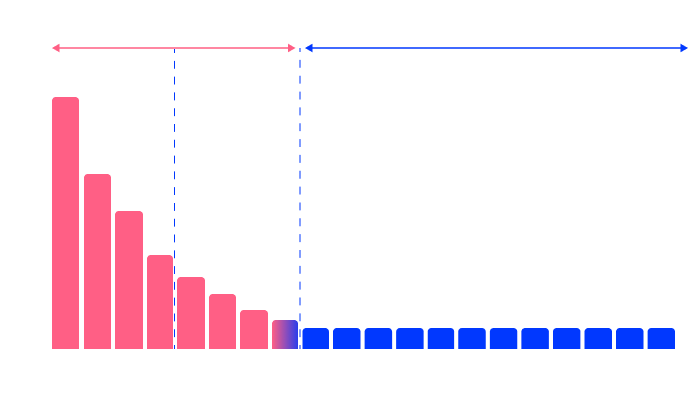
The long tail is the specific, detailed searches people type, as opposed to short general terms like “furniture.” Google sees approximately 15% new searches every day.
Most of those new searches are long-tail. A site with thin coverage misses most of them.
Entities, coverage, and structure
Entity-rich content tells Google who, what, and how a topic connects to related subtopics, use cases, and decisions. Clear headings, direct definitions, and tightly grouped supporting sections give your on page SEO a structured way to signal those connections.
On page SEO analysis starts here: not with a score checker, but with asking whether a page actually covers the topic.
The on page SEO process is not a one-time task. The on page SEO steps that matter are definition, entity coverage, real customer phrasing, and structure.
An on page SEO score checker can flag issues, but it cannot tell you whether your content is thin.
Links, freshness, and context
Internal links show Google which pages belong together. A main guide, supporting articles, and use-case pages, connected clearly, give a SEO company the topic relationships that reinforce relevance across a whole site.
Search language also shifts over time. Examples age.
Content that covered a topic well two years ago can lose relevance when terminology, proof points, or product context fall behind. Freshness is part of on page SEO, not an optional extra.
What works in practice
NLP SEO is a content-system problem, not a page-editing problem.
When you ask an AI tool a question, it runs several smaller searches and builds its answer from what it finds. That process, called query fan-out, means one AI answer can draw from eight to twelve separate searches.
Programmatic SEO needs enough coverage to match multiple search formulations, not just the obvious one.
Tactics alone do not fix thin content
Synonyms, schema, and tool-generated scores can support relevance. They cannot compensate for shallow coverage, weak structure, or outdated information.
Google’s own guidance for AI search visibility calls for unique content, strong organisation, good page experience, and helpful images and video. Shortcut tactics only carry weight when the underlying content is already complete and well maintained.
If you are wondering whether SEO explained material about “LSI keywords” still applies, it does not. LSI is an outdated term for an outdated approach.
Cover the topic with the right entities and supporting subtopics. Keyword repetition makes content harder for readers and search engines alike.
Where we fit
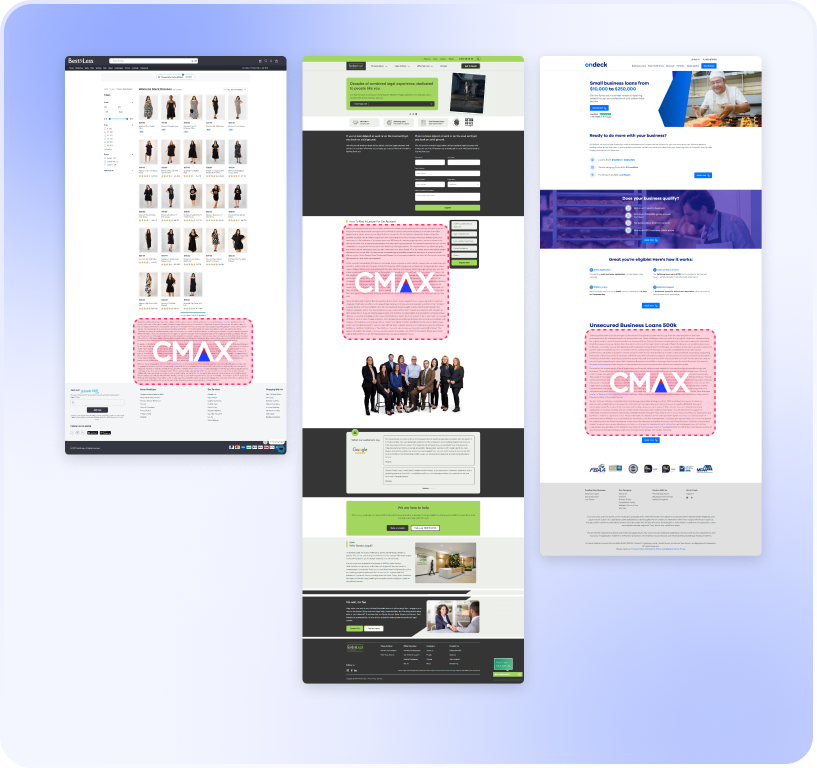
CMAX is the Agentic SEO Platform, built around long-tail coverage, continuous updates, Dynamic Internal Linking, and human-reviewed content. Natural language processing AI works from your approved brand assets.
Human review keeps output accurate and on-brand.
Frequently Asked Questions (FAQ)
Does NLP help with voice search SEO?
Yes. Voice queries run longer and more conversational than typed searches, and they are more intent-specific.
A page that answers the natural-language question directly, names the entity or category clearly, and surfaces the main answer early gives search engines something easy to extract and return.
Should podcasts and videos have transcripts for SEO?
Transcripts turn spoken content into text Google can read. Without text on the page, Google has limited context about what the media covers.
Google’s video guidance recommends descriptive text on the watch page alongside useful metadata. A concise transcript or summary helps the page stay SEO optimised around the topic and questions the media covers, and it strengthens relevance for related searches.
Are LSI keywords still useful for NLP SEO?
No. LSI is a term from an earlier era of search, and treating NLP SEO as a synonym-stuffing exercise gets the concept wrong. Cover the topic with the right entities, supporting subtopics, and intent signals.
Repeated phrases make content harder to trust, not easier to rank.
Is SEO important for small business?
Is SEO important for small business? More than most small businesses realise.
Paid search costs keep rising. Organic search, including search and AI visibility, compounds over time when content is accurate, linked, and refreshed.
The question is whether your content system can keep up, or whether it is already going stale. Aio SEO depends on coverage that stays connected and current, which is the same thing semantic SEO has always required.
Coverage beats clever wording
NLP SEO works when a page makes its topic unmistakable, not when it repeats a phrase more often. CMAX is the Agentic SEO Platform, built for the long tail Google and AI answers actually pull from, which is why AIO SEO depends on coverage that stays connected and current.
Our agents deploy and update content for the thousands of ways customers search for what you sell. Publishing one page is easy. Keeping thousands of them accurate, connected and current is the part that decides whether you show up.
That’s the work CMAX does. Content trained on your approved brand assets, checked for performance, and refreshed on an ongoing basis, so coverage grows instead of going stale. For CMAX, the question “is SEO important for small business” connects to keeping approved-brand content accurate, linked, and refreshed over time.
You don’t need a new team to run it. You need a system that keeps learning what customers actually ask, and keeps answering it. Get in touch with CMAX to see how stronger coverage can support the searches your customers are already making.
Author
Jeremy Tang
Founder and CEO of CMAX
Jeremy Tang is the Founder and CEO of CMAX. With over 2 decades of experience in business consulting and digital marketing, he has successfully driven seven startup businesses, six of which achieved $1 million in revenue from zero in less than 16 months, 5 of which grew to multi-million dollar a year ventures without any external funding. Jeremy's expertise lies in streamlining business processes through technology and leveraging digital (in particular SEO) for business growth. He resides in Australia, travels extensively, and draws inspiration from his global experiences.