Questions about AI SEO usually start when ChatGPT recommends a competitor. Nothing focuses a marketing team like that. At its broadest, what is AI SEO means building pages that work across Google Search and the AI answers built on top of it, including AI Overviews and AI Mode. Those answers come from AI search engines that read the web much as Google does.
AI SEO is one job done for a bigger audience. It isn’t a separate channel sitting next to your normal SEO. Effective AI search engine optimisation gives one useful page enough clarity to rank in Google and to be read and retrieved by AI.
Pages still need to rank in Google and make sense to a machine. They also need to be useful enough for AI tools to pull from when they answer a question. Google itself says the fundamentals haven’t changed, even with AI Overviews and AI Mode in the mix.
People use “AI SEO” to mean two different things. One is using AI tools to help with SEO tasks. The other is optimising your site so AI can find and cite it. Many AI search optimisation tools help with keyword analysis or drafting.
CMAX works on the second meaning. We build the specific pages that both Google and AI tools draw answers from.
AI SEO optimises for how people and AI find answers
AI SEO is SEO expanded for search and AI visibility. The same page must rank, help Google read its answer, and be useful enough for AI to retrieve or cite. Google confirms that SEO best practices remain relevant for AI Overviews and AI Mode, its Google AI Search engine experience, with no special optimisations required beyond sound fundamentals.
Two meanings of AI SEO
The first meaning is using AI inside the SEO workflow to analyse keywords, brief pages, draft content or find internal linking gaps. Judge anything in this group, including ChatGPT for SEO, against concrete tasks such as briefing pages or finding internal link gaps.
The second meaning is optimising your site so AI-driven search can find and cite its pages. It carries more strategic weight, because it pushes your team toward the thousands of specific questions customers actually search.
Why AI SEO matters now
AI interfaces change how discovery starts, but they still pull source material from the web. To optimise content for AI search, CMAX builds specific pages that AI engines can retrieve from the web and connect to relevant sources.
Google says AI Overviews and AI Mode surface links from Search. OpenAI says ChatGPT can search the web and link to sources. When an AI answer satisfies the searcher, you get a zero click search unless your page is the source being cited. The job now covers search visibility in conventional results and in AI-generated answers.
The core of AI SEO is still coverage, clarity and freshness
Coverage, clarity and freshness give you a practical framework for what is AI SEO. Visibility comes down to three questions. Do you have a page for the exact angle searched? Is it clear to a machine and a buyer? Is it current enough to trust?
People searching answer engine optimisation aeo want one thing: clear pages that automated systems can read and present as the right answer.
Long-tail coverage matters most
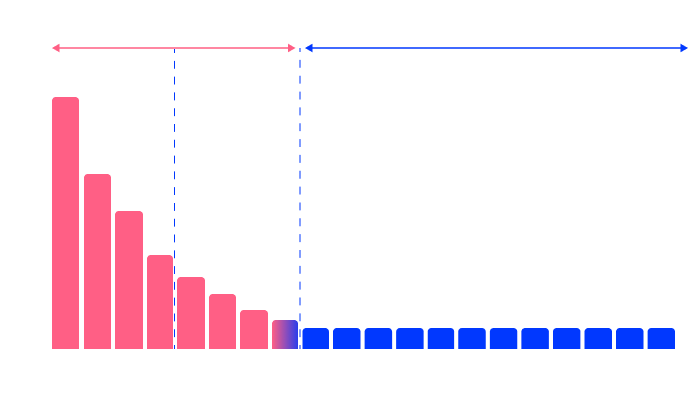
Over 90% of search and AI demand is in the long tail. That means very specific searches, such as “best sofa bed for small apartment with storage”. Each one is rare. Together they are most of the demand.
Picture a paint shop. One shop has a single tin on the counter marked “white.”
The shop next door has a wall of named shades, including a warm white for a north-facing bedroom and a cool white for a rental. A customer asks the staff what to buy, and the staff sends them to the shop that has the exact shade.
In this context, long-tail coverage means giving each specific need its own named page, like a named shade on the wall, instead of one tin.
Content surface area is how many of the ways customers search you have a useful answer for. More surface area gives search and AI more pages to retrieve.
Keywords still matter
You still can’t rank for something you don’t talk about. The question “What is generative engine optimisation?” has a short answer here: one AI prompt can fan out into several smaller Google searches to build one answer. A single broad page won’t cover that ground. A cluster of specific pages can.
Freshness and connected content
Facts go stale. Prices change, regulations change and product names update. Google recommends making content findable through internal links. Dynamic Internal Linking keeps related pages connected as the content base grows, and continuous updates keep the facts on those pages current.
AI SEO works best when it extends SEO
Google states that pages shown as supporting links in AI Overviews or AI Mode must be indexed and eligible to appear in Search with a snippet. That means every new label still leads back to Google’s index. Any generative engine optimisation agency still depends on pages entering that index and staying eligible to appear with a Search snippet.
SEO, GEO and AEO compared
SEO targets positions in search results and clicks. Generative engine optimisation GEO targets citation inside generated answers. AEO (answer engine optimisation) targets selection as the answer. Generative search engine optimisation and generative AI search engine optimisation are two more names for the same work. So is LLM SEO, and an LLM SEO strategy starts with the same indexed pages as everything else.
All of these draw from the same indexed content. Funding separate retainers for a shared foundation is where budgets leak. Before you hire an AI search optimisation agency, ask which of its AI search optimisation services your SEO doesn’t already cover.
CMAX’s Agentic SEO approach
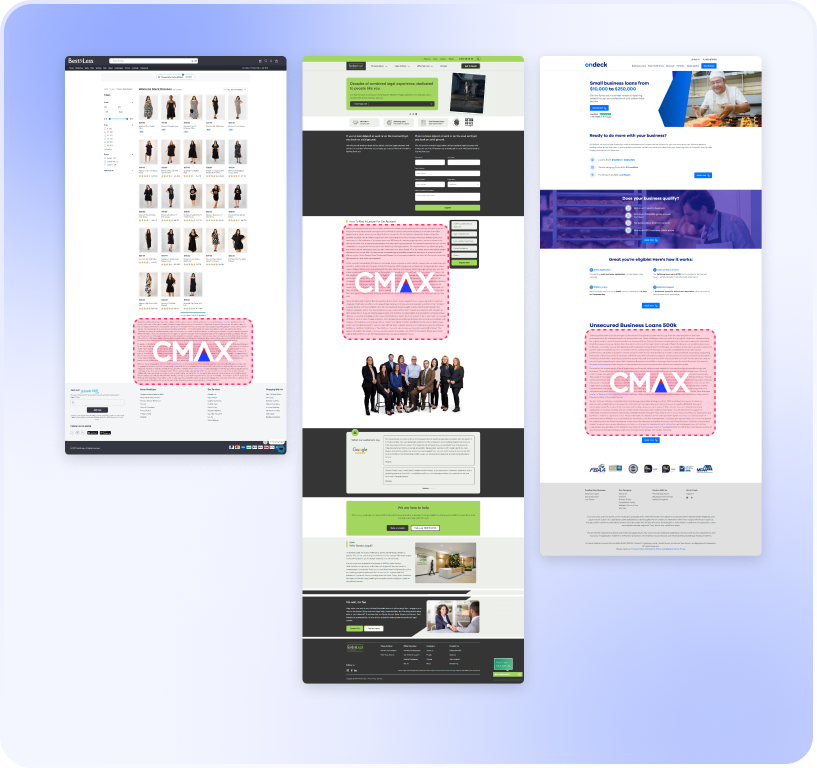
CMAX is the Agentic SEO Platform. It combines Full Body SEO with Dynamic Internal Linking, and CMAX is trained on human-reviewed, client-approved content. CMAX targets that same long tail of search demand.
Most SEO programmes run by conventional agencies, using outdated methods, tell clients to expect results in six months. CMAX’s methods allow clients to start seeing clicks in 6 to 8 weeks.
Can AI-generated content hurt my SEO?
It can, when it’s thin, inaccurate, duplicated or published without editorial control. Google asks whether the page helps a real buyer and can be trusted. Whether AI wrote it isn’t the test. Any automation needs editorial controls to stop weak pages reaching publication.
Google still requires no special schema or AI-only file for content to qualify for visibility. Schema adds hidden labels to a page’s code that tell Google what things are. It doesn’t create visibility on its own.
Can anyone guarantee your brand will appear in ChatGPT?
No. Answers vary by wording, model, location, freshness and sources, and OpenAI states citations can be incomplete, outdated or incorrect. AI SEO includes visibility work, but it can’t promise inclusion in ChatGPT or any other AI engine. Be wary of any answer engine optimisation agency or answer engine optimisation services that sell fixed inclusion, prompt tricks or citations from schema alone.
How do you measure AI SEO success beyond site visits?
Search Console, Google’s free tool, shows which searches your site appears for. Track non-brand query coverage, long-tail impressions, clicks to commercial pages and assisted conversions, which are the sales a search helped start.
Prompt tracking tools repeatedly ask ChatGPT questions and record whether your brand appears. Treat them as a directional signal only. CMAX connects its reporting to sales, and Search Console supplies the search data behind it.
Same Search Rules Define What Is AI SEO
What is AI SEO gets simpler when you treat it as a visibility problem across every place people look for answers. Our view is direct: AI has expanded the number of searches and questions your content needs to cover, while the SEO fundamentals still do the work.
That is why we connect search intent with content surface area and freshness, covering specific demand across both search results and AI retrieval. If customers search in thousands of specific ways, and AI tools retrieve from what already ranks, the gap is usually the coverage you don’t yet have.
Teams looking for LLM SEO Australia support or AI search marketing Brisbane help are asking the same question you are. Unlike a conventional automation platform, we expand long-tail coverage using content built from approved business assets.
You don’t need to commit to anything to find out where your gaps are. A review maps the questions your buyers ask that your site doesn’t yet answer.
If you’re curious as to how you’re performing on AI, book in a Missing Customer Map review with our Growth Team.
Author
Jeremy Tang
Founder and CEO of CMAX
Jeremy Tang is the Founder and CEO of CMAX. With over 2 decades of experience in business consulting and digital marketing, he has successfully driven seven startup businesses, six of which achieved $1 million in revenue from zero in less than 16 months, 5 of which grew to multi-million dollar a year ventures without any external funding. Jeremy's expertise lies in streamlining business processes through technology and leveraging digital (in particular SEO) for business growth. He resides in Australia, travels extensively, and draws inspiration from his global experiences.