SEO services usually get sold as one monthly report on a few target keywords. That leaves most of the work undone.
Real coverage means strategy, content, technical fixes, internal linking and reporting working together under a clear scope.
Markets differ. SEO services Hobart face different local conditions from Sydney, yet both need clear scope, relevant coverage and measurable outcomes.
Effective search engine optimisation covers specific product, comparison and use-case phrases instead of a short list of trophy keywords.
CMAX is one option built to close that gap. It pairs SEO services for small business with long-tail content coverage and reporting tied to sales, not only clicks and impressions.
SEO services start with work you can measure
Core SEO service areas
Good SEO services connect five jobs: strategy, content, technical foundations, internal linking and reporting. Strategy picks the searches worth winning.
Content gives Google useful pages to show. Technical work helps Google crawl and index the site, which means find it and file it.
Internal links show how your pages relate. Reporting proves whether clicks become leads, orders or pipeline.
Search Console is Google’s free tool that shows which searches your site appears for. It tracks clicks, impressions, average CTR, average position, and the queries and pages behind them.
Alongside keyword research tools, it gives any SEO services programme a baseline to measure against.
Scope should map to outcomes
A useful scope names the page types, search themes, technical fixes, approval workflow and commercial actions the work will influence. A SEO services company should define these before work starts.
Scopes built on a short list of trophy keywords miss the product, location, comparison, problem and use-case searches that carry buying intent.
The first deliverable is often an audit. What is SEO audit work in plain terms?
A review of your site’s technical health, content gaps and links, with a list of fixes.
Google states that Search Console provides information on how Google crawls, indexes and serves websites. That lets a SEO company connect technical fixes and content changes to real search performance.
Long-tail coverage is where most SEO growth comes from
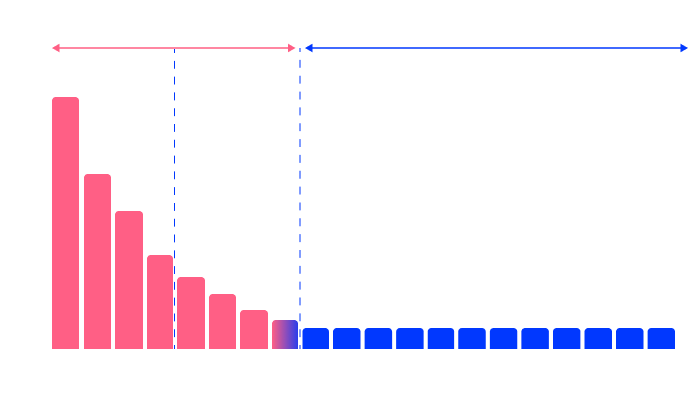
Growth sits in the long tail
“Washable linen quilt cover king size” is a search. “Bedding” is a category.
Matching the specific phrasing customers use is the job of NLP SEO, and it matters because over 90% of search and AI demand is in the long tail. A programme built only on head terms can look busy while most of that demand goes unanswered.
Picture a bakery with one tray labelled “bread.” Customers walk in asking for sliced sourdough rye, a gluten-free loaf, or a seeded roll for tomorrow’s lunch.
The baker has all of it out the back, but none of it is on the tray, so they leave. In this context, long tail means those specific loaf requests, and a programme that only covers the word “bread” leaves most customers at the door.
Do you have a useful page for the way customers describe what they want, or only for the broad category name?
Freshness, links and crawl matter
Content surface area is how many of the ways customers search you have a useful answer for. As product ranges change, SEO services should refresh older pages and use Dynamic Internal Linking to keep related content connected.
A page nobody has touched in years is open for business, technically.
Link building outreach earns links from other sites, and it suits a link building ecommerce website with strong products. It shouldn’t be the only lever.
If a link building reseller is involved, ask who does the outreach. Connected and current pages also tell Google what your site covers and give it reasons to come back.
CMAX scales coverage and reporting
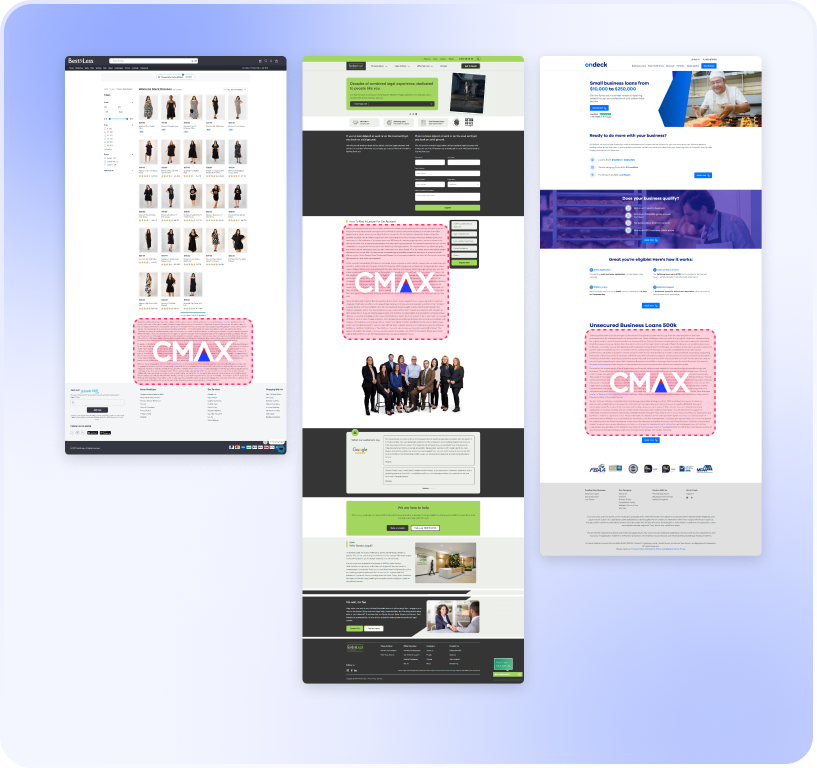
CMAX combines a search engine optimisation strategy with Full Body SEO, Dynamic Internal Linking, long-tail coverage and reporting tied to sales and revenue signals. CMAX is trained on human-reviewed, client-approved content.
It uses programmatic SEO methods to deploy and refresh search pages and internal links continuously. CMAX targets the long-tail demand that static templates leave untouched.
A strong SEO partner proves progress with clean measurement
Measurement should show real progress
A monthly SEO report should answer three questions. Are the right pages earning more impressions?
Are those impressions becoming qualified clicks? Are those clicks producing leads, orders or pipeline?
Weigh SEO services pricing against that standard. If the report can’t link impressions and clicks to leads and orders, the price buys activity only.
Search Console tracks query and page growth. Your analytics and sales reporting show what happened after the visit.
Direct visits are the ones your analytics can’t trace to a source. It adds context, but it can’t prove SEO performance alone, because attribution gaps push unclassified visits into that bucket.
CMAX compresses time to first clicks
Most SEO programmes run by conventional agencies, using outdated methods, tell clients to expect results in six months. CMAX’s methods allow clients to start seeing clicks in 6 to 8 weeks.
A fixed timetable is a poor way to get SEO explained, because results vary by site, competition and method. Our implementation takes four to six weeks, and client examples show more visits from search in less than two months.
Those timelines apply to CMAX clients. Other timelines will differ.
Fit matters as much as tactics
The right partner can show a governed process for choosing searches, creating approved content, keeping pages fresh, connecting related pages and reporting against commercial outcomes. Any Australia digital agency you shortlist should be able to walk you through that process.
Claims of SEO services guaranteed overlook competition, site history, technical health, content quality and ongoing changes in Google’s systems.
AI engines retrieve from Google. They run several smaller searches and build answers from what ranks.
A brand still needs useful pages in Google’s index before it earns search and AI visibility.
Frequently Asked Questions (FAQ)
Can an SEO agency work with our in-house team?
An agency can work with your team, and shared ownership is the best setup. Your team supplies product knowledge, compliance rules, approvals, margins, priority categories and sales context.
The SEO partner handles research, deployment, technical fixes, internal linking and measurement.
That split is also a practical answer to what is SEO consulting services: shared research, technical guidance, deployment planning, internal linking, measurement and governed approvals. It suits retailers with legal or brand review requirements, because content moves faster without skipping those checks.
Who owns my SEO content if I leave an agency?
Define ownership before work starts. Cover published copy, briefs, metadata, page templates, internal linking logic, analytics dashboards and reusable research.
If you commission a SEO audit online, the contract should say who owns the findings and the working files.
Before you sign, ask whether the live pages can stay SEO optimised, be updated, and be reused after the contract ends without paying again.
Can an SEO agency guarantee a top Google ranking?
No credible partner can. Your position in Google depends on competition, site history, technical health, content quality and changes in Google’s systems.
A better standard is whether the partner can explain the work, show leading indicators in Search Console, connect visits to commercial outcomes, and keep improving pages after they go live.
SEO Services Start With Long Tail Coverage
SEO services matter when they increase the number of real searches you can answer. A report on a handful of trophy terms doesn’t do that.
So we focus on coverage first: strategy, content deployment, technical foundations, internal linking and reporting tied to sales signals.
You can’t win demand you don’t cover, and most of it sits in the long tail. A SEO audit template can document the gaps.
We close them through strategy, content deployment, technical foundations and internal linking.
CMAX is the Agentic SEO Platform built for that job. It keeps approved content fresh and connected as discovery changes across Google, AI interfaces and the emerging practice of AIO SEO.
A review shows you which customer searches have no page yet. It’s the quickest way to see where you stand before you spend anything.
If you’re curious as to how you’re performing on AI, book in a Missing Customer Map review with our Growth Team.
Author
Jeremy Tang
Founder and CEO of CMAX
Jeremy Tang is the Founder and CEO of CMAX. With over 2 decades of experience in business consulting and digital marketing, he has successfully driven seven startup businesses, six of which achieved $1 million in revenue from zero in less than 16 months, 5 of which grew to multi-million dollar a year ventures without any external funding. Jeremy's expertise lies in streamlining business processes through technology and leveraging digital (in particular SEO) for business growth. He resides in Australia, travels extensively, and draws inspiration from his global experiences.