Search Engine Optimisation: What It Is and How It Works

Updated: 05/08/26

Search engine optimisation what is often answered with “it’s about keywords,” but that only covers one piece. SEO is a process that spans technical access, content relevance, link signals and ongoing measurement, and each part has to work for the others to matter. A page can rank without earning clicks, or be well written but never crawled. Understanding how those stages connect is what separates sites that grow organically from ones that stall. CMAX works across these layers at scale, which makes it a useful reference point as you read on.

Search Engine Optimisation Is More Than Keywords

SEO Helps Engines and Users

What is search engine optimisation? It works on two fronts simultaneously. For search engines, it signals what a page covers, how that page fits within the broader site structure, and whether it genuinely answers a query. For people, it closes the gap between the words someone types and the page that actually satisfies what they were looking for, which is rarely an exact phrase match.

That distinction shapes everything. A page optimised only around a keyword can still fail to surface for searches that carry the same intent but use different wording. What is search engine optimisation, then, if not accounting for that gap by aligning page content with the underlying question rather than the literal string?

Search engine optimisation is the practice of making pages visible, relevant, and trustworthy across every stage of how engines and users interact with content. Exploring search engine optimisation means beyond keyword placement encompasses how engines access, evaluate, and rank pages against real user intent. What is search engine optimisation SEO in practical terms comes down to structuring a site so that both crawlers and visitors find exactly what they need.

Crawl, Index, Rank, Traffic

Search visibility moves through four separate stages, and a breakdown at any one of them stops progress at the next.

Crawling is when a search engine fetches a page to inspect its content and links. Indexing is when that page is stored and made eligible to appear in results. Ranking is when the indexed page is evaluated against competing pages for a specific query. Traffic is what follows only when the title and snippet are compelling enough to earn the click.

Search engine optimisation what is often the first question newcomers ask, and exploring search engine optimisation as a discipline quickly reveals it spans technical access, content relevance, trust signals, and ongoing measurement.

Each stage is a gate. A page can be crawled but deliberately or accidentally excluded from the index. It can be indexed but never matched to queries where it could compete. It can rank on a results page and still generate no visits if the snippet does not match what the searcher expected to find.

SEO Works Through Access, Relevance, Trust and Measurement

Technical Access Enables Discovery

Before relevance or ranking enters the picture, a page has to be reachable. Technical access covers the conditions that let search engines reach and process a page at all: whether important URLs can be crawled, return a valid response, load reliably, and are free of directives that block indexing.

A page that returns an error, loads too slowly to be processed, or carries a noindex directive is invisible to search engines regardless of how well-written the copy is. Technical access is the floor. Everything else sits on top of it. What lies behind each stage of visibility becomes tangible when you break down SEO what is SEO into its four core pillars: technical access, content relevance, trust signals, and performance measurement.

Relevance and Links Shape Matching

Once a page is accessible and indexed, search engines decide which page best fits a given query. The question search engine optimisation what is really asks is how access, relevance and trust combine. Three inputs drive that decision.

Content defines the topic and intent of the page. A page that clearly addresses what a searcher is trying to do is more likely to be matched to that query than one that only repeats a phrase. Viewed through the lens of what is search engine optimisation marketing, this stage is where aligning content with intent produces the strongest results.

Internal links show search engines how pages on the same site relate to each other. A well-linked site makes it easier for search engines to find and weigh pages that might otherwise go unnoticed.

External links act as outside signals.[1] When other sites link to a page, search engines treat those links as indicators that the page is worth considering for relevant queries. For any search engine optimisation business, these external signals carry weight because they reflect how the wider web values a page.

All three work together. Strong content with no internal links is harder to surface. Internal links pointing to thin content do not move rankings. The combination is what shapes matching.


The SEO process follows a repeatable order.

What SEO is and is not

Answering search engine optimisation what is requires separating the process from common misconceptions. SEO is a process of improving discoverability, intent match, trust signals and measurement. Inserting keywords into pages is one small part of that process, not the whole of it.

The search engine optimisation basics cover discoverability, intent match, trust signals, and measurement. A precise SEO definition frames it as a continuous process rather than a one-time keyword exercise.

Search engines evaluate whether a page actually answers a query. A page that repeats a phrase frequently but fails to address the question behind it will not rank for relevant searches. Frequency is not the same as relevance.

Technical access is a prerequisite. A page that is hidden, blocked by a directive, or returning errors cannot compete for rankings regardless of how well the copy is written. The content never reaches the engine.

Publishing new pages alone does not move the needle if internal linking is weak. Search engines and users both rely on links to discover content. Valuable pages that sit without links pointing to them are effectively invisible, even when they are indexed.

Indexing is also not the finish line. A page stored in the index can still fail to appear for the searches that drive business value. Being indexed means a page is eligible to appear, not that it will appear for competitive or commercially relevant queries. Effective search engine optimisation keyword research identifies the specific queries worth targeting so indexed pages attract the right traffic.

Finally, SEO does not guarantee a ranking outcome. Performance depends on query intent, the strength of competing pages, the overall condition of the site, and how completely the page satisfies what the searcher actually needs. Those variables shift, which is why SEO is a continuous process rather than a one-time task.

SEO Is Measured After Changes Are Made

Practical SEO Workflow

A practical SEO sequence has a clear order. Start by identifying how people search, the specific phrases, questions, and intent signals behind real queries. Map those queries to the pages best positioned to answer them. Then fix crawl and indexing barriers so search engines can actually reach and process those pages; strong copy on a blocked or broken page earns nothing.

With access resolved, improve internal linking so search engines and users can find the pages that matter. Buried pages rarely rank, regardless of how well they’re written.

Measurement comes after changes are live. Search Console shows impressions, clicks, and average position.[2] Analytics shows what happens after the click, whether visits convert, bounce, or signal that the page missed the intent. Comparing those numbers before and after each change tells you which improvements moved the needle and which need another pass. The best search engine optimisation ties every change back to measurable outcomes rather than treating reporting as an afterthought.

Search engine optimisation what is measured through impressions, clicks, and conversions connects directly to the broader question of marketing what is SEO, since demonstrating business impact is what ties organic search work to overall marketing strategy.

Publication alone is not the measure. A page going live is the start of the process, not the end. Rankings shift as search engines re-evaluate the page against competing results, and that evaluation takes time. The workflow is iterative: measure, identify the gap, fix it, measure again.

This sequence, query research, page mapping, access fixes, internal linking, then measurement, applies whether you’re working across ten pages or ten thousand.

Measured SEO results usually appear over time.

Why SEO timelines vary

Anyone asking search engine optimisation what is should expect results to build gradually rather than appear overnight. A search engine must first discover the updated or new page, process what changed, decide whether to index it, and then weigh it against every other page competing for the same query. None of those steps happen on a fixed schedule.

Beyond that sequence, timing shifts depending on how often the engine crawls the site, how established the site’s authority is, how competitive the target queries are, and how precisely the page satisfies search intent. A technically clean page on a well-crawled domain targeting low-competition long-tail queries tends to move faster. Both are SEO. Neither follows the same clock.

Search engine optimisation what is already a shifting landscape, and the rise of AI search is adding another layer of complexity to how pages are discovered, evaluated, and surfaced to users.

One measured proof point

A B2B omnichannel hospitality retailer working with CMAX added 5,000 long-tail product pages and grew organic traffic 255% across 12 months. The driver was coverage: broad category pages could not match the specificity of thousands of individual product queries, so each new page captured searches the existing site was invisible for. That dynamic holds across verticals. SEO growth at scale frequently comes from matching many specific searches rather than optimising a handful of pages for broad terms. The 12-month window also reflects the timeline reality from 5.1: discovery, indexing, and competitive comparison all take time, even when the underlying work is sound. A search engine optimisation specialist reads these signals to decide what needs another pass and where the next round of pages should focus.

Frequently Asked Questions (FAQ)

How does SEO work exactly?

The question search engine optimisation what is comes down to making pages accessible, relevant and measurable. SEO works across four connected activities: making pages accessible to search engines, aligning each page with the intent behind a query, strengthening signals that the page is relevant and trustworthy, and measuring whether those changes improve visibility, clicks and visits over time. Miss any one of those and the others underperform.

What is on-page vs off-page SEO?

On-page SEO covers elements you can directly edit: copy, headings, metadata, internal links and page structure. Off-page SEO refers to outside signals, backlinks, citations and brand mentions, that influence how credible a page appears to search engines. Both categories affect ranking; neither works well in isolation.

What is the difference between crawling and indexing?

Crawling happens when a search engine fetches a page to inspect its content and links. Indexing happens when that page is stored and made eligible to appear in search results. A page can be crawled without being indexed, and an indexed page can still fail to rank for queries that matter.

Resources that define search engine optimisation typically explain how crawling, indexing, relevance, and measurement all work together to improve visibility.

What is a long tail keyword?

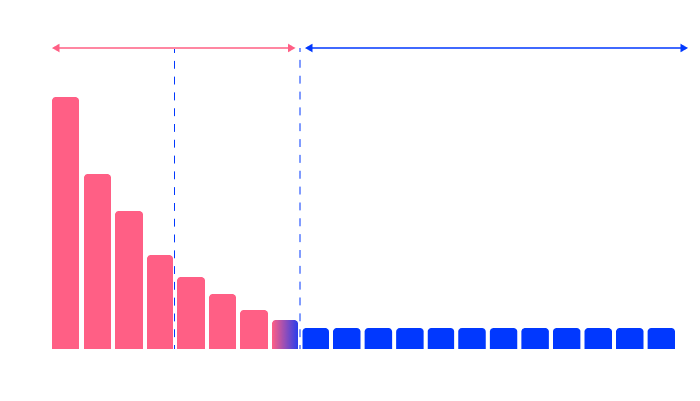
A long tail keyword is a specific search phrase with narrower intent, a detailed product, problem, feature or location query rather than a broad head term. Based on CMAX’s analysis, over 90% of search demand sits in these longer, more specific queries, which broad category pages rarely cover.

Can SEO be automated?

Parts of SEO can be automated: technical monitoring, reporting and large-scale page production workflows. Judgement is still needed to match pages to intent, check quality and prioritise the work most likely to move results.

SEO Has a Scale Problem, CMAX Built the Fix

Most SEO strategies stall at the same point: too many keywords, too few resources, too little time.

CMAX is an agentic SEO platform that deploys and continuously updates content across thousands of long-tail keyword variations, the 90% of search demand most teams never reach. It integrates with two lines of code, targets high-intent queries at a speed manual workflows can’t match, and starts producing measurable results within six weeks. Our AI agents don’t just publish pages; they refine them based on performance data so your content net keeps growing.

If you’re evaluating what search engine optimisation can actually deliver at scale, CMAX is where that conversation gets specific.

References [1] – https://developers.google.com/search/docs/fundamentals/seo-starter-guide [2] – https://developers.google.com/search/docs/fundamentals/seo-starter-guide

Search engine optimisation what is often answered with “it’s about keywords,” but that only covers one piece. SEO is a process that spans technical access, content relevance, link signals and ongoing measurement, and each part has to work for the others to matter. A page can rank without earning clicks, or be well written but never crawled. Understanding how those stages connect is what separates sites that grow organically from ones that stall. CMAX works across these layers at scale, which makes it a useful reference point as you read on.

Search Engine Optimisation Is More Than Keywords

SEO Helps Engines and Users

What is search engine optimisation? It works on two fronts simultaneously. For search engines, it signals what a page covers, how that page fits within the broader site structure, and whether it genuinely answers a query. For people, it closes the gap between the words someone types and the page that actually satisfies what they were looking for, which is rarely an exact phrase match.

That distinction shapes everything. A page optimised only around a keyword can still fail to surface for searches that carry the same intent but use different wording. What is search engine optimisation, then, if not accounting for that gap by aligning page content with the underlying question rather than the literal string?

Search engine optimisation is the practice of making pages visible, relevant, and trustworthy across every stage of how engines and users interact with content. Exploring search engine optimisation means beyond keyword placement encompasses how engines access, evaluate, and rank pages against real user intent. What is search engine optimisation SEO in practical terms comes down to structuring a site so that both crawlers and visitors find exactly what they need.

Crawl, Index, Rank, Traffic

Search visibility moves through four separate stages, and a breakdown at any one of them stops progress at the next.

Crawling is when a search engine fetches a page to inspect its content and links. Indexing is when that page is stored and made eligible to appear in results. Ranking is when the indexed page is evaluated against competing pages for a specific query. Traffic is what follows only when the title and snippet are compelling enough to earn the click.

Search engine optimisation what is often the first question newcomers ask, and exploring search engine optimisation as a discipline quickly reveals it spans technical access, content relevance, trust signals, and ongoing measurement.

Each stage is a gate. A page can be crawled but deliberately or accidentally excluded from the index. It can be indexed but never matched to queries where it could compete. It can rank on a results page and still generate no visits if the snippet does not match what the searcher expected to find.

SEO Works Through Access, Relevance, Trust and Measurement

Technical Access Enables Discovery

Before relevance or ranking enters the picture, a page has to be reachable. Technical access covers the conditions that let search engines reach and process a page at all: whether important URLs can be crawled, return a valid response, load reliably, and are free of directives that block indexing.

A page that returns an error, loads too slowly to be processed, or carries a noindex directive is invisible to search engines regardless of how well-written the copy is. Technical access is the floor. Everything else sits on top of it. What lies behind each stage of visibility becomes tangible when you break down SEO what is SEO into its four core pillars: technical access, content relevance, trust signals, and performance measurement.

Relevance and Links Shape Matching

Once a page is accessible and indexed, search engines decide which page best fits a given query. The question search engine optimisation what is really asks is how access, relevance and trust combine. Three inputs drive that decision.

Content defines the topic and intent of the page. A page that clearly addresses what a searcher is trying to do is more likely to be matched to that query than one that only repeats a phrase. Viewed through the lens of what is search engine optimisation marketing, this stage is where aligning content with intent produces the strongest results.

Internal links show search engines how pages on the same site relate to each other. A well-linked site makes it easier for search engines to find and weigh pages that might otherwise go unnoticed.

External links act as outside signals.[1] When other sites link to a page, search engines treat those links as indicators that the page is worth considering for relevant queries. For any search engine optimisation business, these external signals carry weight because they reflect how the wider web values a page.

All three work together. Strong content with no internal links is harder to surface. Internal links pointing to thin content do not move rankings. The combination is what shapes matching.

The SEO process follows a repeatable order.

What SEO is and is not

Answering search engine optimisation what is requires separating the process from common misconceptions. SEO is a process of improving discoverability, intent match, trust signals and measurement. Inserting keywords into pages is one small part of that process, not the whole of it.

The search engine optimisation basics cover discoverability, intent match, trust signals, and measurement. A precise SEO definition frames it as a continuous process rather than a one-time keyword exercise.

Search engines evaluate whether a page actually answers a query. A page that repeats a phrase frequently but fails to address the question behind it will not rank for relevant searches. Frequency is not the same as relevance.

Technical access is a prerequisite. A page that is hidden, blocked by a directive, or returning errors cannot compete for rankings regardless of how well the copy is written. The content never reaches the engine.

Publishing new pages alone does not move the needle if internal linking is weak. Search engines and users both rely on links to discover content. Valuable pages that sit without links pointing to them are effectively invisible, even when they are indexed.

Indexing is also not the finish line. A page stored in the index can still fail to appear for the searches that drive business value. Being indexed means a page is eligible to appear, not that it will appear for competitive or commercially relevant queries. Effective search engine optimisation keyword research identifies the specific queries worth targeting so indexed pages attract the right traffic.

Finally, SEO does not guarantee a ranking outcome. Performance depends on query intent, the strength of competing pages, the overall condition of the site, and how completely the page satisfies what the searcher actually needs. Those variables shift, which is why SEO is a continuous process rather than a one-time task.

SEO Is Measured After Changes Are Made

Practical SEO Workflow

A practical SEO sequence has a clear order. Start by identifying how people search, the specific phrases, questions, and intent signals behind real queries. Map those queries to the pages best positioned to answer them. Then fix crawl and indexing barriers so search engines can actually reach and process those pages; strong copy on a blocked or broken page earns nothing.

With access resolved, improve internal linking so search engines and users can find the pages that matter. Buried pages rarely rank, regardless of how well they’re written.

Measurement comes after changes are live. Search Console shows impressions, clicks, and average position.[2] Analytics shows what happens after the click, whether visits convert, bounce, or signal that the page missed the intent. Comparing those numbers before and after each change tells you which improvements moved the needle and which need another pass. The best search engine optimisation ties every change back to measurable outcomes rather than treating reporting as an afterthought.

Search engine optimisation what is measured through impressions, clicks, and conversions connects directly to the broader question of marketing what is SEO, since demonstrating business impact is what ties organic search work to overall marketing strategy.

Publication alone is not the measure. A page going live is the start of the process, not the end. Rankings shift as search engines re-evaluate the page against competing results, and that evaluation takes time. The workflow is iterative: measure, identify the gap, fix it, measure again.

This sequence, query research, page mapping, access fixes, internal linking, then measurement, applies whether you’re working across ten pages or ten thousand.

Measured SEO results usually appear over time.

Why SEO timelines vary

Anyone asking search engine optimisation what is should expect results to build gradually rather than appear overnight. A search engine must first discover the updated or new page, process what changed, decide whether to index it, and then weigh it against every other page competing for the same query. None of those steps happen on a fixed schedule.

Beyond that sequence, timing shifts depending on how often the engine crawls the site, how established the site’s authority is, how competitive the target queries are, and how precisely the page satisfies search intent. A technically clean page on a well-crawled domain targeting low-competition long-tail queries tends to move faster. Both are SEO. Neither follows the same clock.

Search engine optimisation what is already a shifting landscape, and the rise of AI search is adding another layer of complexity to how pages are discovered, evaluated, and surfaced to users.

One measured proof point

A B2B omnichannel hospitality retailer working with CMAX added 5,000 long-tail product pages and grew organic traffic 255% across 12 months. The driver was coverage: broad category pages could not match the specificity of thousands of individual product queries, so each new page captured searches the existing site was invisible for. That dynamic holds across verticals. SEO growth at scale frequently comes from matching many specific searches rather than optimising a handful of pages for broad terms. The 12-month window also reflects the timeline reality from 5.1: discovery, indexing, and competitive comparison all take time, even when the underlying work is sound. A search engine optimisation specialist reads these signals to decide what needs another pass and where the next round of pages should focus.

Frequently Asked Questions (FAQ)

How does SEO work exactly?

The question search engine optimisation what is comes down to making pages accessible, relevant and measurable. SEO works across four connected activities: making pages accessible to search engines, aligning each page with the intent behind a query, strengthening signals that the page is relevant and trustworthy, and measuring whether those changes improve visibility, clicks and visits over time. Miss any one of those and the others underperform.

What is on-page vs off-page SEO?

On-page SEO covers elements you can directly edit: copy, headings, metadata, internal links and page structure. Off-page SEO refers to outside signals, backlinks, citations and brand mentions, that influence how credible a page appears to search engines. Both categories affect ranking; neither works well in isolation.

What is the difference between crawling and indexing?

Crawling happens when a search engine fetches a page to inspect its content and links. Indexing happens when that page is stored and made eligible to appear in search results. A page can be crawled without being indexed, and an indexed page can still fail to rank for queries that matter.

Resources that define search engine optimisation typically explain how crawling, indexing, relevance, and measurement all work together to improve visibility.

What is a long tail keyword?

A long tail keyword is a specific search phrase with narrower intent, a detailed product, problem, feature or location query rather than a broad head term. Based on CMAX’s analysis, over 90% of search demand sits in these longer, more specific queries, which broad category pages rarely cover.

Can SEO be automated?

Parts of SEO can be automated: technical monitoring, reporting and large-scale page production workflows. Judgement is still needed to match pages to intent, check quality and prioritise the work most likely to move results.

SEO Has a Scale Problem, CMAX Built the Fix

Most SEO strategies stall at the same point: too many keywords, too few resources, too little time.

CMAX is an agentic SEO platform that deploys and continuously updates content across thousands of long-tail keyword variations, the 90% of search demand most teams never reach. It integrates with two lines of code, targets high-intent queries at a speed manual workflows can’t match, and starts producing measurable results within six weeks. Our AI agents don’t just publish pages; they refine them based on performance data so your content net keeps growing.

If you’re evaluating what search engine optimisation can actually deliver at scale, CMAX is where that conversation gets specific.

References [1] – https://developers.google.com/search/docs/fundamentals/seo-starter-guide [2] – https://developers.google.com/search/docs/fundamentals/seo-starter-guide

Author

Jeremy Tang

Founder and CEO of CMAX
Jeremy Tang is the Founder and CEO of CMAX. With over 2 decades of experience in business consulting and digital marketing, he has successfully driven seven startup businesses, six of which achieved $1 million in revenue from zero in less than 16 months, 5 of which grew to multi-million dollar a year ventures without any external funding. Jeremy's expertise lies in streamlining business processes through technology and leveraging digital (in particular SEO) for business growth. He resides in Australia, travels extensively, and draws inspiration from his global experiences.