Most teams trying to scale SEO and content strategy run into the same wall: hundreds of long-tail pages that look different in a spreadsheet but feel identical to Google. The problem usually starts before any content is written, when there is no system deciding what each page is for, which intent it owns, and how it connects to the pages around it. Getting that structure right is what separates programmes that compound from ones that plateau. CMAX helps enterprise teams build and scale that kind of intent-mapped content architecture.
Long-tail growth needs strategy before scale.
One Intent Per Page
A disciplined SEO and content strategy starts by assigning one intent per page. Pages perform more predictably when each URL is built around one search intent. A user searching for a definition wants a structured explanation with clear terminology. A user comparing vendors wants trade-offs, selection criteria, and differentiators. A user on a pricing query wants numbers, tiers, and fit signals. These are different jobs, and a single page cannot do all of them well.
When intent is locked to a URL, the page structure, depth, and call to action can be calibrated precisely to what that searcher expects at that moment. That alignment is what drives rankings, dwell time, and downstream conversion.
Teams refining their SEO and content strategy are increasingly turning to SEO AI to automate intent mapping, template governance, and cluster expansion without sacrificing page-level quality signals.
Prevent Topic Overlap
A sound SEO and content marketing strategy loses clarity when multiple pages target the same entity, modifier, or search task with only slight wording changes. The damage runs in three directions: internal linking logic weakens because there is no clean hierarchy to follow, cannibalisation risk rises as pages compete for the same query, and search engines lose the signal that each URL answers a distinct question.
At scale, this problem compounds fast. A programme covering thousands of queries can quietly accumulate near-duplicate pages that dilute authority across the cluster rather than building it. The fix is structural: each page needs a defined query angle before it is built, so the content set expands coverage rather than fragmenting it. Aligning SEO and content marketing goals at this stage is what prevents cannibalisation from taking root across overlapping clusters.
Effective SEO and content strategy is inseparable from website search optimisation, since the structural decisions made at the site level, crawlability, internal linking, and URL architecture, determine whether long-tail clusters can be discovered and ranked at scale.
Intent mapping makes large content sets rankable.
Match Intent to Page Type
Search intent determines page structure before a single word is written. A solid SEO content plan links each intent type to a specific page format before any drafting begins. Informational queries call for guide-style pages that explain, define, or answer a specific question. Transactional queries belong on product or service pages, because at that stage the user is comparing providers, features, fit, or price. Publishing a guide-style page against a transactional query, or a sales page against an informational one, produces a structural mismatch that suppresses rankings regardless of how strong the SEO content writing is on the page. The types of SEO content each intent requires, from long-form guides and comparison tables to landing pages and spec sheets, should be defined at the mapping stage. As SEO and content strategy evolves, practitioners must consider how query interpretation works inside AI search environments, where intent signals are processed differently than in keyword-match ranking models.
Repeatable Cluster Blueprint
A repeatable topic structure lets large sites expand into thousands of long-tail queries without publishing near-duplicates. Each page carries a fixed job, from broad topic discovery through to specific commercial evaluation. An effective SEO strategy for website growth treats this blueprint as the foundation for every new content vertical. Building a scalable SEO and content strategy means accounting for how content is discovered and ranked across AI search engines, not just traditional crawl-and-index pipelines.
The pillar page targets the core topic with a plain-language definition, the main subtopics the reader needs, and links that route users to deeper pages by question type.
Cluster page 1 answers a foundational informational query and removes a basic point of confusion before the reader moves further into the topic.
Cluster page 2 addresses a comparison or alternative query, giving users the clear distinctions, trade-offs, or selection criteria they need to narrow options.
Cluster page 3 covers a use-case or industry-specific variation so the page reflects how the search changes by context, sector, or application.
Cluster page 4 explains a process, method, or implementation question, including the sequence, dependencies, and decisions involved.
Cluster page 5 handles a problem-solution query built around a specific pain point, failure mode, or obstacle.
Cluster page 6 targets a lower-funnel query, pricing, vendor evaluation, or feature fit, where the reader is assessing whether a solution matches their requirements. The six-page cluster above works as a SEO strategy example any team can replicate and adapt to its own topic set.
Distinct Signals for Similar Pages
Teams running SEO in Sydney face the same indexing challenges as teams anywhere else: similar pages stay indexable only when each URL carries concrete differentiators. Those differentiators include a unique title, disciplined canonical rules, internal links that reflect the page’s specific role, and first-party details that no other page on the site replicates. For any team refining a content strategy Sydney audiences rely on, the principle is the same: search engines don’t rank pages on good intentions. They rank pages with clear evidence that each URL answers a different query angle. Organisations scaling a content strategy Australia wide should audit for these signals before publishing new page sets.
Evidence From Catalogue-Scale SEO
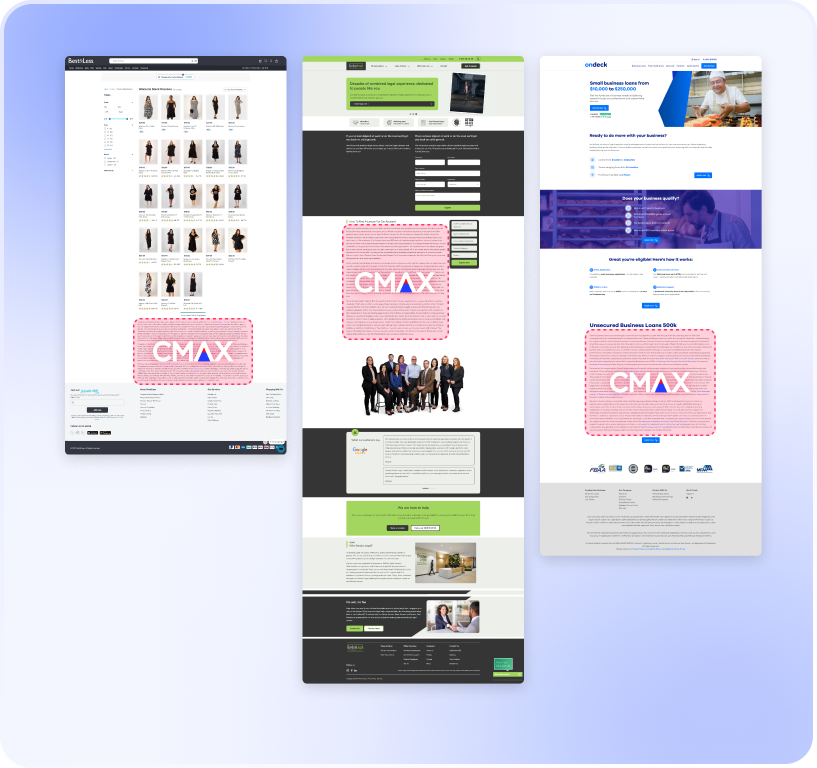
enterprise SEO at catalogue scale produces results that single-page optimisation cannot match. In one CMAX engagement, a B2B SEO strategy for an omnichannel hospitality retailer published 5,000 long-tail product pages and reached $1M+ per month in incremental SEO revenue within 8 months. This is where a mature SEO and content strategy proves its value. Head-term SEO alone doesn’t produce that coverage. Query-specific landing pages at catalogue scale do.
Track by Cluster and Intent
A SEO and content strategy is only as useful as the metrics that confirm it is working. Aggregate organic traffic is a vanity metric at scale. Segment by topic cluster and intent type, and the data becomes actionable: you can see whether informational pages are building topical authority and whether commercial pages are capturing the queries that feed pipeline.
Use Promotion Where Intent Fits
Promotional tie-backs belong on comparison, vendor evaluation, and pricing pages, where the reader is already weighing options. Educational pages should answer the search task fully before any commercial angle appears, and most should stay vendor-neutral throughout.
Is Programmatic SEO Safe From Google Penalties?
Programmatic SEO is publishable when pages deliver distinct value, match search intent accurately, and avoid duplicating content across keyword variants. Pages built only to multiply search terms without adding unique usefulness carry real exposure under Google’s spam policies.[1]
A strong SEO and content strategy now requires understanding how results are presented in an AI Overview, since these AI-generated summaries are reshaping which pages earn visibility before a user ever clicks a traditional result.
How to Avoid Thin Content in Programmatic SEO?
Templates reduce thin content risk when they include original attributes, entity-specific details, internal links to relevant supporting pages, and answers tailored to the exact query. Formats like video content SEO carry particular thin-content risk, because a page wrapper around an embedded video with no supporting transcript or structured detail offers little indexable value. A single generic paragraph swapped across thousands of URLs is the problem; structured variation at the template level is the fix.
Why Are Programmatic SEO Pages Not Indexing?
Indexing problems trace back to four causes: pages are too similar to existing URLs, internal links are too sparse for discovery, technical settings block crawling or indexing, or Google judges the pages lower value than other URLs on the site. Google does not index every crawled page.[2]
How to Measure ROI for Long-Tail Content at Scale?
Track each cluster against its own traffic, rankings, CTR, assisted conversions, and conversion paths. That lets you compare content production cost with the search demand captured and the revenue influence of that specific topic set, rather than collapsing the whole programme into one number.
Can You Combine Programmatic and Manual SEO?
Combining both is often the practical model. Scaled templates cover repeatable long-tail patterns efficiently. Manually written pages handle flagship topics, nuanced thought leadership, and high-stakes conversion pages where messaging and proof require tighter editorial control.
Practitioners expanding their SEO and content strategy beyond traditional search are beginning to incorporate generative engine optimisation principles to ensure content surfaces inside AI-generated answer experiences, not just ranked blue-link results.
SEO and Content Strategy at Scale, Two Lines of Code, Thousands of Keywords
Most teams treat SEO and content strategy as a manual grind: one page at a time, one keyword at a time, one quarter lost at a time.
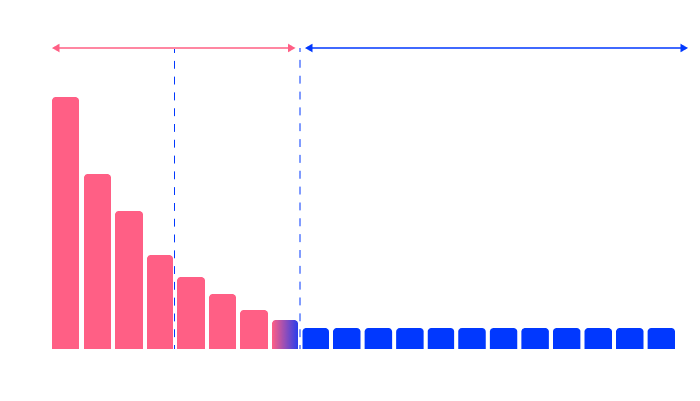
CMAX is an agentic SEO platform that deploys and continuously updates content across thousands of long-tail keywords, the 90% of search demand most businesses never reach. It installs in two lines of code, builds pillar-and-cluster topic architecture automatically, and starts delivering measurable organic traffic within six weeks. Every page targets real search intent, so topical authority compounds as your content library grows.
We built CMAX for teams that need board-ready results without board-sized budgets.
References [1] – https://developers.google.com/search/docs/essentials/spam-policies [2] – https://developers.google.com/search/docs/essentials
Author
Jeremy Tang
Founder and CEO of CMAX
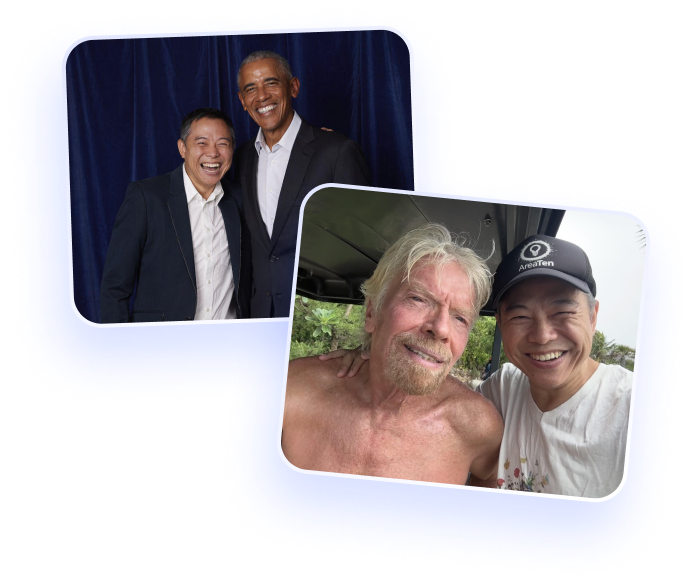
Jeremy Tang is the Founder and CEO of CMAX. With over 2 decades of experience in business consulting and digital marketing, he has successfully driven seven startup businesses, six of which achieved $1 million in revenue from zero in less than 16 months, 5 of which grew to multi-million dollar a year ventures without any external funding. Jeremy's expertise lies in streamlining business processes through technology and leveraging digital (in particular SEO) for business growth. He resides in Australia, travels extensively, and draws inspiration from his global experiences.