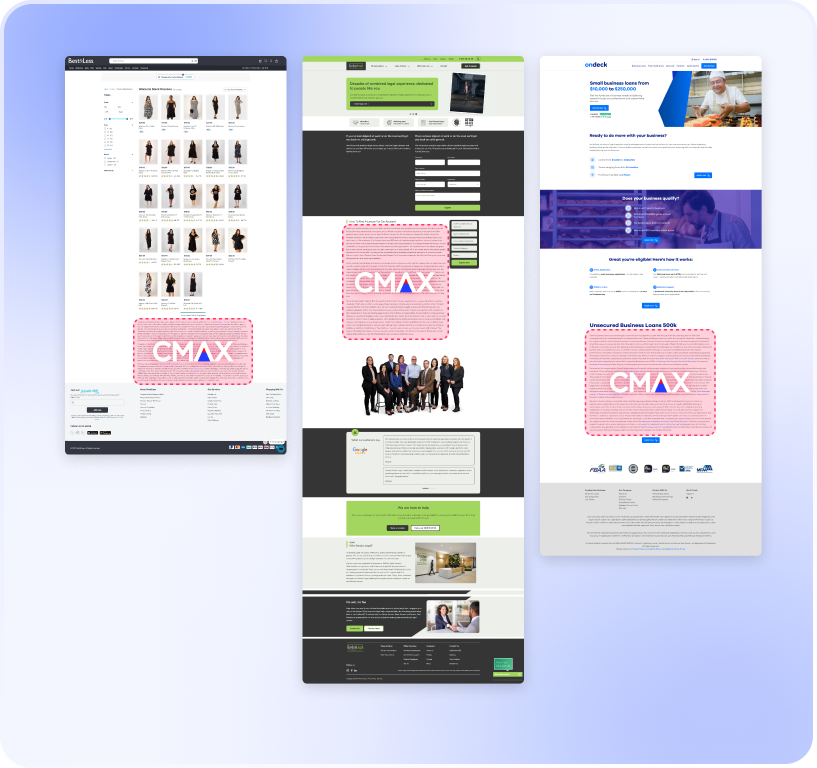
SEO for accountants works best when it starts with the searches that actually lead to enquiries: specific service terms paired with a suburb or city. Most accounting firms still rely on a single homepage to rank for everything from tax returns to advisory, which means they’re invisible for the exact queries prospects type when they’re ready to compare and contact. The firms pulling consistent leads tend to have dedicated service pages, a complete Google Business Profile, and local signals that all point in the same direction. CMAX helps accounting firms build that kind of structured local visibility at scale.
Local SEO Can Attract Qualified Accounting Leads
Service Pages for Local Intent
When SEO for accountants focuses on local intent, service pages become the primary discovery asset. Firms that publish separate pages for tax preparation, bookkeeping, BAS support, and business advisory, each tied to the locations they actually serve, give search engines a clear signal about what they do and where they do it. That specificity is what surfaces a firm in high-intent searches rather than burying it behind generalist competitors.
Each page targets a distinct combination of service and geography, which means the firm can appear in results that a homepage would never reach. The more precisely a page matches what a prospect is searching for, the more likely that prospect is already close to making an enquiry.
SEO for accountants draws on many of the same principles covered under SEO AI, where machine-learning signals and content relevance work together to match service pages with the right local search intent.
Service-Plus-Location Terms Convert
Broad queries like “accountant” attract researchers, students, and people who haven’t decided what they need yet. Searches that combine a service with a city, suburb, or near-me modifier tell a different story. The prospect has already identified the service type and narrowed by location, which puts them much further along in the decision process.
A search for “BAS agent in Parramatta” or “small business tax accountant near me” carries stronger hiring intent than “accountant” alone. Targeting these service-plus-location terms means the traffic arriving on a page is more likely to convert into an actual enquiry, which is the outcome that drives a firm’s growth.
Google Business Profile and Local Pages Drive Visibility
Local Visibility Signals That Matter
Google’s local ranking logic is built on consistency. A firm’s Google Business Profile, reviews, citations, and contact details need to describe the same business, the same services, and the same service area across every touchpoint. When those signals conflict, a different phone number on a directory listing, a trading name that doesn’t match the website, a service area that’s vague or missing, Google has less confidence placing that firm in front of a local accounting search. SEO for accountants must account for how Google AI Search interprets local business signals, since AI-enhanced results can elevate or suppress a firm’s visibility based on how clearly its profile, services, and location data align.
The fix is straightforward: audit every place the firm’s details appear and bring them into alignment. Reviews reinforce this further. Fresh review text that mentions real services and locations adds relevance signals that a bare profile can’t replicate.
Proof Point From Local Lead Generation
The local lead-generation dynamic for accountants mirrors what CMAX observed in a compensation law engagement: query-specific conversion landing pages delivered a 61% reduction in CPL within 12 months compared to generic templates. The mechanism transfers directly. Accounting prospects search by service and suburb before they enquire, they’re comparing a tax accountant in their postcode against a bookkeeper two suburbs over. A firm with pages built around those specific combinations gives Google something concrete to match against that search, and gives the prospect a reason to click rather than scroll past.
Generic service pages don’t carry that specificity. Location-matched pages do.
A Six-Step Local SEO Checklist Keeps Execution Focused
Six-Step Local SEO Checklist
This six-step checklist turns SEO for accountants into a repeatable execution plan. These steps target the assets that most directly influence discovery, relevance, and lead capture for accounting firms.
1. Claim and complete your Google Business Profile. Use the firm’s exact trading name, select the most accurate primary category, confirm hours, and write service descriptions that reflect what local prospects actually search for. A half-completed profile leaves Google with gaps it will fill with assumptions.
2. Standardise NAP details everywhere. Name, address, and phone number must match exactly across major directories, industry listings, and the website. A single conflicting address or phone variation can dilute local relevance signals.
3. Build separate service pages. Tax returns, bookkeeping, BAS support, and business advisory each carry distinct search intent. One page cannot rank competitively for all of them. Separate pages let each service match its own query.
4. Create location pages only for areas you genuinely serve. Each page needs unique local detail, relevant service context, and a clear contact pathway. Copied location text adds no ranking value and no reason for a prospect to enquire.
5. Add internal links between service pages, location pages, and contact pages. A clear path from service need to nearby location to enquiry benefits both users and search engines. Without it, traffic lands and stalls.
SEO for accountants relies on the same foundational principles as website search optimisation, including consistent NAP details, structured service pages, and clear internal linking that guides both users and search engines toward an enquiry.
These five steps are not a one-time project. Profiles drift, citations accumulate errors, and service offerings change. Treat the checklist as a recurring audit, not a launch task.
Ask Satisfied Clients for Reviews on an Ongoing Basis
Fresh reviews do more than build trust. When a client mentions that your firm handled their BAS lodgement, sorted out their small business tax return, or helped them through a compliance issue, that language feeds directly into the terms prospects use when they search. A profile with recent, service-specific review text signals to Google that the firm is active, relevant, and genuinely serving the area it claims to cover.
The ask should be routine, not occasional. A short follow-up after a completed engagement, a link sent with the final invoice, or a prompt at the end of an onboarding call all work. Consistency matters more than volume. A steady flow of reviews across months carries more weight than a burst of ten followed by silence.
Schema for Local Service Relevance
Structured data gives search engines a cleaner read of what the firm does, where it operates, and what questions prospects typically ask before making contact. LocalBusiness schema ties the firm’s name, address, and phone number to a defined service area. Service schema names individual offerings, such as tax preparation, bookkeeping, or business advisory, so Google can match those services to relevant queries without relying solely on page text. FAQ schema surfaces direct answers to pre-enquiry questions in search results, which can reduce friction for prospects still comparing local providers.
None of these schema types replace well-written service pages, but they reinforce the signals those pages already send.
Keyword strategy determines whether traffic becomes enquiries.
Service pages beat broad targeting
A homepage optimised for “accountant” competes against every firm in the country for a term that tells you almost nothing about what the searcher actually needs. Service-led pages work differently. A page built around “small business accountant,” “BAS agent,” or “tax accountant near me” matches the searcher’s specific need at the point they’re ready to act. The page content, the service described, and the search query align, and that alignment is what converts a visit into an enquiry. This is where SEO for accountants diverges from generic website optimisation. Broad targeting spreads relevance thin; service-specific pages concentrate it where it counts.
SEO for accountants benefits from how AI search engines process and rank local service queries, since these platforms increasingly influence which accounting firms appear in high-intent results.
Long-tail clusters reveal hidden demand
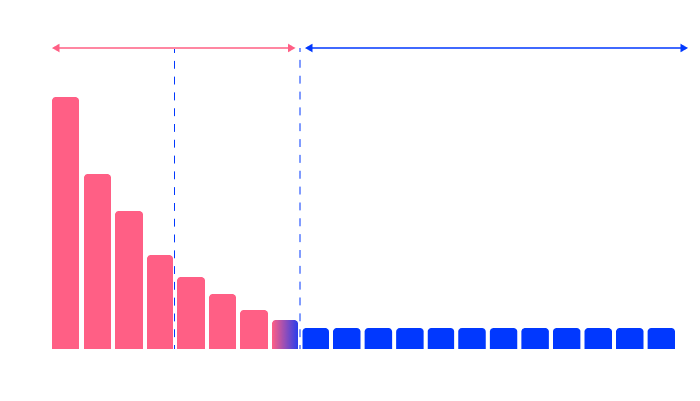
Based on CMAX’s analysis, broad accounting terms capture only a fraction of actual search demand. The rest sits in long-tail queries: the specific ways prospects describe a tax problem, a compliance obligation, a business structure question, or a suburb-level need. A firm serving construction contractors searches differently from one serving medical practices. A prospect with a late BAS lodgement types something different from one setting up a new company structure. Long-tail keyword clusters surface that demand across niche services, business types, industry specialisations, and suburb-level searches that a single broad term will never reach. Each cluster represents a distinct prospect with a distinct reason to enquire, and a page that matches that reason directly is far more likely to generate a qualified lead than one built to rank for everything at once.
SEO Progress Should Be Measured by Leads, Not Rankings
Rankings tell you where a page sits. They don’t tell you whether anyone who found it picked up the phone. Measuring SEO for accountants by leads rather than rankings keeps reporting tied to revenue.
Early Signals Appear Before Lead Growth
For accounting firms, SEO progress rarely announces itself with a sudden spike in signed clients. It shows up earlier, in metrics that precede revenue: non-brand impressions climbing in Search Console, Google Business Profile interactions increasing, service pages drawing longer sessions, and early enquiry signals like form starts or call clicks. These are the indicators worth watching in the first few months. A firm that dismisses SEO because the client roster hasn’t moved in the short term is likely ignoring the data that would tell them it’s working.
SEO for accountants is beginning to intersect with generative engine optimisation, as AI-driven search tools increasingly summarise local service options and surface firms whose content directly answers buyer questions.
Attribution Shows What Drives Enquiries
Once traffic is moving, the next question is which of it converts. Call tracking, form attribution, and booked-consultation reporting answer that directly. They connect specific landing pages, service themes, and search queries to actual accounting enquiries, separating qualified leads from general traffic that was never going to convert. Without this layer, a firm can’t distinguish a tax preparation page that books consultations from a blog post that attracts students doing research. Attribution makes that distinction visible, so budget and content effort can follow what’s actually generating enquiries rather than what’s generating clicks.
How long does SEO take for accounting firms?
Accounting firms typically need several months before meaningful organic lead growth shows up in reporting. Earlier signals appear sooner: rising non-brand impressions, increased Google Business Profile views, map interactions, and stronger engagement on service and location pages. Track those early indicators so you can assess momentum before signed clients confirm it.
Should accounting firms use Google Ads or SEO?
Many firms run Google Ads for immediate visibility while building SEO in parallel. SEO compounds over time, particularly on service-plus-location searches that prospects repeat when comparing local providers. Ads fill the short-term gap; SEO reduces the cost of that gap as organic enquiries grow.
How to track SEO results for an accounting firm?
Connect organic landing pages to phone call tracking, form fills, and booked consultations. That setup lets the firm evaluate SEO by enquiry quality, source page, and service intent rather than rank position alone, which is the metric that actually informs budget decisions.
What is the impact of AI on accountant SEO?
As AI reshapes search behaviour, SEO for accountants increasingly depends on clear service pages and direct answers. Consistent location signals and responses to pre-enquiry questions carry more weight in that environment because they give AI systems something specific and verifiable to surface.
SEO for accountants is increasingly shaped by how search engines surface results, and understanding what an AI Overview means for local service visibility can help firms anticipate how their service pages are displayed before a user ever clicks.
Do long-tail keywords work for accounting leads?
Long-tail keywords capture specific needs: entity type, tax task, industry specialisation, suburb. That specificity signals a clearer reason to enquire than a broad accountant search, which makes long-tail traffic more likely to convert into a genuine lead.
SEO for accountants is evolving alongside AI search, where summarised results and conversational queries are changing how prospects discover and evaluate local accounting firms before making an enquiry.
SEO for Accountants Shouldn’t Take an Army
Most accounting firms know they need organic visibility but lack the team to build it at scale.
CMAX is an agentic SEO platform that deploys content across the thousands of long-tail keyword variations your prospective clients actually search, terms like “tax preparer near me” or “small business accountant [city].” It runs on two lines of code, targets the 90% of search demand that conventional strategies leave on the table, and starts delivering measurable results within six weeks. Our AI agents continuously update every page so your local and service-level content stays competitive without draining your in-house resources.
If you need to attract qualified leads for an accounting practice and present a clear ROI case to leadership, CMAX gives you the scale to do it.
Author
Jeremy Tang
Founder and CEO of CMAX
Jeremy Tang is the Founder and CEO of CMAX. With over 2 decades of experience in business consulting and digital marketing, he has successfully driven seven startup businesses, six of which achieved $1 million in revenue from zero in less than 16 months, 5 of which grew to multi-million dollar a year ventures without any external funding. Jeremy's expertise lies in streamlining business processes through technology and leveraging digital (in particular SEO) for business growth. He resides in Australia, travels extensively, and draws inspiration from his global experiences.