Most SEO for B2B SaaS programmes stall not because rankings stop improving, but because the pages that rank never matched what buyers actually search when they’re evaluating vendors. Traffic climbs, but pipeline doesn’t follow. The gap usually sits between the queries your site covers and the specific integrations, comparisons, and use cases your buyers type before they book a demo. Closing that gap means rethinking which pages exist, what intent they serve, and how you measure their contribution to revenue. CMAX works with B2B SaaS teams to scale that kind of intent-matched content programmatically.
Qualified Pipeline Starts With Search Intent
Intent by Evaluation Stage
When SEO for B2B saas is built around buying stages rather than volume, it produces better-fit pipeline because each topic maps to a real buying stage. Those stages are distinct: problem recognition, shortlist building, vendor comparison, and implementation review. Each one signals a different need.
A searcher in problem recognition wants education. Someone building a shortlist wants proof. A buyer in vendor comparison wants differentiation. A team in implementation review wants rollout detail. Treating all four the same way produces traffic without pipeline.
When topic selection follows this logic, the organic visitors arriving on each page are already in the right frame of mind. That alignment is what separates high-volume organic traffic from organic traffic that converts into sales-qualified leads.
SEO for B2B SaaS now extends beyond traditional ranking signals, and teams that incorporate generative engine optimisation principles, structuring content for AI-driven answer extraction, are better positioned to capture demand at the problem-recognition and shortlist-building stages.
High-Intent Page Types
Effective SEO for saas depends on building the right high-intent page types. Product pages, comparison pages, and integration pages attract visitors who are already narrowing options. The searches that land on these pages are specific by nature: they name a product category, reference a competing vendor, or call out a platform that must work inside an existing stack.
A buyer searching “[your product] vs [competitor]” has already moved past awareness. A buyer searching “[your product] + [existing tool] integration” is evaluating fit against a live environment. These searches represent a small share of total search volume but a disproportionate share of pipeline-ready demand.
Generic solution pages rarely capture this traffic because they don’t match the specificity of the query. Dedicated comparison and integration pages do, and a strong B2B saas SEO programme treats each of these page types as a distinct conversion asset.
Enterprise SaaS architecture shapes SEO outcomes.
Indexation before scale
Large SaaS sites generate architectural problems that quietly drain SEO performance before a single new page goes live. Faceted navigation creates URL variants that fragment link equity. Parameterised URLs produce near-duplicate pages that compete with each other in search. Overlapping templates give crawlers too many similar signals to resolve cleanly.
The fix is sequenced, not simultaneous. Indexation rules must come first: define which page types are discoverable, which carry canonical tags pointing elsewhere, and which are excluded from crawl entirely. Only after that foundation is set does adding content at scale produce compounding returns rather than compounding noise. SEO for B2B SaaS depends heavily on sound website search optimisation practices, including crawl control, canonical rules, and URL parameter management, before any content scaling effort can deliver consistent indexation results. Skipping this step means every new page you publish dilutes the authority of the pages already earning rankings.
Long-tail pages by use case
Generic solution pages describe what a product does. Buyers searching with a specific workflow, compliance requirement, or existing platform already in mind need pages that answer a narrower question.
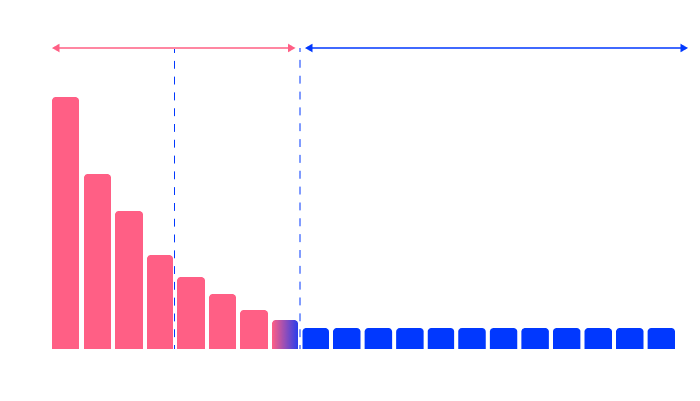
Integration, use-case, and industry pages capture that demand. A procurement lead searching for a tool that connects to their existing ERP, or a security reviewer checking whether a platform meets a specific compliance standard, will not find their answer on a homepage or a broad category page. Pages built around those specific contexts pull in visitors who have already done early research and are narrowing options, which is the traffic profile that converts into qualified pipeline. Based on CMAX’s analysis, over 90% of search demand sits in long-tail queries; for SEO for B2B saas, a significant share of that demand is use-case and integration-specific.
Measurement Must Connect Rankings to Revenue
Unified Revenue Reporting
A ranking improvement tells you one thing: a page moved up in search results. It tells you nothing about whether that page attracted a buyer, advanced an opportunity, or contributed to closed-won revenue. Connecting rankings to revenue is what separates SEO for B2B saas from generic content marketing. Organic lead quality only becomes visible when first-touch source data, CRM stage progression, and assisted conversions sit in a single reporting model. Without that unified view, SEO looks like a traffic channel when it may be a pipeline channel, or vice versa. SQL creation, pipeline progression, and closed-won revenue all require entry-page data tied to CRM records, not just session counts in analytics.
SEO for B2B SaaS measurement frameworks need to account for visibility shifts introduced by Google AI Search, since AI-generated answer panels can intercept organic clicks before they reach the entry pages used in revenue attribution models.
Five-Step Attribution Checklist
This checklist gives RevOps and marketing teams a repeatable way to connect SEO for B2B visibility to commercial outcomes, and to separate high-traffic pages from pages that actually move pipeline.
- Define a fixed set of organic entry pages and tag them consistently across analytics and CRM records, so every report references the same page groups across sessions, leads, and opportunities.
- Capture first-touch, last-touch, and assisted-touch channel fields for every demo request, trial signup, or contact form submission. SEO rarely closes deals alone; crediting it only on last touch understates its role.
- Map leads to opportunity stages to compare SQL rate, pipeline creation, and closed-won progression by landing page type, not traffic volume.
- Segment by intent class, educational, comparison, product, and integration pages, to identify which clusters assist revenue and which stop at early research. A strong B2B SEO strategy ties this segmentation directly to pipeline reporting so each intent class has a measurable commercial outcome.
- Review month-over-month cohorts, not same-month traffic snapshots. B2B sales cycles routinely delay when pipeline surfaces in reporting after the first organic visit.
Proof comes from repeatable mechanisms.
B2B SaaS plateau proof point
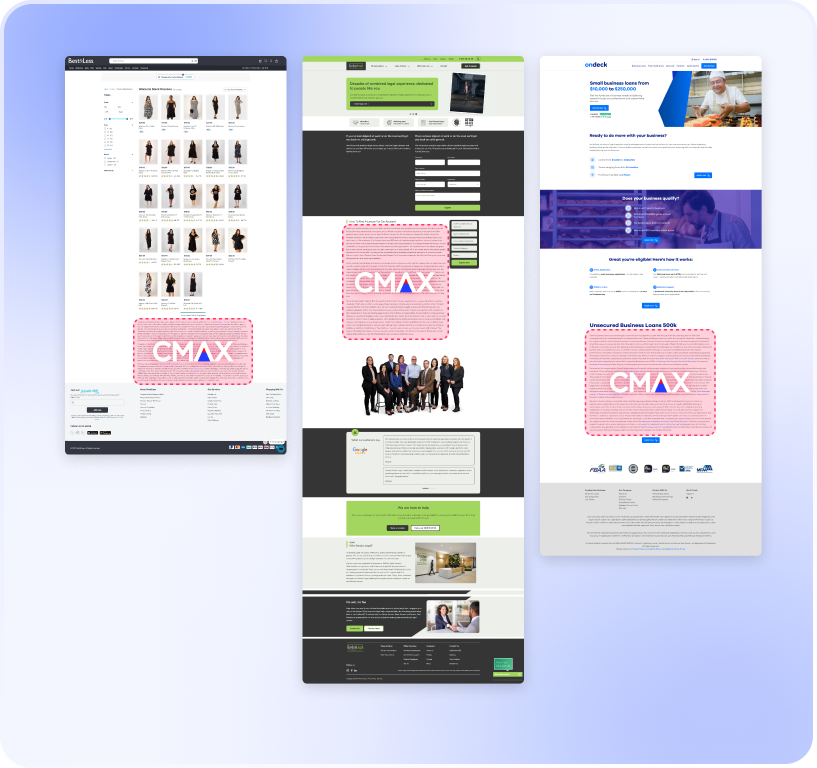
In one CMAX engagement, a B2B SEO agency that builds dedicated pages for underserved search demand helped a fintech lender grow from 1,000 to 15,000+ pages and deliver 6X SEO traffic alongside 6X loan applications within 12 months.[1] The traffic gain and the conversion gain moved together because the new pages targeted demand that had no organic home before: specific loan types, borrower profiles, and workflow-level queries that paid search was absorbing at a premium cost per click. This fintech case is one of several B2B saas examples where long-tail page expansion drove measurable pipeline growth.
The same dynamic appears in B2B SaaS. When PPC captures bottom-funnel demand, the cost is visible on a media invoice. What stays invisible is the long-tail volume sitting across integration queries, feature-specific searches, and job-to-be-done terms that buyers use before they ever reach a demo request. Those searches rarely become dedicated organic pages, so the demand either goes to a competitor or gets paid for repeatedly. Engagements that pair B2B SEO services with programmatic page creation surface this hidden demand at a fraction of paid search cost.
SEO for B2B SaaS scales most efficiently when teams apply SEO AI to automate page production, identify intent gaps, and prioritise the long-tail queries that manual workflows routinely miss.
Why plateaus persist
SaaS SEO plateaus are structural, not strategic. Paid search fills the conversion gap well enough that the absence of organic coverage goes unnoticed in monthly reporting. Meanwhile, buyers searching for “[your product] + [their existing stack]” or “[feature] for [compliance requirement]” land on generic solution pages that were never built to answer those queries.
The plateau holds until the site adds pages that match the specific jobs, integrations, feature comparisons, and implementation questions buyers search before converting. Traffic volume alone does not break it. Page-level relevance to real buying queries does, and that relevance at scale is what defines effective SEO for B2B saas.
Practical SEO choices improve lead quality.
Content for buying committees
A single page written for “the buyer” misses most of the buying committee. In B2B SaaS, a deal typically involves end users who care about workflow fit, team leads who care about adoption, budget owners who want ROI evidence, procurement who want contract terms, and security reviewers who want compliance documentation. Each of those stakeholders searches differently and needs different proof before they move forward.
Pages that address those distinct concerns qualify demand at the point of search. A security reviewer landing on a page that leads with SOC 2 certification and data residency options is more likely to progress than one who has to dig through a generic features list. A strong B2B SEO agency will tailor pages to each committee role, structuring content around committee-level concerns with deliberate page logic that anticipates who else is in the room when the decision gets made.
Align scale, intent, attribution
Content volume alone does not improve lead quality. In B2B SaaS SEO, scale produces better pipeline only when three conditions hold simultaneously: site architecture makes the right pages discoverable, each page targets a specific buying intent, and reporting connects organic entry points to pipeline outcomes rather than stopping at session counts or keyword rankings.
SEO for B2B SaaS teams must account for the growing role of AI search engines when planning content distribution, as these platforms increasingly influence how buyers discover and shortlist vendors before ever clicking a traditional result.
When any one of those conditions is missing, the gap shows up in reporting, high-traffic pages with low SQL rates, or ranking improvements that cannot be traced to revenue. Effective SEO for B2B saas ties architecture, intent, and attribution into one system, and that alignment is what separates an SEO programme that generates qualified pipeline from one that generates charts.
How to optimise B2B content for AI search and SGE?
Structure pages around explicit questions, direct comparison-ready answers, product-specific language, and sourceable facts. AI summary systems extract clear statements, so vague positioning claims get skipped. If a page can’t answer “what does this product do differently for [use case]?” in two sentences, it won’t surface in generated responses.
SEO for B2B SaaS increasingly requires understanding how content surfaces in an AI Overview, since AI-generated summaries now appear above traditional organic results for many high-intent queries.
Is programmatic SEO suitable for enterprise B2B SaaS?
Yes, when the page set follows real search patterns: integrations, industries, features, or locations. The condition is that each template adds unique buying context. Pages that swap one term for another without changing the use case, proof, or conversion path produce near-duplicates that dilute crawl value and fail buyers who arrived with a specific need already in mind.
How to scale B2B SEO content without sacrificing quality?
Standardise page logic, evidence requirements, internal linking, and review criteria across every template. Quality holds when each page remains distinct in the query it targets, the use case it explains, the proof it includes, and the conversion path it supports. Standardisation controls consistency; query-level specificity controls relevance.
How long does it take for B2B SEO to generate qualified leads?
Qualified leads can appear before broad traffic growth is visible when new pages target high-intent queries: product, comparison, and integration terms. Set the reporting window to match the sales cycle. Pipeline attribution frequently lags the first organic visit by weeks or months, so same-month snapshots undercount SEO’s contribution.
SEO for B2B SaaS content must be structured with explicit answers and sourceable facts to perform well in AI search, where summary systems extract direct statements rather than rewarding vague positioning language.
How to balance programmatic SEO with brand guidelines?
Templates that use approved messaging, controlled terminology, compliance-reviewed claims, and fixed design rules keep large page sets on-brand while still allowing query-level relevance. Scale and brand consistency are not in conflict when the template architecture is built with both requirements defined upfront.
SEO for B2B SaaS Demands Scale, CMAX Was Built for It
Most B2B SaaS companies chase the same handful of high-volume keywords while ignoring the long tail that drives over 90% of search demand.
CMAX is an agentic SEO platform that deploys with two lines of code and targets thousands of long-tail, high-intent keywords, the exact queries your buyers type when they’re comparing products, evaluating integrations, and ready to convert. Our AI agents continuously create and update content at a speed and scale manual teams simply can’t match, turning every page into another node capturing qualified traffic. Results typically start showing within six weeks, with clear attribution back to pipeline.
If your SEO has plateaued and your board wants measurable organic growth tied to revenue, CMAX closes that gap.
References [1] – https://backlinko.com/google-keyword-study
Author
Jeremy Tang
Founder and CEO of CMAX
Jeremy Tang is the Founder and CEO of CMAX. With over 2 decades of experience in business consulting and digital marketing, he has successfully driven seven startup businesses, six of which achieved $1 million in revenue from zero in less than 16 months, 5 of which grew to multi-million dollar a year ventures without any external funding. Jeremy's expertise lies in streamlining business processes through technology and leveraging digital (in particular SEO) for business growth. He resides in Australia, travels extensively, and draws inspiration from his global experiences.