Most teams evaluating a B2B SEO company already know what good SEO looks like in theory. The harder question is whether the agency you hire can actually map its work to your revenue model, publish at the scale your buying searches demand, and show you where the pipeline came from. That means scrutinising deliverables, pricing structure, link quality, and proof of commercial impact before you sign. CMAX built its B2B SEO programme around exactly those criteria.
A B2B SEO company should fit your revenue model.
Revenue-first B2B SEO
A B2B SEO company should be measured by whether it moves pipeline, not just rankings. Traffic grows. Neither of those outcomes pays a sales team’s quota. A B2B SEO programme earns its budget when organic search delivers qualified pipeline, demo requests, and sales-ready demand from the accounts that actually convert. That’s the standard to hold any B2B SEO company to before you sign a contract.
The distinction is critical at the evaluation stage. An agency can show you a traffic chart trending up and a keyword rank report full of green arrows. If those gains don’t trace back to leads, opportunities, or closed revenue, the programme is decorating a dashboard. Tie every proposed deliverable to a commercial outcome before work starts.
A B2B SEO company built for long-term pipeline growth needs a strategy that accounts for AI search engines, as these platforms are changing how high-intent buyers discover and shortlist vendors before reaching a sales conversation.
Coverage for complex buying searches
Enterprise and mid-market buyers don’t arrive at a vendor decision through a single search. They move through product terms, industry-specific use cases, comparison queries, and long-tail buying searches across weeks or months before they speak to sales. Each of those searches is a separate coverage requirement.
A B2B SEO company that focuses on a handful of broad head terms leaves most of that demand unaddressed. Mid-market and enterprise programmes need coverage at the depth buyers actually research: the specific use case pages, the “X vs Y” comparisons, the niche solution queries that signal a buyer is shortlisting vendors. That’s where high-intent traffic lives, and it’s where organic search either earns pipeline or misses it entirely.
A B2B SEO company operating in competitive enterprise markets should be able to speak to generative engine optimisation, given that AI-generated answers are now influencing which vendors appear credible to buyers before a demo request is ever made.
The service mix determines whether SEO can scale.
Keyword mapping to buyer intent
A scalable B2B SEO strategy maps ideal customer profiles, commercial-intent topics, and solution pages to the exact phrases prospects use when shortlisting vendors, comparing approaches, and preparing to book a demo. That means going beyond broad category terms. A mid-market buyer searching “best [category] software for manufacturing teams” or “[vendor A] vs [vendor B] pricing” is further along the buying cycle than someone searching a generic industry term, and the two searches need different pages built to different briefs. Mapping at this level of specificity is what connects organic search to qualified pipeline rather than anonymous traffic. A B2B SEO company covering the full B2B SEO services mix will typically include website search optimisation as a foundational workstream, so that technical structure, crawlability, and on-page signals support every content and keyword initiative. This depth of keyword mapping is what makes SEO for B2B companies measurably different from generic organic programmes aimed at broad audiences.
Publishing capacity at page scale
Keyword mapping only produces results when there is capacity to build and maintain the pages it calls for. Content deployment becomes a real buying criterion when growth depends on publishing, testing, and refreshing large numbers of specific landing pages for distinct searches. A limited set of broad thought-leadership articles cannot cover the hundreds of high-intent, narrow queries that enterprise and mid-market buyers use before they speak to sales. When evaluating what a B2B SEO company can deliver at page scale, it is worth looking at how SEO AI is used to plan, deploy, and optimise large volumes of landing pages as a practical part of the service comparison. At this stage of the evaluation, SEO for B2B becomes less about individual rankings and more about whether the provider can sustain output across an entire keyword map.
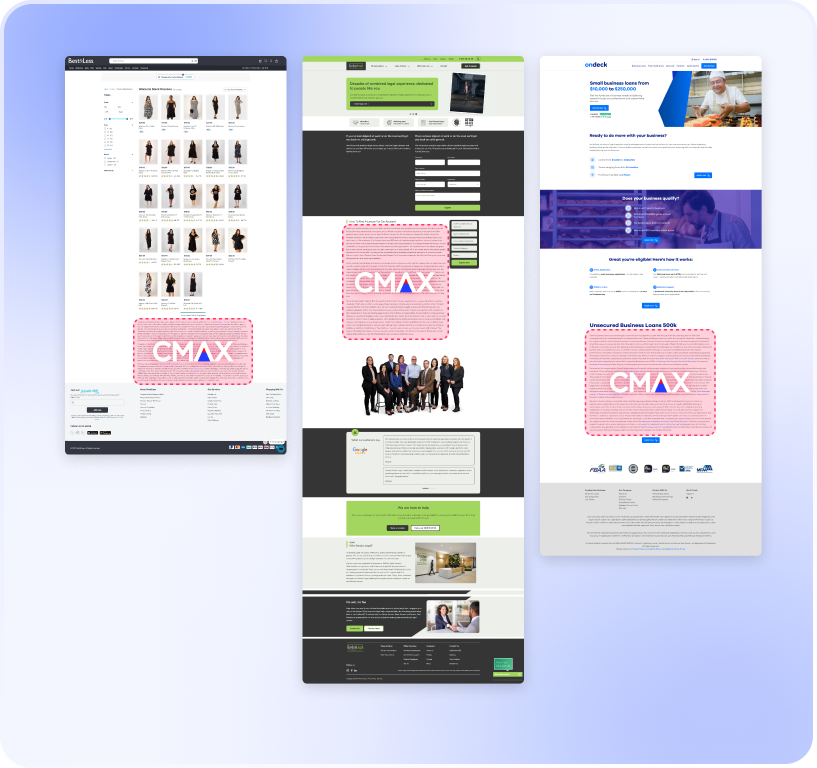
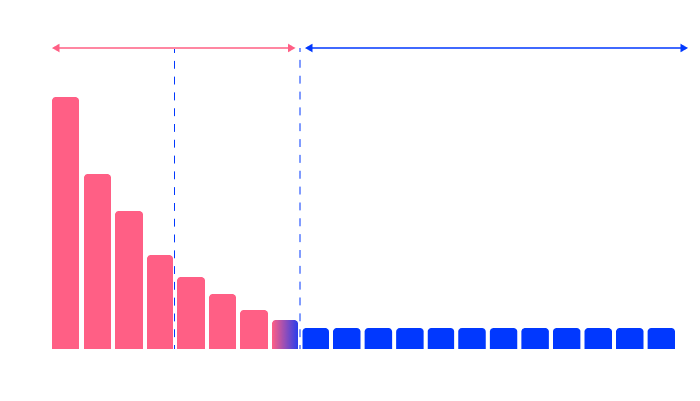
Based on CMAX’s own analysis, CMAX deploys and continuously updates content across thousands of long-tail searches, targeting the 90% of search and AI demand that most programmes miss entirely. That deployment capacity, built into the platform rather than bolted on through manual effort, is what separates page-scale coverage from a content calendar that plateaus after the first dozen posts.
A clear delivery process reduces ramp-up surprises.
Three-step onboarding checklist
Most B2B SEO programmes stall in the first 60 days because the agency and the client are still negotiating what “ready” means. When engaging a B2B SEO company, confirming baselines and delivery owners early prevents ramp-up delays. A structured onboarding process closes that gap before production starts.
Step 1: Record baseline metrics and priority pages. Pull current organic performance data, identify which pages or page types are already contributing to pipeline, and flag the gaps. This gives the delivery team a factual starting point rather than assumptions, and it gives you a benchmark you can hold the programme against from week one.
Step 2: Confirm brand assets and messaging. Lock in approved brand assets, core messaging, and tone guidelines before a single page goes into production. This step also surfaces any legal, compliance, or brand boundaries that content and optimisation work must stay within. Catching these constraints early prevents rework cycles that compress your timeline.
Step 3: Assign delivery owners and lock the first six-week plan. Confirm who owns each workstream on both sides, then set a concrete six-week schedule that states what will be delivered, reviewed, and published. CMAX targets early results within six weeks, and that timeline only holds when ownership and scope are agreed before the work begins.
A B2B SEO company that skips these steps is transferring the cost of its own disorganisation onto your team. A clear onboarding checklist is the first signal that a provider can execute at the pace your board expects.
Assign Implementation Owners on Both Sides and Lock the First Six-Week Timeline, Including What Will Be Delivered, Reviewed, and Published.
Defined Ongoing Deliverables
Ambiguity in a B2B SEO engagement rarely surfaces during the sales process. It surfaces three months in, when procurement asks what was delivered, marketing asks who approved it, and the agency points to a scope document no one can locate.
Ongoing deliverables should be written in plain terms before work starts: how many pages will be produced each month, how often existing pages will be optimised, when reporting is issued, and who owns each workstream on both sides. For providers offering SEO for service businesses, that level of specificity lets procurement verify scope, gives marketing a clear handoff point, and gives the delivery team a single source of accountability.
The six-week timeline is where that clarity gets tested. Locking it means naming what will be built, who reviews it, and what the publication date is, not leaving those decisions to a kickoff call that never gets followed up. Any enterprise SEO company that cannot produce a concrete six-week plan before the contract is signed is signalling how it will operate at month six.
CMAX surfaces results in six weeks because the delivery structure is defined before production begins. Page output targets, optimisation cycles, and reporting cadence are set at the start, so every stakeholder, from the CFO reviewing spend to the SEO manager tracking pipeline, can see exactly what the programme is doing and who is responsible for it.
Pricing and Link Practices Should Be Transparent
Separated Pricing by Workstream
Bundled pricing makes scope changes invisible until they become disputes. Transparent pricing is one of the clearest signals that a B2B SEO company is structured for accountability. Clear pricing separates strategy, content deployment, technical work, and ongoing optimisation into distinct line items, so every stakeholder, from procurement to the CMO, can see exactly what they are buying and what a change in scope will cost.
That separation also makes vendor comparison more honest. For any SEO company Australia buyers are evaluating, separated pricing by workstream makes scope changes easier to spot. When one proposal bundles everything into a monthly retainer and another itemises by workstream, you are comparing different things. Separated pricing gives you a consistent basis for evaluation during the initial review and at renewal.
Link Plans with Quality Standards
A link building plan should state monthly targets, placement standards, and relevance criteria in plain terms. Without those specifics, a promise of “X links per month” tells you nothing about whether those placements will carry any weight with the accounts you are trying to reach.
A smaller number of credible, contextually related domains is a different proposition from a high-volume backlink programme with no explanation of how placements are selected or vetted. When a B2B SEO company can name its placement standards and relevance criteria upfront, that is a signal the programme is built around commercial outcomes rather than metric inflation. Ask for it in writing before you sign.
Proof should show commercial impact, not traffic alone.
Catalogue-scale proof point
Traffic numbers are easy to produce. Revenue is harder to fake.
In one CMAX engagement, a B2B omnichannel hospitality retailer deployed 5,000 long-tail product pages and generated over $1M per month in incremental SEO revenue within 8 months.[1] That result came from catalogue-scale coverage: matching thousands of specific, high-intent searches to dedicated pages, rather than relying on a handful of broad articles to carry the load.
The same logic applies directly to B2B SEO programmes. Enterprise and mid-market buyers search in narrow, specific ways. A conventional agency content calendar rarely produces the page volume needed to capture that demand. When the coverage gap closes, the commercial gap closes with it.
A B2B SEO company demonstrating commercial impact should also show how its content strategy positions clients within Google AI Search, where AI-generated overviews are reshaping which pages earn visibility for the high-intent queries that drive pipeline. This is the kind of commercial evidence a B2B SEO company should be ready to show.
Proposal comparison criteria
When you’re comparing providers, the proposal itself is a signal. A strong B2B SEO agency makes four things easy to assess before you sign: the ROI logic (how organic search converts to pipeline), contract terms (length, exit conditions, scope change process), reporting ownership (who produces it, how often, and against which commercial metrics), and the expected time to early results.
If a proposal buries those details or leaves them to a follow-up conversation, that is a process answer. B2B SEO agencies often fall short here. CMAX targets early results within 6 weeks, states deliverables in plain terms, and ties reporting to pipeline contribution rather than ranking movement alone. Evaluate every provider against the same criteria and the differences become straightforward to present to a CFO or procurement lead.
What is the difference between B2B and B2C SEO?
Understanding what is B2B SEO starts with the buying cycle differences. B2B SEO targets lower-volume, higher-intent searches attached to longer buying cycles, internal approval steps, and multiple stakeholders. A single deal may involve a procurement lead, a technical evaluator, and a CFO sign-off, each searching differently. B2C SEO more often targets broader demand and faster purchase decisions, where one person searches and one person buys.
How to measure B2B SEO ROI?
Trace organic search to leads, demo requests, sales-qualified opportunities, pipeline value, and closed revenue. Set that commercial contribution against the cost of the SEO programme. Rankings and traffic are inputs, not outcomes.
What are red flags when hiring a B2B SEO agency?
Watch for vague deliverables, bundled pricing that obscures scope changes, and backlink promises built on volume with no quality criteria. Add unclear implementation ownership and reporting that stops at rankings or traffic without connecting either to pipeline.
How to track AI visibility for B2B brands?
Check whether your brand, product pages, and supporting content appear in AI-generated answers for high-intent prompts. Then review which source pages those systems cite, summarise, or paraphrase. That tells you where your content is being pulled from and where gaps exist.
A B2B SEO company tracking organic performance today should also monitor how its content appears in an AI Overview, since AI-generated answer panels are increasingly shaping which brands get seen before a buyer ever clicks a result.
B2B SEO agency vs in-house SEO?
An agency adds execution bandwidth, specialist workflows, and page-scale deployment faster than most in-house teams can staff for. An in-house team retains deeper product context and closer access to sales, subject-matter experts, and implementation stakeholders. The strongest programmes typically combine both.
A B2B SEO company advising on AI visibility should help clients understand how AI search surfaces content for high-intent prompts, since appearing in these results is becoming a measurable part of brand discoverability alongside traditional rankings.
Most B2B SEO Companies Scale People, CMAX Scales Results
CMAX is the agentic SEO platform built for one job: capturing the 90% of search demand that sits in the long tail.
Our AI agents deploy and continuously update content across thousands of high-intent keyword variations, the specific phrases your buyers actually type when they’re ready to act. Two lines of code connect CMAX to your site, and results start showing within six weeks. Where traditional B2B SEO company engagements add headcount and timelines, CMAX adds pages, rankings, and pipeline.
Every piece of content strengthens the next, building a compounding network of organic visibility no manual team can match at the same speed.
Author
Jeremy Tang
Founder and CEO of CMAX
Jeremy Tang is the Founder and CEO of CMAX. With over 2 decades of experience in business consulting and digital marketing, he has successfully driven seven startup businesses, six of which achieved $1 million in revenue from zero in less than 16 months, 5 of which grew to multi-million dollar a year ventures without any external funding. Jeremy's expertise lies in streamlining business processes through technology and leveraging digital (in particular SEO) for business growth. He resides in Australia, travels extensively, and draws inspiration from his global experiences.