International SEO services break down fast when teams treat them as a translation job. Each market has its own search behaviour, keyword patterns, and technical requirements, and a single oversight in hreflang or URL structure can duplicate effort across dozens of country sites. The real complexity is coordination: aligning templates, localisation workflows, and reporting before pages go live, not after problems surface at scale. CMAX works with enterprise teams managing exactly this kind of multi-market rollout, where technical precision and localised relevance have to hold up across every region simultaneously.
International SEO Services Address Market-by-Market Search Complexity
International SEO vs Translation
International SEO services address more than language: they solve market-by-market search complexity. Translating copy is a starting point, not a strategy. Each market carries its own search behaviour: the terms buyers use, the intent behind those queries, the devices they favour, the SERP features that dominate results, and in some regions, the search engines that matter at all. Teams already investing in SEO services in Sydney often discover that the same approach does not transfer abroad. A page translated from English into German may rank for nothing in Germany if the keyword research was never done in German, or if Bing holds meaningful share in a market where the campaign was built entirely around Google. Local visibility requires local inputs, and translation alone does not provide them.
Choosing the Right Service Model
The right international SEO service model is determined by what must stay coordinated across markets. That coordination spans country sites, language variants, shared templates, approval workflows, technical ownership, and the teams responsible for content, legal review, and deployment. A business running 12 country sites with a centralised dev team faces a different operating model than one where each regional team controls its own CMS. As a capable SEO services Sydney provider, a domestic team may have strong local processes, yet getting the service model wrong for international rollouts means changes that should take days take months, or a fix applied to one market breaks three others. Before selecting an approach, map who owns each layer: technical, content, legal, and deployment. The service model should match that ownership structure, not fight it.
International SEO services often incorporate SEO AI tooling to automate multilingual keyword mapping, template validation, and cross-market content scaling at a pace that manual workflows cannot match.
A rollout checklist reduces international SEO rework.
Five-step rollout checklist
Errors in international SEO don’t stay contained. A misconfigured hreflang tag or a template that canonicalises all language variants to one URL can propagate across hundreds of pages before anyone notices. A pre-launch checklist forces the decisions that prevent that: market targeting, template logic, hreflang, localisation details, and reporting setup all confirmed before a single URL goes live. A checklist keeps international SEO services from compounding errors across country versions.
Confirm target markets and search engines. Google dominates most markets, but Baidu, Naver, and Yandex each have their own crawl behaviour, indexing signals, and technical requirements. Know which engines matter in each market before you build.
Map every indexable URL and its intended country or language variant. A URL map makes hreflang implementation auditable and gives development teams a single source of truth for what gets built and what gets tagged. Even a team experienced in SEO services Brisbane will find that international rollouts introduce coordination problems domestic campaigns never surface.
Validate templates for metadata, canonicals, hreflang, and internal linking. Template errors scale. One broken canonical rule applied to a shared template can suppress an entire market’s pages from ranking. International SEO services rely on thorough website search optimisation practices at every stage of the rollout checklist, from validating templates and canonicals to confirming metadata is correctly localised for each target market.
Localise copy, offers, currency, units, and compliance wording for each market. A page priced in USD with imperial measurements and generic terms and conditions won’t convert in Germany or Australia, regardless of how well it ranks.
Running this checklist before launch is faster than diagnosing why three markets aren’t indexing correctly six weeks after go-live.
Set up country-level reporting for rankings, traffic, conversions, and assisted revenue.
Audit before launch
Before a single international page goes live, an audit tells you what search engines can actually reach. That distinction shapes every decision that follows.
The audit has three jobs. First, confirm which pages are indexable. Robots directives, noindex tags, and misconfigured canonicals can silently exclude entire country variants from search engines before the rollout even begins. Second, identify where translated or templated pages create duplication. When multiple language versions share near-identical copy or when templates pull the same metadata across markets, search engines may consolidate those pages rather than rank each one independently. Third, flag whether regional Google variants or local search engines require separate treatment. A market where Google is not the dominant search engine needs a different crawl and indexation strategy than one where Google dominates.
International SEO services must now factor in how AI search engines index and surface multilingual content differently from traditional crawlers, which can affect pre-launch audit priorities across regional markets.
Running this audit before launch is what separates a clean rollout from one that requires months of remediation across dozens of country versions. Duplication caught at the template level costs far less to fix than duplication discovered after pages have been indexed, cached, and cross-linked at scale.
The output of the audit feeds directly into reporting setup: you can only track country-level rankings, traffic, conversions, and assisted revenue accurately if the pages being measured are the ones search engines are actually serving. Skipping the audit means your reporting baseline is built on incomplete data from day one.
Technical Setup Determines Whether Global Pages Can Rank
URL Structure Trade-offs
URL structure is the foundation that determines whether international SEO services can consolidate or fragment domain authority. The choice between ccTLDs, subdomains, and subfolders is an operating model decision, and it shapes everything downstream.
ccTLDs (e.g., example.de, example.fr) make country targeting explicit to both search engines and users, and they give regional teams or local partners clear ownership boundaries.[1] The trade-off is authority: each ccTLD starts with its own link equity, so a new market launch means building domain authority from scratch. Development overhead is also higher, and adding a new country typically requires a separate deployment pipeline.
Subfolders (e.g., example.com/de/) consolidate authority under one domain, simplify analytics roll-up, and let a central team govern templates and technical standards without duplicating infrastructure. New markets can be added without rebuilding the system. Most SEO providers Australia typically weigh subfolders against ccTLDs when planning their first expansion beyond the domestic market. The trade-off is governance: when multiple regional teams or agencies share one domain, change control becomes critical.
Subdomains sit between the two. They offer some separation for hosting or CMS reasons but provide fewer of the authority benefits of subfolders and fewer of the targeting signals of ccTLDs. For teams already running SEO in Australia, the subfolder model often provides the smoothest path to scaling internationally without sacrificing the domain authority built at home.
Hreflang and Page Equivalence
Hreflang tells search engines which page to serve to which audience.[1] It works when three conditions hold: every language or regional variant points to a true equivalent page, every tag includes a return tag from the target page back to the source, and the canonical setup preserves each variant as a distinct, indexable URL.
International SEO services must now consider how AI search interprets hreflang signals and page equivalence across language variants, since AI-driven results surfaces can behave differently from traditional organic rankings.
Where any of those conditions break down, search engines may consolidate variants into a single URL, stripping the market-specific signals the hreflang was meant to deliver. Canonical tags that point all variants to a default-language URL are a common cause of this failure.
Localisation shapes relevance beyond translated copy.
Native keyword research changes pages
A direct translation of your existing keyword list rarely reflects how local searchers actually look for what you sell. Native keyword research surfaces the modifiers, product terms, and problem-led queries that vary by market, and those differences often require structural changes, not copy swaps.
A heading that converts in the US may be invisible in Germany if local buyers phrase the category differently. Businesses running SEO in Melbourne may already localise for Australian English, but overseas markets demand deeper adaptation. Category labels, landing page hierarchy, and even the order of information on a page can shift once you map real search behaviour in each market. Treating this as a copy edit misses the point. The page structure itself needs to reflect local intent.
Localisation beyond copy
Keyword relevance gets a page found. Everything else determines whether a buyer stays and converts.
Effective localisation adapts the details that affect trust and purchase decisions in each market: currency display, units of measure, delivery timeframes, market-specific examples, and regulated wording where compliance language differs by country. A page priced in USD with imperial measurements and US-centric shipping terms will underperform in markets where those signals read as foreign or unreliable.
International SEO services are beginning to align localisation workflows with generative engine optimisation principles, so that locally adapted copy and structured content are also well-positioned for AI-generated answer surfaces in each market.
Buyers in each country compare offers against local norms. If your page doesn’t match those norms, the gap shows up in bounce rate and conversion data before it shows up in a ranking report. These details are what separate surface-level translation from international SEO services that convert in-market.
Measurement Reveals Whether International SEO Can Scale
Reporting by Country and Template
Aggregate international traffic numbers tell you almost nothing actionable. A single “organic” line item that rolls up 12 markets, four languages, and three page types hides which markets are pulling weight and which are quietly underperforming.
International SEO services prove scalable when country-level reporting ties non-branded traffic to assisted revenue. This kind of reporting becomes decision-useful when it breaks down performance by market, page type, and template, and separates branded from non-branded demand. Branded traffic confirms awareness; non-branded traffic confirms you’re capturing new demand. Conversions and assisted revenue by country give the CFO a number to hold. For teams delivering world SEO services across multiple regions, this granularity is what turns reporting into a growth lever.
International SEO services increasingly need to account for how content surfaces in AI-generated results, making it worth knowing what an AI Overview is and how it affects country-level visibility reporting.
Template-level reporting adds a second layer. If your product listing template outperforms your category template in Germany but underperforms in Japan, that’s a structural signal, not a content problem. You can act on it without rebuilding the entire site.
Proof Point from CMAX
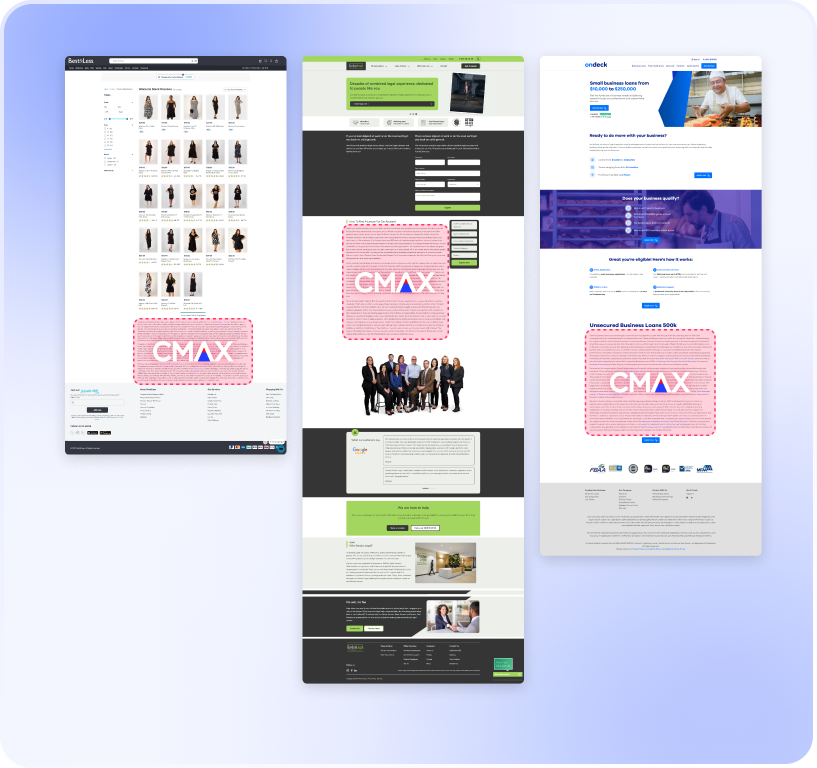
Based on CMAX’s client portfolio, the catalogue-scale challenge is real for large international sites, and it is especially acute for ecommerce SEO services managing thousands of SKUs across languages. Standard category pages rarely cover the full long tail across markets and local buying terms. The gap between what a category page targets and what local buyers actually search is where revenue leaks.
In one CMAX engagement, a B2B omnichannel hospitality retailer added 5,000 long-tail product pages and reached $1M+/month in incremental SEO revenue within 8 months. The same dynamic applies across international rollouts: when you match page volume to the actual breadth of local search demand, and measure it by market, the revenue signal becomes clear enough to scale with confidence.
Understanding what is international SEO helps frame every FAQ answer below.
ccTLD vs subfolders for international SEO?
ccTLDs give each market a distinct signal: country targeting is explicit, local teams can own their domain, and in-market credibility is easier to establish. The trade-off is authority fragmentation and higher development overhead when adding new countries. Subfolders consolidate authority under one root domain, simplify cross-market reporting, and let a central team govern templates and technical standards without rebuilding infrastructure per market.
How to scale keyword research for global markets?
Build a core topic model first, then localise it market by market. Native search terms, live SERP patterns, and commercial modifiers vary enough between markets that translating one master keyword list produces gaps in coverage. Local searchers use different product terms, problem-led queries, and buying modifiers, and those differences should drive page structure, not just copy.
Do local backlinks influence international rankings?
Yes. Local backlinks strengthen country-level relevance when they come from market-specific publications, industry associations, partners, or directories that match both the page topic and the target geography.
How to measure ROI for international SEO?
Tie revenue or lead value back to country, language, landing page type, and assisted conversions. Last-click traffic alone obscures which markets and page types are actually driving commercial outcomes.
International SEO services that target Google-dominant markets should monitor how Google AI Search handles multilingual queries and hreflang-tagged pages, as AI-powered results can shift which content formats earn visibility across different country SERPs.
How to manage multilingual content at scale?
Standardise templates, glossary terms, approval rules, and localisation workflows before scaling page count across markets. Getting that infrastructure in place first prevents inconsistency from compounding as volume grows.
Long Tail Keywords Across Every Market You Sell In
CMAX is the Agentic SEO platform built for scale.
When you expand into new regions, your keyword targets multiply fast, localised queries, language variants, long tail phrases unique to each market. CMAX deploys AI agents that create and continuously update content for thousands of those high-intent search terms, across both traditional search and AI surfaces. Two lines of code connect it to your site, and results typically start showing within six weeks.
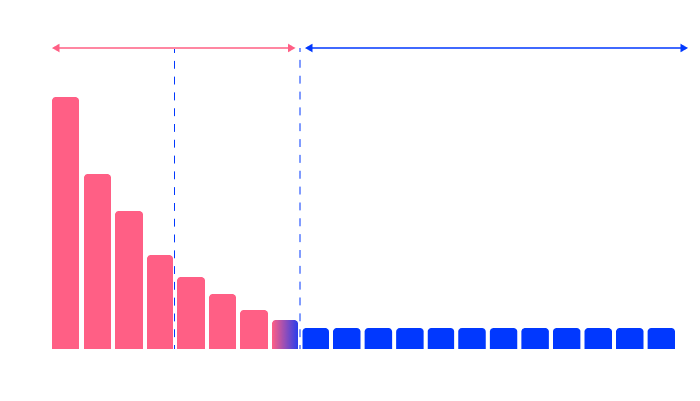
Over 90% of search demand sits in the long tail, and that’s exactly where international SEO wins or loses. CMAX captures that demand at a speed and volume a small team with conventional tools simply can’t match, giving you measurable organic growth in every market you target.
References [1] – https://developers.google.com/search/docs/essentials
Author
Jeremy Tang
Founder and CEO of CMAX
Jeremy Tang is the Founder and CEO of CMAX. With over 2 decades of experience in business consulting and digital marketing, he has successfully driven seven startup businesses, six of which achieved $1 million in revenue from zero in less than 16 months, 5 of which grew to multi-million dollar a year ventures without any external funding. Jeremy's expertise lies in streamlining business processes through technology and leveraging digital (in particular SEO) for business growth. He resides in Australia, travels extensively, and draws inspiration from his global experiences.