Most teams start looking for a scalable SEO platform after the same realisation: the long tail holds thousands of commercially relevant keyword combinations, and no editorial team can publish, review, and maintain that volume by hand. The gap between search demand and publishing capacity only widens as product lines, locations, or use cases grow. Closing it requires structured automation with real governance, not just faster content production. CMAX was built for exactly that kind of catalogue-scale challenge.
A scalable SEO platform should expand without losing control.
Pages from Structured Data
A scalable SEO platform turns structured data into thousands of unique pages by combining approved copy blocks and page rules. Each page maps to a distinct long-tail query and still follows a repeatable publishing standard. That combination is what separates genuine scale from a content sprawl problem: every URL is generated from the same governed inputs, so consistency holds whether you’re publishing 500 pages or 50,000.
The mechanism matters here. Structured data supplies the variable layer, product names, locations, use-case attributes, while approved copy blocks carry the brand-safe, legally reviewed language that wraps those variables. Page rules determine how those elements assemble. The result is a page set that’s both unique at the query level and auditable at the system level.
A scalable SEO platform built for long-tail coverage today also needs to consider visibility across AI search engines, where structured, intent-matched pages are increasingly being surfaced alongside traditional organic results.
When Manual Publishing Stops Scaling
Enterprise teams typically start evaluating a scalable SEO platform when head-term growth plateaus. At that point, the long tail holds more commercially relevant keyword variations, product combinations, locations, use-case searches, than an editorial team can publish, review, and maintain by hand.
The volume problem compounds quickly. A catalogue with 200 products across 15 locations and six use-case categories produces tens of thousands of addressable query combinations. An editorial programme covers a fraction of those. The rest stay unaddressed while search demand exists and competitors fill the gap. That’s the operational ceiling that a scalable SEO platform is built to break through. For teams managing SEO in Australia, the long tail of location-qualified queries alone can be far larger than what an editorial team publishes by hand.
The right platform makes page scale measurable.
Generation, Refresh, and Audit Controls
Scaling to thousands of pages is straightforward to claim. Proving it holds up operationally is a different question. Enterprise SEO programmes require generation, refresh, and audit controls that work in concert from day one.
Page generation controls determine whether a large page set launches consistently or accumulates exceptions that require manual cleanup. Refresh logic governs what happens when source data changes: a product is discontinued, a price updates, a service area expands. Without it, stale pages sit in the index and erode the credibility of the entire programme. Audit trails close the loop by tracing each published page back to the rules, inputs, and approved copy that shaped it, so when a page underperforms or raises a compliance question, the answer is already on record.
Together, these three controls are what separate a scalable SEO platform from a one-time content build. Any SEO enterprise team evaluating automation should confirm that all three are native to the platform rather than bolted on after launch. A scalable SEO platform that integrates generation, refresh, and audit controls is closely aligned with what practitioners mean when they evaluate SEO AI as part of their enterprise automation stack.
CMS and Workflow Integrations
Automation that runs outside your existing systems creates its own overhead. Publishing queues, approval gates, performance reporting, and SEO impact reviews all need to fit the tools your team already uses to govern releases.
CMS, analytics, and workflow integrations are what make that possible. When a scalable SEO platform connects to the systems your team already trusts, programmatic publishing doesn’t require a parallel process to manage it. Approvals move through existing channels. Performance data surfaces in the dashboards your stakeholders already read. That operational fit is what allows a team of two to five to govern thousands of live pages without adding headcount to do it. A scalable SEO platform with robust analytics integrations helps teams monitor how their programmatic pages perform within Google AI Search, where structured and authoritative content is increasingly prioritised in AI-generated result summaries.
Brand safety depends on governance, not just generation.
Approved Assets and Governance
Scaling to thousands of pages creates a governance problem that generation alone cannot solve. Strong governance is what separates a scalable SEO platform from a basic page generator. When a platform draws from approved brand assets, approved language, and vetted source material, every page it produces stays within the boundaries set by brand, legal, and product teams. The alternative, a system that fills gaps by inferring positioning or constructing claims from scratch, introduces inconsistency that compounds across thousands of URLs and is difficult to audit after the fact. Governance built into the generation layer means scaled pages reflect the same standards as hand-reviewed copy, without requiring hand review at every URL.
A scalable SEO platform with strong governance controls is better positioned to maintain brand-safe content as AI search continues to reshape how pages are retrieved and summarised for users.
Scalability and ROI Checklist
Before committing to thousands of URLs, run the rollout case through five checks.
Page volume. Confirm the total page count is large enough to justify automation. A small batch of landing pages does not warrant a programmatic build, but verticals like SEO for lawyers, where practice-area and location combinations multiply addressable queries, often produce the volume needed.
Traffic per page. Estimate average organic traffic using current long-tail demand data. Separate terms with real search volume from pages that would exist only because they can be generated.
Conversion modelling. Model informational and commercial-intent pages separately. Sectors such as SEO finance, where product and comparison queries carry strong commercial intent, require their own assumptions. Broad-question pages and product or solution pages carry different conversion profiles and should not share the same assumption.
Time to first signal. Set a concrete milestone, first 100 visits or first pilot MQLs, so the pilot is evaluated against early traction evidence rather than final revenue alone.
CAC comparison. Compare projected organic CAC against current paid and manual content costs using the same KPI definitions the business already applies to channel decisions.
Proof and pilots should make the decision practical.
Enterprise Scale Case Proof
One CMAX engagement with a B2B omnichannel hospitality retailer illustrates what catalogue-scale long-tail coverage looks like in practice.[1] The retailer’s challenge is essentially SEO for hospitality at catalogue scale, with thousands of product and location combinations generating fragmented search demand. Based on CMAX’s client engagement data, the retailer added 5,000 long-tail product pages through CMAX and reached $1M+/month in incremental SEO revenue within 8 months. This case illustrates what a scalable SEO platform delivers when catalogue-scale demand exists.
The dynamic is consistent across enterprise buyers with large product, service, or solution libraries. For companies focused on SEO for B2B, search demand exists across thousands of keyword combinations, product variants, locations, use cases, specifications, that a standard editorial programme will not cover by hand. The same applies to SEO for saas, where software companies with extensive solution libraries face equally fragmented long-tail demand. The long tail does not wait for headcount to catch up.
10,000-Page Pilot Example
A structured pilot removes the guesswork from the scale decision. A practical 10,000-page rollout example tracks projected results against actual outcomes across a defined KPI set: traffic, time-to-first-100 visits, revenue, pages deployed, top-10 rankings, and pilot MQLs.
The six-week window matters. Early signals within that period tell decision-makers whether the model held, the rollout process performed, and the initial outcomes matched the pre-pilot assumptions. That comparison, projected versus actual using the same KPIs, is what makes the case defensible to a CFO, not a vendor’s summary of what went well.
Results typically begin within 6 weeks. A pilot scoped to a real page set, measured against KPIs the business already tracks, gives the evidence needed to scale with confidence rather than assumption.
The pilot results that make a scalable SEO platform decision defensible are the same evidence base that informs broader website search optimisation strategy, connecting page-level performance to site-wide organic growth goals.
Does programmatic SEO still work?
Yes. Programmatic SEO works when each page targets a distinct search intent, draws from trustworthy underlying data, and delivers page-level value beyond variable substitution in a shared template.[2] Pages that answer a specific query differently from every neighbouring URL give crawlers a reason to index and rank them.
A scalable SEO platform must account for how search results are evolving, and the AI Overview feature in Google’s results is increasingly relevant when evaluating how programmatic pages surface in modern SERPs.
Can Google penalize scaled content?
Scale itself is not the problem. Duplicative, low-value, or unreviewed pages are.[3] Quality controls, internal linking structure, and review rules carry more weight than page volume when it comes to search performance. Build the governance layer before the page count grows.
How to measure programmatic SEO ROI?
Track pages deployed, organic sessions, top-10 keyword growth, conversion rate, revenue or pipeline contribution, and CAC. Measure those against the cost, rollout pace, and pilot timeline. Using the same KPI definitions the business already applies to other channels makes the comparison defensible to a CFO. A scalable SEO platform should make these metrics visible from the pilot onward.
Why aren’t programmatic pages indexing?
The most common causes are pages that are too similar to neighbouring URLs, weak internal linking from the broader site, and content that offers crawlers too little reason to prioritise the URL. Differentiated content, a deliberate internal linking architecture, and sufficient page-level utility address all three.
How to maintain content quality at scale?
Define approved source inputs, reusable copy rules, refresh logic, and review checkpoints before large page sets go live. Fixing inconsistency after publication across thousands of URLs costs significantly more time than setting the rules upfront.
A scalable SEO platform that produces structured, intent-specific pages is also laying the groundwork for generative engine optimisation, since well-governed programmatic content is more likely to be cited or surfaced by AI-driven answer engines.
Most SEO Platforms Scale Pages, CMAX Scales Results
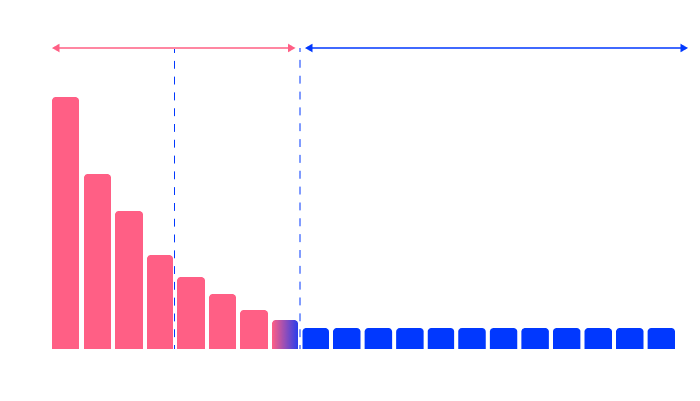
Long-tail keywords account for over 90% of search and AI demand, yet most teams lack the bandwidth to target them.
CMAX is an agentic SEO platform that deploys and continuously updates content across thousands of long-tail keyword variations, with just two lines of code. Every page self-optimises, so your content net grows stronger as it grows larger. Teams typically start seeing measurable traffic uplift within six weeks of deployment.
If you’re evaluating a scalable SEO platform, the question isn’t whether you can publish at volume, it’s whether that volume compounds into revenue.
References [1] – https://backlinko.com/google-keyword-study [2] – https://developers.google.com/search/docs/fundamentals/creating-helpful-content [3] – https://developers.google.com/search/docs/essentials/spam-policies
Author
Jeremy Tang
Founder and CEO of CMAX
Jeremy Tang is the Founder and CEO of CMAX. With over 2 decades of experience in business consulting and digital marketing, he has successfully driven seven startup businesses, six of which achieved $1 million in revenue from zero in less than 16 months, 5 of which grew to multi-million dollar a year ventures without any external funding. Jeremy's expertise lies in streamlining business processes through technology and leveraging digital (in particular SEO) for business growth. He resides in Australia, travels extensively, and draws inspiration from his global experiences.