SEO for B2B SaaS only matters if it brings buyers who are ready to talk to sales. A B2B SEO company that reports more sessions has told you very little.
Sessions are pleasant. They don’t sign contracts.
Most SaaS sites chase category terms like “CRM” or “project management software.” Those terms are a small slice of how buyers search.
Chasing them alone leaves SEO for SaaS companies silent on the integration, industry and security questions buyers ask next.
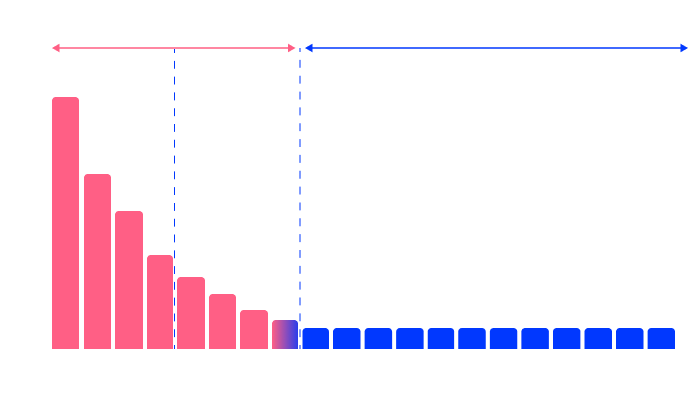
The bigger opportunity sits in the long tail. Picture a hardware shop with one sign over the door that says “Tools.”
You need a 6mm masonry bit for a brick wall, can’t see it from the entrance, and walk across the road to the shop with a sign over that aisle. In this context, the long tail means a sign over every aisle: a page for each use case, integration, industry and security requirement that a buyer further along in evaluating a purchase searches for.
Those pages give SaaS content marketing more commercial relevance than broad category coverage does.
Getting that coverage right is hard. Keeping it current as your product and competitors change is harder, and most teams underestimate it.
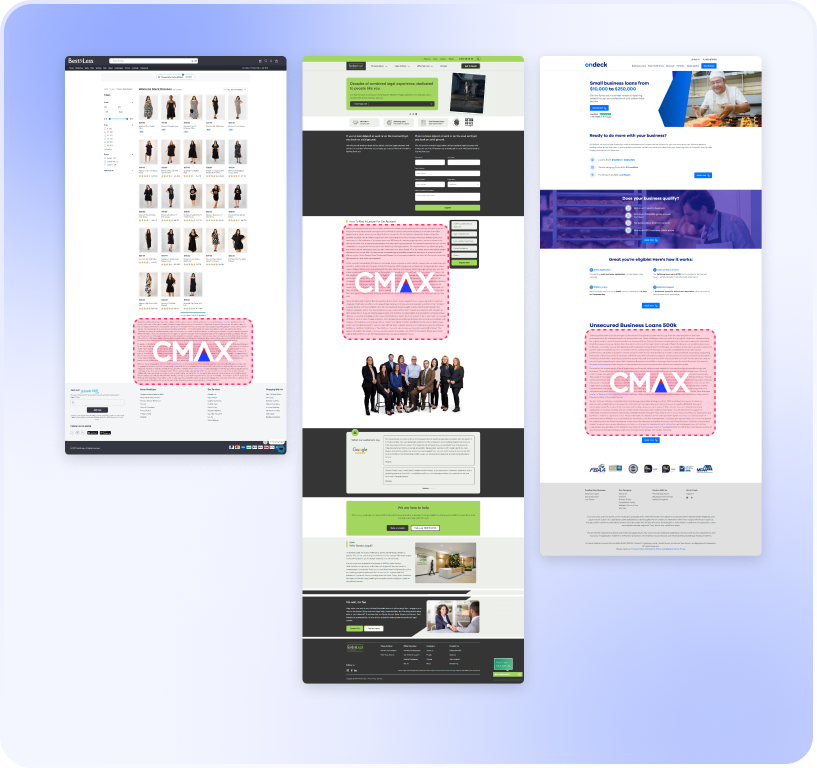
CMAX works with B2B SaaS companies on this problem. We build and maintain the topical coverage that shows up when buying committees compare options.
SEO for B2B SaaS works when it targets the searches buyers actually use.
Focus on pipeline, not visits.
Judge SEO for B2B SaaS by whether it attracts buyers with a real problem, a budget, a workflow need or a comparison task. A rise in sessions tells you little.
A useful plan maps pages to buying intent. Problem pages serve early research.
Integration and use-case pages serve active evaluation. Comparison pages serve shortlist decisions.
Commercial pages serve demo-ready demand.
Search Console is Google’s free tool that shows which searches your site appears for. It separates queries with commercial value from informational noise, which supports a B2B lead generation strategy.
It also shows how to generate B2B leads from search: start with the queries already earning impressions on commercial pages. The best B2B lead generation strategies start with searches buyers already make.
Win the long tail.
The long tail is the set of specific, detailed searches buyers type, such as industry questions, role questions and integration checks. These phrases give SEO for B2B companies access to demand that broad category terms miss.
When you review B2B SaaS examples, look for pages that answer one specific buyer question each. That is what content marketing for SaaS looks like when it is built for buyers.
Effective B2B SEO services prioritise pages for use cases, industries, roles, integrations, alternatives, implementation concerns, security requirements and migration questions. That keeps SEO for B2B SaaS relevant to buyers already weighing implementation.
The same approach applies to B2B SEO in any category with long buying cycles.
The right B2B SaaS SEO system measures coverage, freshness and pipeline impact together.
Measure visibility at query level.
A ranking list shows where you sit for a handful of terms. Query-level data shows which searches each page appears for.
At that level, SEO for SaaS uses Search Console data to reveal where impressions are growing and which valuable searches still have thin coverage. Segment by page type: solution, comparison, integration, industry and documentation.
Then connect those signals to CRM outcomes: demo requests, qualified opportunities, influenced pipeline and closed-won revenue.
Treat AI search as SEO.
GEO and AEO are extensions of SEO. You don’t need a separate retainer for them.
Query fan-out means one buyer question gets split into several smaller searches behind the scenes, and AI engines retrieve from several Google results to answer them. That makes broad topic coverage central to a B2B SaaS content marketing strategy.
Google reports AI Overview and AI Mode performance directly inside Search Console.
Choose a system that stays current.
Content goes stale fast in SaaS. Content marketing for B2B SaaS needs regular updates across integrations, capabilities and security objections.
The right system refreshes important pages, adds coverage where query data shows gaps and keeps internal links current as the topic cluster grows. Dynamic Internal Linking and Full Body SEO keep important pages connected to surrounding content instead of leaving them as stand-alone assets that go stale.
Frequently Asked Questions (FAQ)
How long does B2B SaaS SEO take to show results?
Timelines depend on the site, its competition and how the work is done, so treat any fixed promise with scepticism. Most SEO programmes run by conventional agencies, using outdated methods, tell clients to expect results in six months.
CMAX’s methods allow clients to start seeing clicks in 6 to 8 weeks. A SaaS content marketing agency should tie its timeline to your site’s competition, condition and implementation method, and should not promise a fixed outcome.
Before pipeline impact is clear, watch the leading indicators: better indexation, more relevant query coverage, rising impressions on commercial pages and early clicks from long-tail searches. Indexation means Google has added a page to the list it searches.
Quotes from B2B lead generation companies Australia use AUD, while US providers quote in USD, so convert before you compare cost per opportunity.
Should documentation and changelogs be indexable?
Index documentation and changelog pages that answer real search demand: API setup, integration instructions, migration steps, feature behaviour, version changes and troubleshooting questions. These pages often capture high-intent searches that polished commercial pages miss.
Sustained coverage of those questions is a practical definition of SEO for B2B SaaS. Exclude pages that are thin, duplicated, private or only useful inside the product.
Apply noindex, a tag that tells Google to leave a page out, directly instead of relying on robots.txt alone.
In a technical review, a B2B SaaS SEO agency should assess documentation by its search value, duplication risk, access requirements and role in the buying process. Location also matters.
Google can show different results for B2B lead generation Sydney than for the same search in Melbourne, because the searcher’s location affects proximity.
How does JavaScript rendering affect SaaS SEO and how can I fix it?
Google processes JavaScript pages in three steps: crawling, rendering and indexing. SEO fails when key copy, links, titles or product content only appear after scripts run late or run poorly.
Use crawlable HTML links with href attributes, real URLs instead of hash fragments, and server-rendered or pre-rendered critical content. Never depend on JavaScript to remove a noindex tag.
These basics are the technical foundation for SEO for B2B SaaS.
SEO for B2B SaaS, Coverage Drives Qualified Pipeline
SEO for B2B SaaS works when it covers the searches real buyers use, instead of only the obvious category terms. We built CMAX around that idea.
If your site doesn’t answer the use cases, comparisons, integrations, objections and role-specific questions buyers search, you miss pipeline even when session counts look fine.
Broad, connected coverage that stays accurate applies beyond software. SEO for fintech and SEO for insurance both need coverage that stays accurate, compliant and connected as products and requirements change.
CMAX is the Agentic SEO Platform. It helps brands expand useful coverage across the long tail and keep that content fresh and connected over time.
Visibility comes from content surface area, and content momentum turns that surface area into ongoing search and AI visibility. Long-tail coverage also supports a B2B demand generation strategy by answering use cases, comparisons, integrations and objections as products change.
You can’t fix a gap you haven’t seen. A map of the searches where buyers can’t find you shows where to start.
If you’re curious as to how you’re performing on AI, book in a Missing Customer Map review with our Growth Team.
Author
Jeremy Tang
Founder and CEO of CMAX
Jeremy Tang is the Founder and CEO of CMAX. With over 2 decades of experience in business consulting and digital marketing, he has successfully driven seven startup businesses, six of which achieved $1 million in revenue from zero in less than 16 months, 5 of which grew to multi-million dollar a year ventures without any external funding. Jeremy's expertise lies in streamlining business processes through technology and leveraging digital (in particular SEO) for business growth. He resides in Australia, travels extensively, and draws inspiration from his global experiences.