SEO for financial services carries higher stakes than most categories because Google treats pages about loans, insurance, and investments with extra scrutiny. Polished copy alone won’t earn rankings when every claim needs a verifiable source, a named author with real credentials, and clear compliance references. The gap most teams hit isn’t strategy; it’s proving trustworthiness in ways both readers and search engines can check. CMAX helps financial services teams build that proof into every page at scale, with structured authorship, compliance fields, and review workflows built in.
Financial Services SEO Depends on Trust Signals Google Can Verify
Higher Scrutiny for Money Topics
SEO for financial services operates under a different standard than most other categories. A page about loans, investments, insurance, or tax can directly influence a decision with real financial consequences, so Google applies closer scrutiny to these topics. Polished copy alone won’t hold up. Pages need evidence that both a reader and a search engine can independently check: who wrote it, what qualifies them, and where the underlying claims come from.
SEO for financial services is a specialised application of website search optimisation where every technical and content decision must also satisfy regulator-aligned trust and compliance standards.
That scrutiny isn’t arbitrary. When a page gets something wrong about eligibility criteria or risk disclosure, the downstream effect on a reader can be significant. The bar for what counts as credible is higher here than in almost any other vertical.
Financial Trust Module
A Financial Trust Module structures that evidence so it appears where readers look first: immediately below the answer summary and embedded within schema markup. It makes four things visible at a glance.
Credential card, the author’s CV with licence numbers or verifiable affiliation links, so expertise is checkable rather than asserted.
Compliance checklist, regulator references relevant to the specific topic covered on that page, not a generic disclaimer buried in the footer.
Data slot, sourced metrics or clearly attributed first-party figures, so every numerical claim has a traceable origin.
AI SEO long-tail cluster map, a structured view of how the page fits a wider coverage plan across products, locations, eligibility scenarios, and comparison queries.
Each component addresses a specific gap that financial pages typically leave open. Together they give Google the verifiable signals it needs and give readers the confidence to act on what they’ve read.
Authority Grows When Expertise, Compliance, and Authorship Are Visible
Visible E-E-A-T Signals
For practitioners focused on SEO for financial advisors, anonymous bylines and undated pages are a liability. Google’s quality raters are explicitly trained to apply higher scrutiny to finance content, and a page with no named author, no reviewer credit, and no last-updated date gives them nothing to verify.[1]
Named authors with publicly checkable credentials change that. A bio that links to a LinkedIn profile, a professional licence register, or an industry body membership makes accountability concrete. Reviewer roles matter too: showing that a compliance officer or licensed adviser checked the page before publication signals a second layer of oversight. Those running SEO for financial planners should treat last-updated dates as non-negotiable, since they confirm the information hasn’t been left to drift out of alignment with current regulation or market conditions.
These signals carry more weight in finance than in almost any other sector because the reader’s decision risk is real. A page about home loan eligibility or investment risk that can’t show who wrote it and when it was checked gives a reader no reason to trust it over the next result. SEO for financial services must account for how AI search interprets author credentials and compliance references, since these signals influence whether a page is surfaced as a trustworthy result in AI-assisted queries. The same principle applies to SEO for finance companies, where visible authorship and review credits separate credible pages from generic content.
Compliance References
Linking to relevant regulator guidance does two things: it anchors the page’s claims to a verifiable external source, and it signals to Google that the content sits within an established compliance framework rather than outside it.
The execution matters. Summarise regulator material accurately in plain educational language, and draw a clear line between general information and personal legal or financial advice. That distinction protects the reader and keeps the page on the right side of both editorial and legal standards.
Financial Services SEO Works When Every Page Passes a Repeatable Review Process
Five-Step YMYL Review
A single poorly worded claim on a finance page can misrepresent risk, breach compliance expectations, or cost a reader money. A repeatable review process is what makes SEO for financial services defensible, and it removes that exposure at scale.
For every finance page, the review should confirm five things in sequence: where each factual claim came from and whether that source is still current; whether the named author and reviewer are real, verifiable, and qualified for the topic; which regulator references apply and whether they are linked accurately; whether risk wording avoids overstatement or implied guarantees; and when the page was last checked and by whom.
Running this as a documented checklist, rather than an informal read-through, means the review is auditable. If a page is ever questioned, the record shows what was checked, who approved it, and when. These review steps apply across SEO for service businesses, but finance demands additional compliance layers.
Human Verification of AI Drafts
AI drafts can support content production in financial services SEO, but the verification step is non-negotiable. A subject-matter expert needs to check every factual claim against approved sources, not just scan for tone. Where the topic carries regulatory weight, final wording should be approved line by line.
SEO for financial services increasingly relies on SEO AI tooling to draft and structure long-tail content at scale, provided every output is fact-checked and signed off by a qualified human reviewer before publication.
The record matters as much as the review itself. Log who reviewed the page, what they checked, and when sign-off happened. That documentation is what separates a defensible content programme from one that scales quickly and creates liability just as fast.
Long-tail coverage expands authority only when quality controls scale too.
Long-Tail Cluster Mapping
Financial long-tail clusters produce authority when each page is built around one distinct search need. A page targeting “personal loan eligibility for self-employed borrowers in Brisbane” serves a different query than “compare fixed-rate personal loans” or “car loan rates in Melbourne.” These are separate intents, separate audiences, and separate ranking opportunities.
Publishing near-duplicate pages that swap a suburb name or product label into the same thin template does the opposite. Google’s scrutiny of YMYL content means low-differentiation pages are more likely to be filtered than ranked.[2] Each page in a financial services cluster needs its own specific answer, its own sourced claims, and its own compliance framing relevant to that topic.
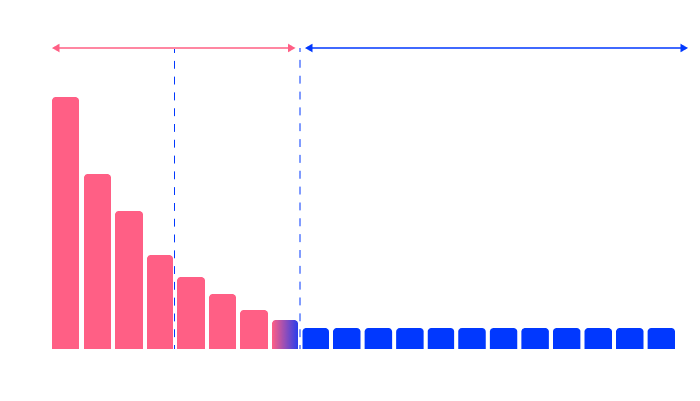
The practical structure for a governed cluster maps queries by four axes: product type, geography, eligibility scenario, and comparison intent. Each axis generates pages that don’t compete with each other on the same site.
Finance Proof Point
The scale this approach unlocks is measurable. In one CMAX engagement, a fintech lender expanded from 1,000 to 15,000+ pages by May 2023 and recorded 6X SEO traffic alongside 6X loan applications within 12 months, driven by suburb-level and long-tail loan pages.
The same dynamics apply across financial services. PPC costs in finance are high, head-term rankings are mature and contested, and local intent queries remain largely uncaptured by most incumbents. For SEO for small business Australia demands verifiable local signals at the page level, which is why governed long-tail expansion is where the growth headroom sits, provided every new page carries the same authorship, sourcing, and compliance standards as the first. Broader SEO services Australia providers can apply the same governed cluster model to any vertical, but finance raises the compliance bar highest.
SEO for financial services teams building long-tail clusters should also consider generative engine optimisation principles, since AI-generated answer surfaces increasingly draw from the same structured, credentialled content that earns traditional rankings, demonstrating how SEO for financial services can compound returns when quality controls hold.
Trust and Scale Must Reinforce Each Other in Finance
Earning Reputable Finance Links
Reputable finance links are earned, not requested. A financial services page that publishes original research, local market data, or expert commentary tied to a live regulatory or economic issue gives other sites something worth citing. A genuinely useful explainer resource, one that answers a specific eligibility or compliance question clearly and accurately, attracts references from industry publications, consumer advocacy sites, and news outlets that cover the sector.
Generic outreach to unrelated websites produces low-authority links that carry little weight with Google and can signal manipulation. Finance editors and journalists link to sources they can verify. That means named authors, checkable credentials, and claims backed by sourced data, the same standards that govern on-page trust signals. Working with a specialist SEO agency for financial services can accelerate this process, because agencies embedded in the sector already maintain relationships with credible finance publications.
As SEO for financial services evolves, the rise of AI search engines means that E-E-A-T signals and verifiable credentials must now satisfy not only traditional ranking algorithms but also the retrieval logic of AI-driven platforms.[3]
Responsible Scaling Strategy
Expanding topical depth in financial services only builds authority when standards travel with every new page. A page added to a long-tail cluster without visible authorship, a review record, source fields, and a documented compliance trail is a liability, not an asset.
SEO for financial services practitioners scaling responsible content programmes should monitor how Google AI Search selects and attributes financial information, as verifiable authorship and compliance references directly influence which pages are cited in AI-generated responses.
The strongest results from SEO for financial services come when trust and scale reinforce each other. Templates that enforce author attribution, reviewer sign-off, and compliance checkpoints before a page goes live make scale operationally viable. CMAX’s programmatic approach applies exactly this logic: content deploys at scale across product, location, eligibility, and comparison queries, with the governance structure built into the workflow rather than bolted on after the fact.
How to ensure compliance in financial services SEO?
Every page should use approved educational wording, link to relevant regulator material where the topic warrants it, and clear a documented legal or compliance review before publication. That paper trail is what separates defensible content from content that creates liability.
How to audit financial services content for YMYL?
A practical YMYL audit checks six things on each page: a named author, verifiable expertise, sourced claims, accurate risk language, a current last-reviewed date, and the compliance references the topic requires. If any one of those is missing, the page is incomplete.
When building SEO for financial services, staying current with how Google surfaces content through the AI Overview feature is increasingly relevant to understanding how trust signals are evaluated at the top of search results.
How to target long-tail keywords for financial services?
Start by grouping queries into four buckets: product type, suburb or region, borrower or customer eligibility, and comparison intent. Each page should answer one distinct search question. Pages that chase the same broad head term with minor wording changes compete against each other and dilute authority across the site.
How to scale financial services SEO without losing E-E-A-T?
Templates do the heavy lifting here. When every new page requires author attribution, a review record, source fields, and a compliance checkpoint before it can go live, scale does not erode quality standards.
Can AI content meet financial services YMYL standards?
AI content can support financial services SEO when it is trained on approved brand assets and every publishable page is fact-checked, compliance-reviewed, and signed off by a qualified human reviewer. The AI accelerates production; the human reviewer is accountable for what goes live.
Financial Services SEO Demands More Than Generic Playbooks
CMAX is the agentic SEO platform built for scale.
Our AI-powered agents deploy and continuously update content across the thousands of long-tail keyword variations your prospects actually search, covering over 90% of the demand most businesses miss. In sectors like financial services, where E‑E‑A‑T scrutiny is high and every trust signal matters, that volume of targeted, verifiable content is what separates authority from noise. Two lines of code connect CMAX to your site, and results typically start showing within six weeks.
If your SEO has plateaued while compliance requirements keep climbing, CMAX gives you the programmatic firepower to capture high-intent traffic at a speed and scale manual teams simply can’t match.
References [1] – https://services.google.com/fh/files/misc/hsw-sqrg.pdf [2] – https://developers.google.com/search/docs/fundamentals/creating-helpful-content [3] – https://developers.google.com/search/blog/2022/12/google-raters-guidelines-e-e-a-t
Author
Jeremy Tang
Founder and CEO of CMAX
Jeremy Tang is the Founder and CEO of CMAX. With over 2 decades of experience in business consulting and digital marketing, he has successfully driven seven startup businesses, six of which achieved $1 million in revenue from zero in less than 16 months, 5 of which grew to multi-million dollar a year ventures without any external funding. Jeremy's expertise lies in streamlining business processes through technology and leveraging digital (in particular SEO) for business growth. He resides in Australia, travels extensively, and draws inspiration from his global experiences.