SEO for medical practices often stalls because traffic goes up but booked appointments don’t. The gap usually sits between the pages a practice publishes and the intent behind what patients actually search. A service page built around one treatment, one location, and one patient need converts differently than a general overview page ranking for broad terms. Getting that structure right, and keeping it compliant, is where most of the real work lives. CMAX helps medical practices scale that kind of page-level precision without breaking regulatory guardrails.
Medical SEO Earns Qualified Leads When Pages Match Patient Intent
Search Intent by Page Type
The way SEO for medical practices delivers results is by matching each page to a specific patient intent, because not every patient search carries the same intent, and the page type has to match what the search is actually asking for.
Brand searches, where a patient types the practice name directly, signal they already know where they want to go. These visitors need navigational details fast: reviews, contact information, and a clear path to booking. A homepage or branded location page handles that job well.
Treatment and location searches work differently. A patient searching “knee replacement surgeon in Austin” or “IVF clinic near me” is evaluating options and needs a dedicated service or location page that answers four specific questions: Am I a candidate? What does the process involve? Is this available near me? How do I book? A general page that gestures at all of these without answering any of them directly loses that patient to a competitor who does.
SEO for medical practices must evolve alongside how patients discover care, and the rise of AI search engines means that treatment and location pages need to be structured for both traditional and AI-driven discovery.
Pages That Drive Qualified Leads
Effective SEO for medical practice starts with service and location pages, which attract visitors who are closer to booking because the search itself is specific. Someone searching for a named treatment in a named area has already narrowed their decision. A page built around that exact combination, one treatment, one location, one clear conversion path, meets them at the right moment.
SEO for medical practices is grounded in the same fundamentals as broader website search optimisation, where matching page content to the precise intent behind a patient’s query determines whether that visit leads to a booked appointment.
Educational pages serve a different function. They support patients who are still comparing options, researching symptoms, or weighing whether to seek care at all. These pages earn their place in the structure by creating internal links back to service and location pages once a patient’s intent sharpens.
The Highest-Value Medical SEO Structure Follows the Patient Journey
Keep Service Pages Distinct
A service page ranks more clearly when it targets one treatment, one patient need, and one location. Stacking multiple services, symptoms, or geographies onto a single page splits ranking signals and leaves patients unsure whether they’ve landed in the right place. A page for “knee replacement surgery in Austin” should do exactly that job and nothing else. This is why SEO for medical practices depends on distinct service pages. The moment a page also tries to cover hip replacements or a second clinic location, it weakens on both fronts.
Capture Long-Tail Medical Searches
Following SEO best practices means core service pages cannot carry every query a patient runs before booking. Condition hubs, FAQ pages, and short video explainers cover the symptom, eligibility, preparation, recovery, and treatment-process searches that sit upstream of a booking decision. These pages do not compete with service pages; they feed them. A patient researching “how long is recovery after cataract surgery” is not ready to book yet, but the right content at that stage keeps the practice in the frame when they are. This illustrates why is SEO so important for medical providers: capturing upstream searches builds familiarity long before a patient is ready to act. As SEO for medical practices matures, structuring service and location pages to perform well in AI search environments is becoming as important as optimising for traditional keyword rankings.
Five-Step Medical SEO Checklist
A five-step checklist keeps clinics focused on the structural work that moves the needle on discoverability, compliance, and appointment attribution rather than surface-level optimisations. Each step keeps SEO for medical practices aligned with discoverability and compliance.
The first structural priority: build one primary service page per treatment and pair it with the most relevant location intent. Each page then has a single ranking target and a direct conversion path, which makes it far easier to tie organic visits to booked appointments and report that connection to stakeholders. Building the highest-value patient journey through SEO for medical practices is increasingly supported by SEO AI tools that help identify content gaps, automate page templates, and scale compliant copy across service and location pages.
Patient-First Compliant Phrasing
Phrases like “What to expect,” “Who it’s for,” and “When to call your clinician” do the work without crossing compliance lines. They answer practical questions about fit, process, and urgency without implying guaranteed outcomes, universal suitability, or clinical superiority.
Publishing Rules for Medical Pages
Content, forms, and structured data typically need review against privacy obligations, clinician oversight requirements, and local advertising rules before going live. Pages covering symptoms, treatment options, appointment requests, or patient data collection carry the highest review burden.
Metrics That Show Qualified Demand
Organic appointment completions, tracked phone-call conversions, local pack visibility, and Google Search Console query patterns show whether SEO is reaching patients with booking intent. Rankings alone cannot confirm whether the right pages are attracting the right searches. Tracking these metrics is what makes SEO for medical practices measurable.
SEO for medical practices now requires monitoring how content performs across evolving formats, and Google AI Search is reshaping which pages receive visibility for high-intent treatment and location queries before patients reach a traditional results page.
Compliance-Approved Content at Scale
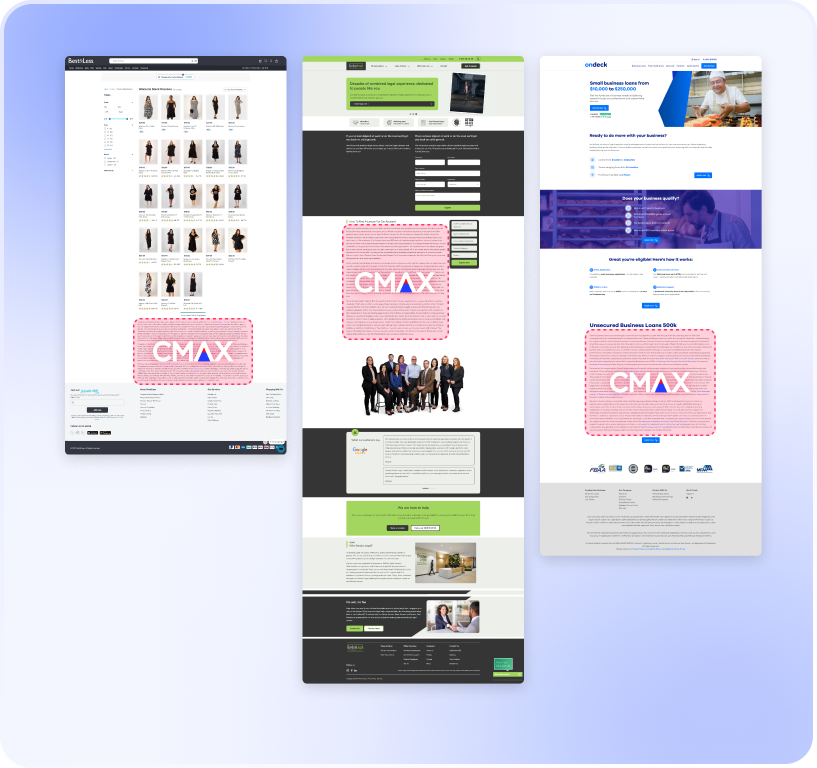
In one CMAX engagement, an online chemist scaled from 1,200 to 5,200 pages in two weeks, achieved 457% YoY non-brand organic growth in under 12 months, and saw SEO drive 90% of all conversions, trained exclusively on compliance-approved copy. This kind of enterprise SEO, where content has to scale inside regulatory guardrails, mirrors the same constraint medical practices face: volume and compliance must move together.
Link Education to Care Paths
Once a patient’s symptoms, treatment fit, or urgency become specific enough, informational pages should route them to the most relevant service, clinician, or location page rather than leaving them in general education. Like SEO for optometrists or SEO for lawyers, medical practices benefit from routing informational readers toward the most relevant service page.
SEO for medical practices is expanding beyond traditional search rankings, and generative engine optimisation is an emerging discipline that helps practices surface their content accurately when AI systems synthesise answers to patient health queries.
Place CTAs After Trust Signals
Appointment CTAs perform better after patients have seen treatment process details, candidacy criteria, insurance notes, clinician information, and location specifics. That sequence reduces uncertainty and makes booking a logical next step. Positioning the call to action after trust signals is a core principle of SEO for medical practices.
How to measure medical SEO success?
Measure organic appointments, tracked phone calls, local visibility, and the search queries landing on booking-ready pages. Traffic volume alone tells you nothing about whether the right patients are arriving.
Is medical SEO HIPAA compliant?
Medical SEO can be managed in a HIPAA-aware way when pages avoid collecting unnecessary protected health information, forms are reviewed carefully, and analytics or call-tracking setups are checked against privacy obligations before launch.
How to optimise multiple medical practice locations?
A practice running SEO in Sydney and another running SEO in Melbourne each need a dedicated location page with unique local details. Each location page should include its own address, maps, local access information, insurance notes, clinician availability where relevant, and service context so the page matches its own geographic intent.
How to convert medical SEO traffic into patient leads?
Informational content should lead into service and location pages that answer candidacy, process, logistics, and booking questions before an appointment CTA appears. That sequence is what moves a researching visitor to a booked patient.
How to scale medical content for long-tail keywords?
Repeatable page templates, approved language patterns, and clear internal linking across conditions, services, FAQs, and locations let practices expand coverage without introducing inconsistent clinical claims across the site.
SEO for Medical Practices Demands Scale Most Teams Can’t Staff
CMAX is a programmatic SEO platform built for exactly this problem.
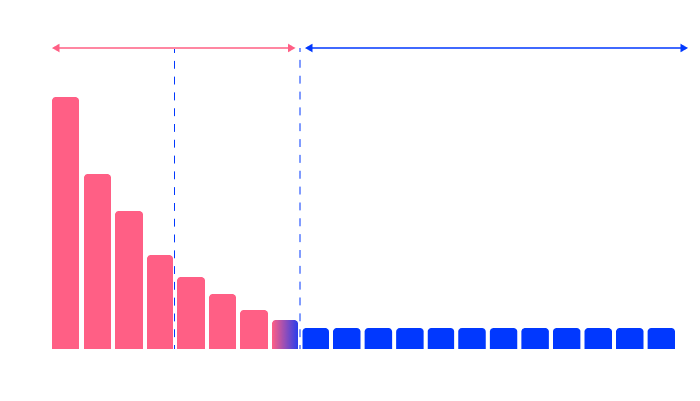
Medical practices need pages for every treatment, every condition, and every location patients actually search, that’s thousands of long-tail keywords most teams never get to. CMAX deploys AI agents that create and continuously update that content with just two lines of code, targeting the 90% of search demand sitting in the long tail. Results start showing in six weeks, not six months.
If your organic strategy stalls at a handful of service pages while patients search in hundreds of specific ways, CMAX closes that gap at a speed and scale manual teams simply can’t match.
Author
Jeremy Tang
Founder and CEO of CMAX
Jeremy Tang is the Founder and CEO of CMAX. With over 2 decades of experience in business consulting and digital marketing, he has successfully driven seven startup businesses, six of which achieved $1 million in revenue from zero in less than 16 months, 5 of which grew to multi-million dollar a year ventures without any external funding. Jeremy's expertise lies in streamlining business processes through technology and leveraging digital (in particular SEO) for business growth. He resides in Australia, travels extensively, and draws inspiration from his global experiences.